While takeoff offers good views from the right, the landing approach provides superior visual rewards. The dramatic Andes descent into Santiago is more visually striking than Mexico City's departure, and left-side seats capture the full cordillera during the approach phase when altitude and angle are optimal for viewing.
Flown MEX to SCL? Did we get it right?
Flight Path
Mexico City to Santiago is 4,099 miles (6,596 km), a flight of about 8 hours 15 minutes.
The flight path crosses the Pacific coast near Oaxaca (southern Mexico), then proceeds over open Pacific Ocean for roughly 3.5 hours. No significant landmarks are visible during the oceanic midpoint. As the aircraft approaches the South American coast near central Chile, the Andes begin to appear on the horizon around 1.5 hours before landing. The cordillera gradually dominates the view during the final descent into Santiago.
Great circle distance and headings ›


Phase by phase
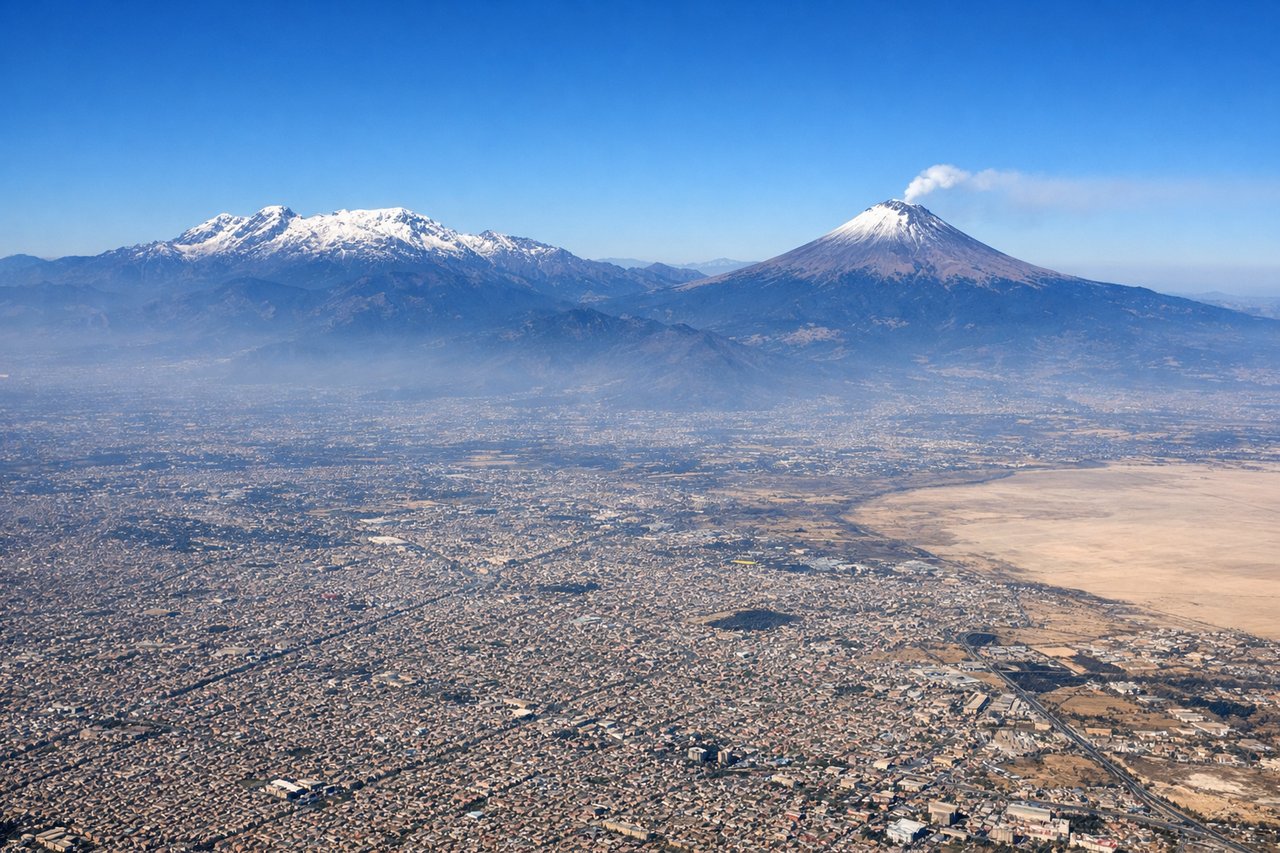
Takeoff from MEX
RIGHTMEX typically departs eastbound on Runway 05L/05R or southbound on Runway 09L/09R. Right-side seats on eastbound departures offer immediate views of the Sierra de Guadalupe and the eastern sprawl of Mexico City. On southbound departures, right seats face the Ajusco volcano and southern highlands.
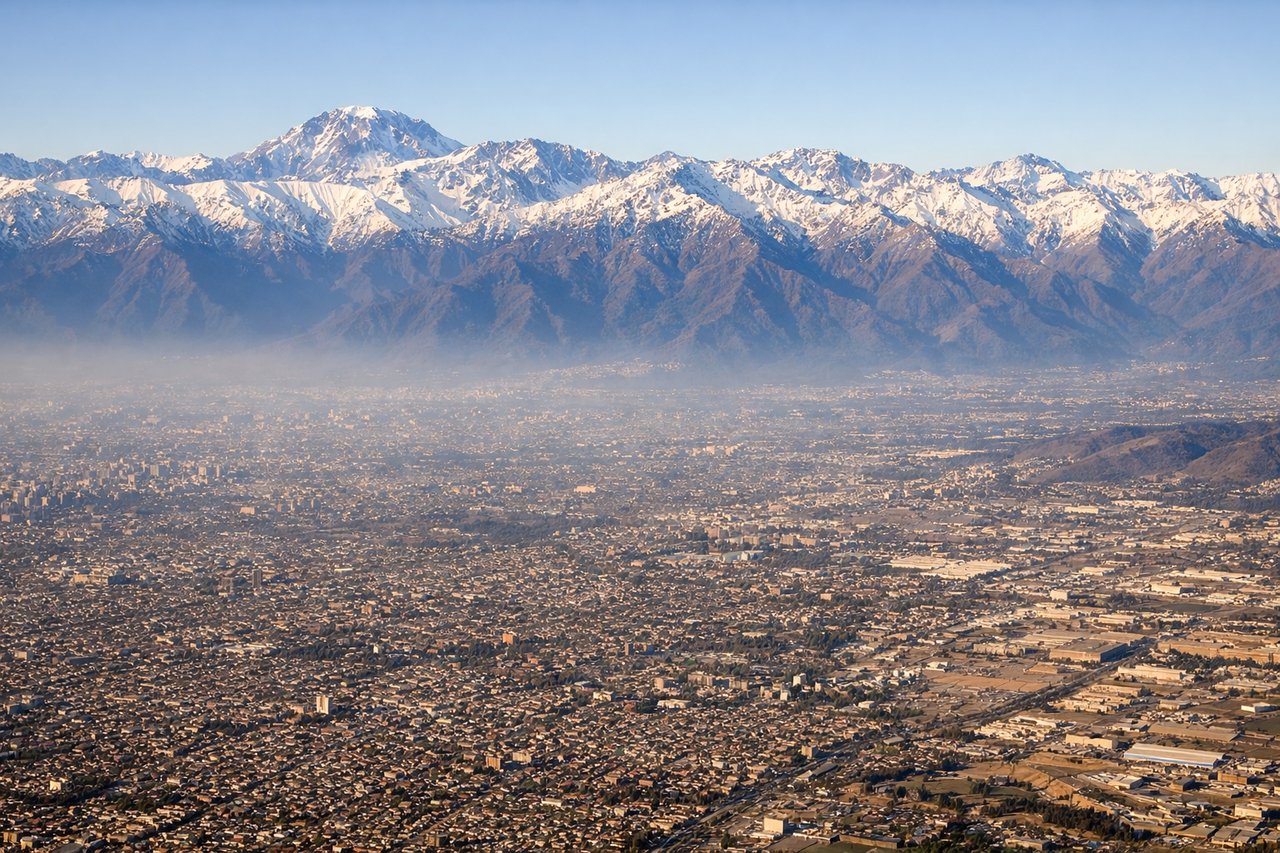
Landing at SCL
LEFTSCL approaches from the north on Runway 34L/34R or from the west on Runway 16L/16R. Left-side seats on northbound approaches provide excellent views of the Andes cordillera, particularly the snow-capped peaks surrounding Santiago. On westbound approaches, left seats face the Andes directly during descent.
Will your flight be in sunlight?
Pick a date and time in the Sun Map to watch the sun move across your whole flight.
About This Route
Which side of the plane should I sit on flying from Licenciado Benito Juarez International (MEX) to Arturo Merino Benitez International (SCL)?
Sit on the Left side of the plane for the best views on flights from Mexico City to Santiago. While takeoff offers good views from the right, the landing approach provides superior visual rewards. The dramatic Andes descent into Santiago is more visually striking than Mexico City's departure, and left-side seats capture the full cordillera during the approach phase when altitude and angle are optimal for viewing.
What can I see during takeoff from Licenciado Benito Juarez International in Mexico City?
During takeoff from Licenciado Benito Juarez International (MEX), sit on the Right side for the best views. MEX typically departs eastbound on Runway 05L/05R or southbound on Runway 09L/09R. Right-side seats on eastbound departures offer immediate views of the Sierra de Guadalupe and the eastern sprawl of Mexico City. On southbound departures, right seats face the Ajusco volcano and southern highlands. Notable sights include: Sierra de Guadalupe (north), Lake Texcoco remnants (east), Ajusco volcano (south), Mexico City urban grid (immediate surroundings).
What can I see when landing at Arturo Merino Benitez International in Santiago?
When landing at Arturo Merino Benitez International (SCL), sit on the Left side for the best views. SCL approaches from the north on Runway 34L/34R or from the west on Runway 16L/16R. Left-side seats on northbound approaches provide excellent views of the Andes cordillera, particularly the snow-capped peaks surrounding Santiago. On westbound approaches, left seats face the Andes directly during descent. Notable sights include: Andes cordillera with snow-capped peaks (dominant), Maipo River valley (foreground), Santiago urban basin (immediate), Aconcagua region peaks (distant south).
How long is the flight from Mexico City to Santiago?
The flight from Licenciado Benito Juarez International (MEX) to Arturo Merino Benitez International (SCL) takes about 8 hours 15 minutes. The shortest flight path between them is 4,099 miles (6,596 km); winds and air traffic control usually add a few percent.
What does the Mexico City to Santiago flight path pass over?
The flight path crosses the Pacific coast near Oaxaca (southern Mexico), then proceeds over open Pacific Ocean for roughly 3.5 hours. No significant landmarks are visible during the oceanic midpoint. As the aircraft approaches the South American coast near central Chile, the Andes begin to appear on the horizon around 1.5 hours before landing. The cordillera gradually dominates the view during the final descent into Santiago.