The right side strings together three distinct scenic phases — Miami's bay and skyline on departure, a glimpse of Cuba's eastern coastline during cruise, and Cartagena's historic walled city and bayfront skyline on arrival — while the left side is dominated by open Atlantic and Caribbean water for most of the flight.
Flight Path
The route crosses the Straits of Florida and passes near the eastern tip of Cuba, with the Sierra Maestra range sometimes visible to the west, before continuing over open Caribbean Sea between Jamaica and Haiti, where the Blue Mountains and Haiti's southern peninsula peaks can appear as distant silhouettes before the coast of Colombia comes into view.
Great circle distance and headings ›

Phase by phase
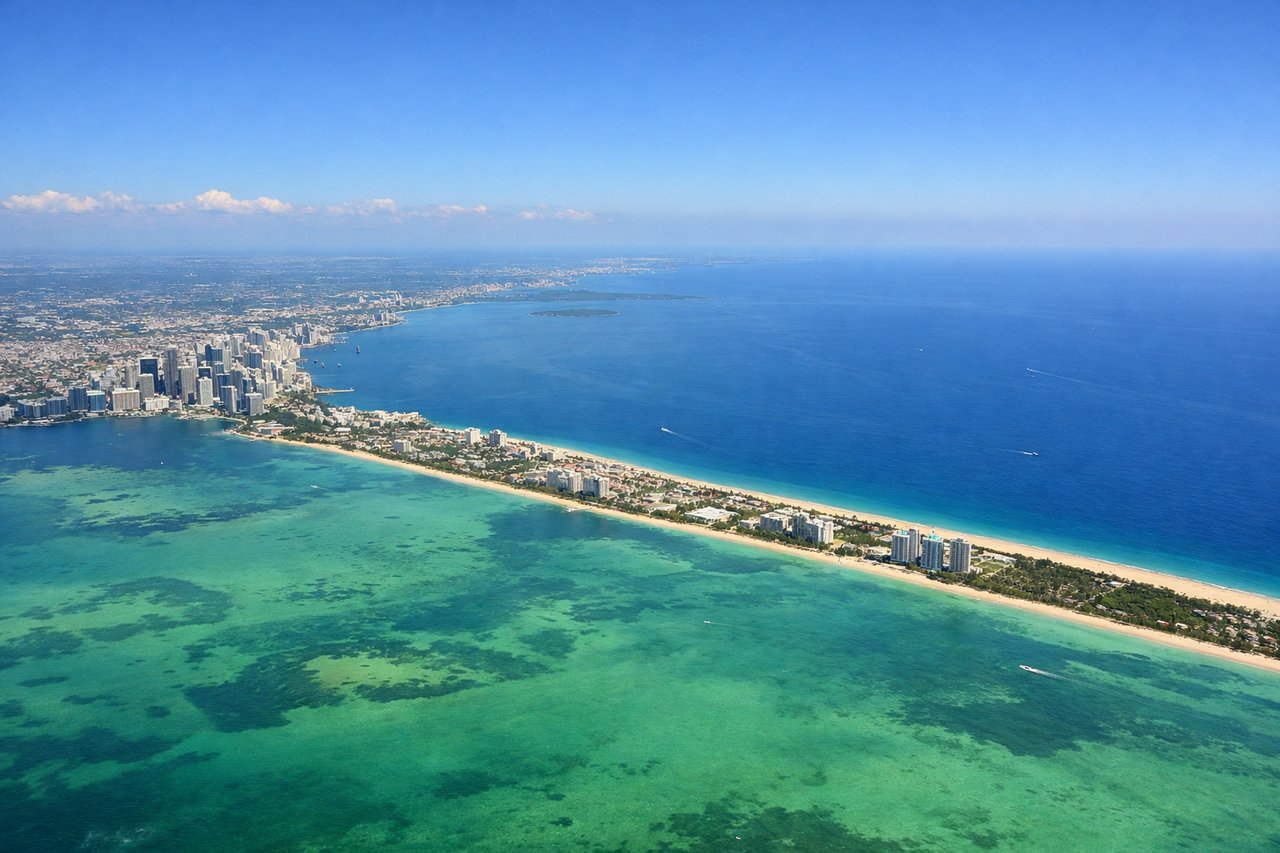
Takeoff from MIA
RIGHTDeparting MIA to the south, the right side catches the turn over Biscayne Bay and Key Biscayne with downtown Miami's skyline receding behind, then opens onto the vast green sawgrass expanse of the Everglades as the aircraft levels onto its southbound track. The left side mostly shows open Atlantic water with little variation.
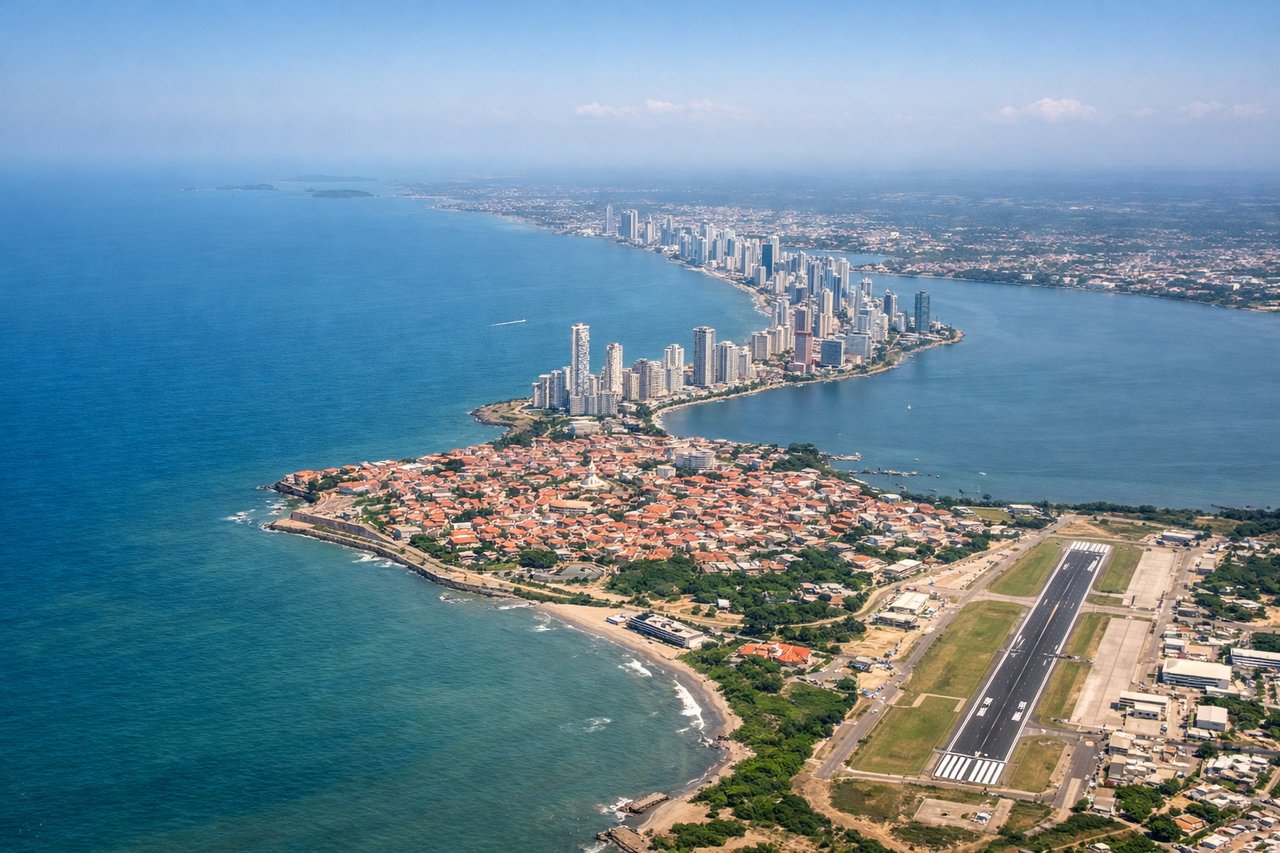
Landing at CTG
RIGHTOn the typical northerly approach into Cartagena for runway 19, the descent path passes along the coast with the historic Walled City, the fortress of San Felipe, and the Bocagrande high-rise skyline visible off the right side just before touchdown. The left side faces mostly open Caribbean water during the same turn.
Landmarks on this routeAll landmarks →
Will your flight be in sunlight?
See exactly which side of the plane gets sun and shade at your departure time.
About This Route
Which side of the plane should I sit on flying from Miami International (MIA) to Rafael Nunez (CTG)?
Sit on the Right side of the plane for the best views on flights from Miami to Cartagena. The right side strings together three distinct scenic phases — Miami's bay and skyline on departure, a glimpse of Cuba's eastern coastline during cruise, and Cartagena's historic walled city and bayfront skyline on arrival — while the left side is dominated by open Atlantic and Caribbean water for most of the flight.
What can I see during takeoff from Miami International in Miami?
During takeoff from Miami International (MIA), sit on the Right side for the best views. Departing MIA to the south, the right side catches the turn over Biscayne Bay and Key Biscayne with downtown Miami's skyline receding behind, then opens onto the vast green sawgrass expanse of the Everglades as the aircraft levels onto its southbound track. The left side mostly shows open Atlantic water with little variation. Notable sights include: Downtown Miami skyline, Biscayne Bay, Key Biscayne, Everglades wetlands.
What can I see when landing at Rafael Nunez in Cartagena?
When landing at Rafael Nunez (CTG), sit on the Right side for the best views. On the typical northerly approach into Cartagena for runway 19, the descent path passes along the coast with the historic Walled City, the fortress of San Felipe, and the Bocagrande high-rise skyline visible off the right side just before touchdown. The left side faces mostly open Caribbean water during the same turn. Notable sights include: Cartagena's Walled City, Bocagrande skyline, Cartagena Bay, Caribbean coastline.
How long is the flight from Miami to Cartagena?
The flight from Miami International (MIA) to Rafael Nunez (CTG) takes 2h 20m.
What does the Miami to Cartagena flight path pass over?
The route crosses the Straits of Florida and passes near the eastern tip of Cuba, with the Sierra Maestra range sometimes visible to the west, before continuing over open Caribbean Sea between Jamaica and Haiti, where the Blue Mountains and Haiti's southern peninsula peaks can appear as distant silhouettes before the coast of Colombia comes into view.