The left side misses the Florida Keys at takeoff but delivers the Yucatan Peninsula coastline over the Gulf of Mexico mid-flight and the spectacular volcanic approach into Mexico City. The snow-capped Popocatépetl and Iztaccíhuatl on final approach alone make the left side the stronger choice for the full journey.
Flown MIA to MEX? Did we get it right?
Flight Path
Miami to Mexico City is 1,274 miles (2,051 km), a flight of about 3 hours 15 minutes.
The flight crosses the Gulf of Mexico, passing over or near the Yucatan Peninsula and the Gulf of Campeche. Passengers may see the shallow turquoise waters of the Yucatan shelf, the coastline near Cancun or Merida depending on routing, and the flat jungle interior of the Yucatan. Further along, the terrain rises into the Sierra Madre Oriental foothills before descending into the high central plateau of Mexico.
Great circle distance and headings ›


Phase by phase
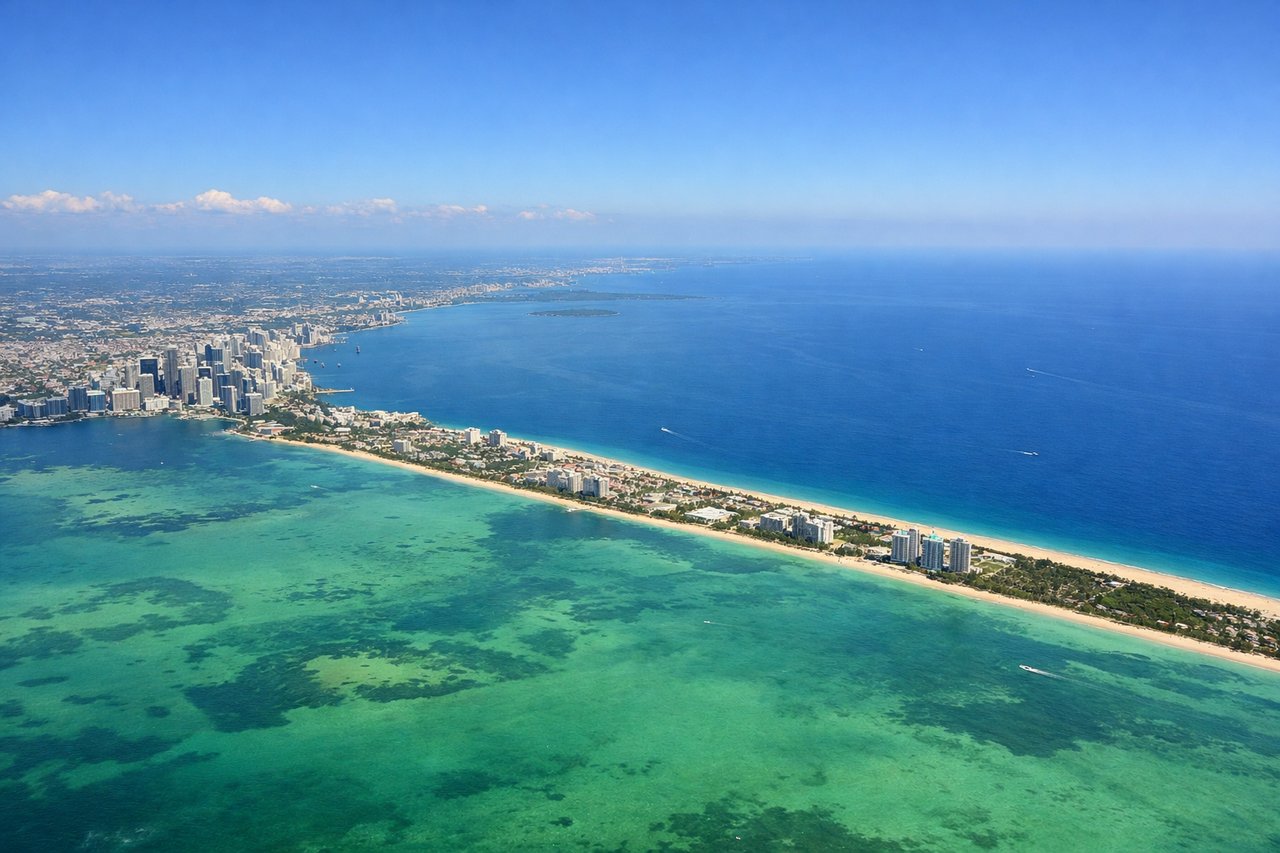
Takeoff from MIA
RIGHTMIA primarily departs eastward on runways 08L/08R, then aircraft turn southwest toward Mexico City. The right side faces south over Biscayne Bay, the Florida Keys chain, and the shallow turquoise waters of Florida Bay. The left side gets downtown Miami briefly but then faces inland over the Everglades.
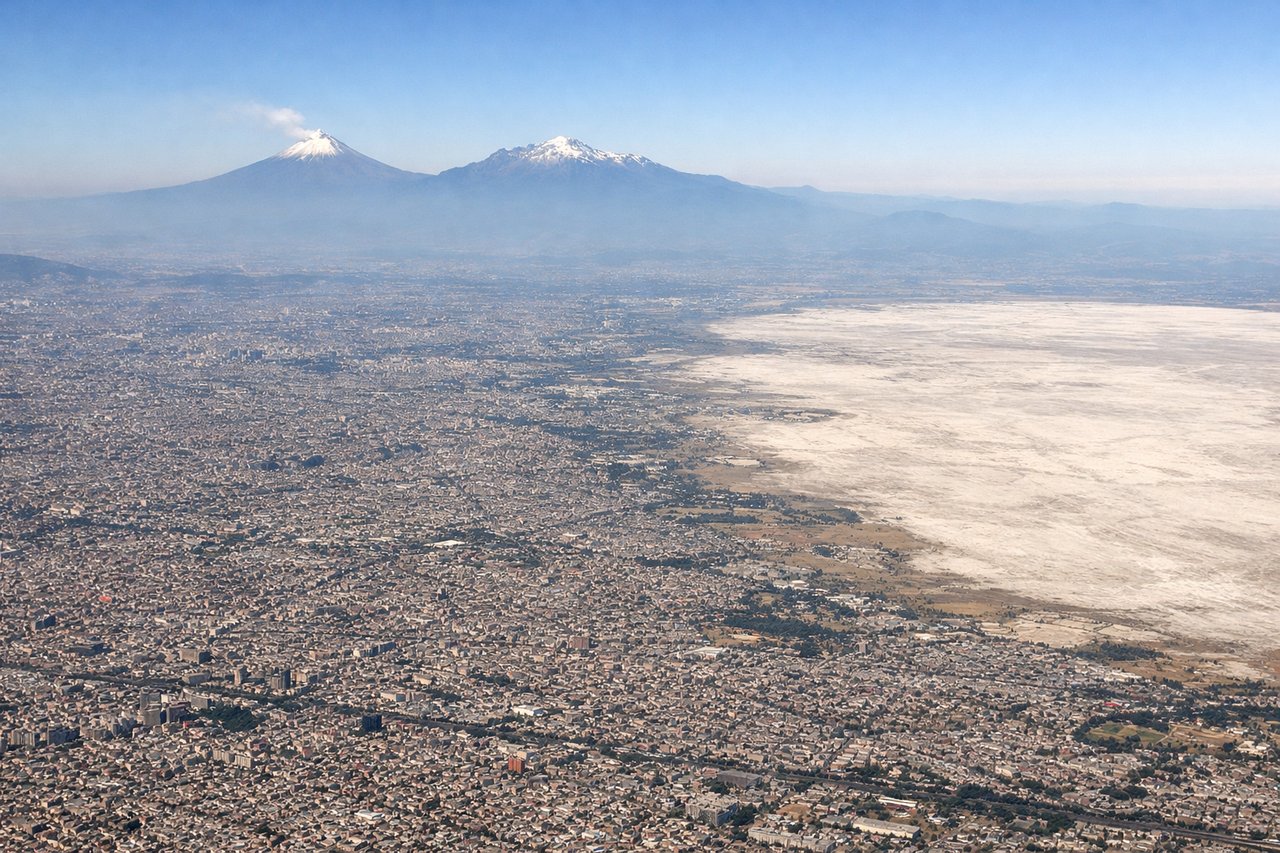
Landing at MEX
LEFTMexico City's main arrival from the northeast on runway 05L/05R puts the left side facing northwest toward the Sierra Nevada volcanic chain, including Popocatépetl and Iztaccíhuatl. These are among the most dramatic and recognizable peaks in North America, snow-capped and rising above the Valley of Mexico smog layer.
Will your flight be in sunlight?
Pick a date and time in the Sun Map to watch the sun move across your whole flight.
About This Route
Which side of the plane should I sit on flying from Miami International (MIA) to Licenciado Benito Juarez International (MEX)?
Sit on the Left side of the plane for the best views on flights from Miami to Mexico City. The left side misses the Florida Keys at takeoff but delivers the Yucatan Peninsula coastline over the Gulf of Mexico mid-flight and the spectacular volcanic approach into Mexico City. The snow-capped Popocatépetl and Iztaccíhuatl on final approach alone make the left side the stronger choice for the full journey.
What can I see during takeoff from Miami International in Miami?
During takeoff from Miami International (MIA), sit on the Right side for the best views. MIA primarily departs eastward on runways 08L/08R, then aircraft turn southwest toward Mexico City. The right side faces south over Biscayne Bay, the Florida Keys chain, and the shallow turquoise waters of Florida Bay. The left side gets downtown Miami briefly but then faces inland over the Everglades. Notable sights include: Biscayne Bay, the Florida Keys arc stretching southwest, Florida Bay's shallow tidal flats, and the edge of the Everglades wetland mosaic.
What can I see when landing at Licenciado Benito Juarez International in Mexico City?
When landing at Licenciado Benito Juarez International (MEX), sit on the Left side for the best views. Mexico City's main arrival from the northeast on runway 05L/05R puts the left side facing northwest toward the Sierra Nevada volcanic chain, including Popocatépetl and Iztaccíhuatl. These are among the most dramatic and recognizable peaks in North America, snow-capped and rising above the Valley of Mexico smog layer. Notable sights include: Popocatépetl volcano, Iztaccíhuatl volcano, the Valley of Mexico urban sprawl, and Texcoco lakebed (former lake, now dry salt flat east of the city).
How long is the flight from Miami to Mexico City?
The flight from Miami International (MIA) to Licenciado Benito Juarez International (MEX) takes about 3 hours 15 minutes. The shortest flight path between them is 1,274 miles (2,051 km); winds and air traffic control usually add a few percent.
What does the Miami to Mexico City flight path pass over?
The flight crosses the Gulf of Mexico, passing over or near the Yucatan Peninsula and the Gulf of Campeche. Passengers may see the shallow turquoise waters of the Yucatan shelf, the coastline near Cancun or Merida depending on routing, and the flat jungle interior of the Yucatan. Further along, the terrain rises into the Sierra Madre Oriental foothills before descending into the high central plateau of Mexico.