The right (north) side offers a richer sequence of landmarks throughout the flight: the Twin Cities skyline at departure, the Black Hills and Wyoming's Wind River/Bighorn ranges plus the Great Salt Lake during cruise, and a dramatic Bay Area arrival featuring the Golden Gate Bridge and San Francisco skyline. The left side sees comparatively featureless plains and desert basin terrain with less variety.
Flight Path
Black Hills of South Dakota, Wind River and Bighorn ranges of Wyoming, Great Salt Lake and Wasatch Range of Utah, Great Basin desert ranges of Nevada, Sierra Nevada near Lake Tahoe
Great circle distance and headings ›

.jpg?width=600)


Phase by phase
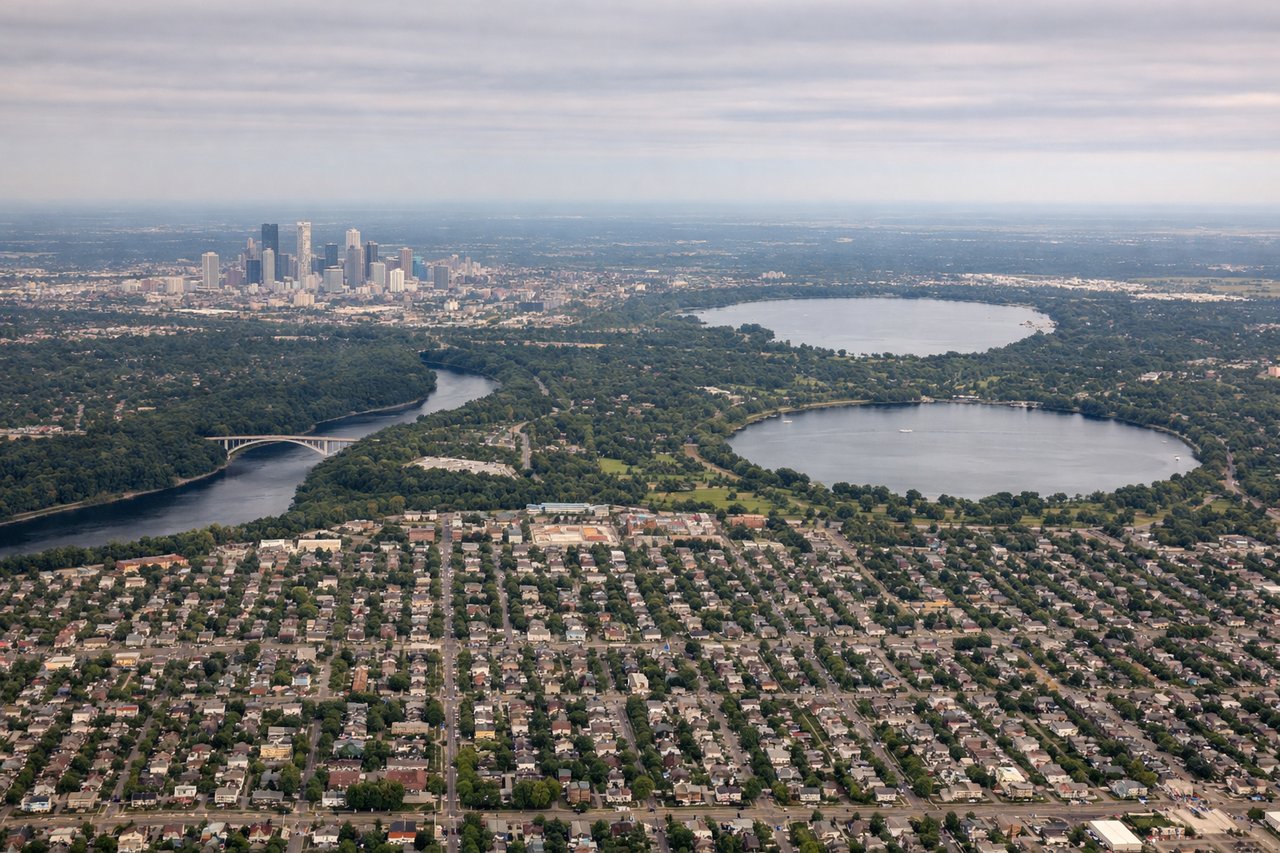
Takeoff from MSP
RIGHTAs the aircraft climbs out of MSP and banks onto its westbound heading, the Minneapolis-St Paul skyline and the Mississippi River's confluence with the Minnesota River briefly appear on the north side of the plane. Otherwise the terrain is flat farmland on both sides, so the difference is modest.

Landing at SFO
RIGHTOn the descent into SFO, flights from the east typically cross the Sierra Nevada and Central Valley before dropping down over the East Bay toward the bay itself. The north side offers views of San Francisco Bay, the Golden Gate Bridge, and the San Francisco skyline as the plane lines up for landing, while the south side mostly shows the South Bay and San Jose suburbs.
Landmarks on this routeAll landmarks →
Will your flight be in sunlight?
See exactly which side of the plane gets sun and shade at your departure time.
About This Route
Which side of the plane should I sit on flying from Minneapolis St Paul International (MSP) to San Francisco International (SFO)?
Sit on the Right side of the plane for the best views on flights from Minneapolis to San Francisco. The right (north) side offers a richer sequence of landmarks throughout the flight: the Twin Cities skyline at departure, the Black Hills and Wyoming's Wind River/Bighorn ranges plus the Great Salt Lake during cruise, and a dramatic Bay Area arrival featuring the Golden Gate Bridge and San Francisco skyline. The left side sees comparatively featureless plains and desert basin terrain with less variety.
What can I see during takeoff from Minneapolis St Paul International in Minneapolis?
During takeoff from Minneapolis St Paul International (MSP), sit on the Right side for the best views. As the aircraft climbs out of MSP and banks onto its westbound heading, the Minneapolis-St Paul skyline and the Mississippi River's confluence with the Minnesota River briefly appear on the north side of the plane. Otherwise the terrain is flat farmland on both sides, so the difference is modest. Notable sights include: Downtown Minneapolis skyline, Mississippi River, Minnesota River confluence, Twin Cities suburbs.
What can I see when landing at San Francisco International in San Francisco?
When landing at San Francisco International (SFO), sit on the Right side for the best views. On the descent into SFO, flights from the east typically cross the Sierra Nevada and Central Valley before dropping down over the East Bay toward the bay itself. The north side offers views of San Francisco Bay, the Golden Gate Bridge, and the San Francisco skyline as the plane lines up for landing, while the south side mostly shows the South Bay and San Jose suburbs. Notable sights include: San Francisco Bay, Golden Gate Bridge, San Francisco skyline, East Bay hills.
How long is the flight from Minneapolis to San Francisco?
The flight from Minneapolis St Paul International (MSP) to San Francisco International (SFO) takes 3h 50m.
What does the Minneapolis to San Francisco flight path pass over?
Black Hills of South Dakota, Wind River and Bighorn ranges of Wyoming, Great Salt Lake and Wasatch Range of Utah, Great Basin desert ranges of Nevada, Sierra Nevada near Lake Tahoe