The left side benefits from the Black Sea departure and, over the many hours of cruise, likely views of the Caucasus foothills, the Caspian Sea, and the Tian Shan and Altai ranges along the great-circle path's northern bulge, giving more sustained terrain variety than the ocean-heavy right side landing bonus alone.
Flight Path
Caucasus Mountains foothills, northern Caspian Sea, Kazakh steppe, Tian Shan and Altai mountain ranges, Gobi Desert margins, Inner Mongolian plateau before descending toward the Yellow Sea and Korean coast
Great circle distance and headings ›

Phase by phase
Takeoff from NOP
LEFTSinop's runway sits on a narrow peninsula, and departures give a clear view north over the Black Sea coastline, the Sinop cape, and its natural harbor before the aircraft turns onto its easterly heading. The right side mostly shows the forested Küre/Ilgaz foothills receding into haze.
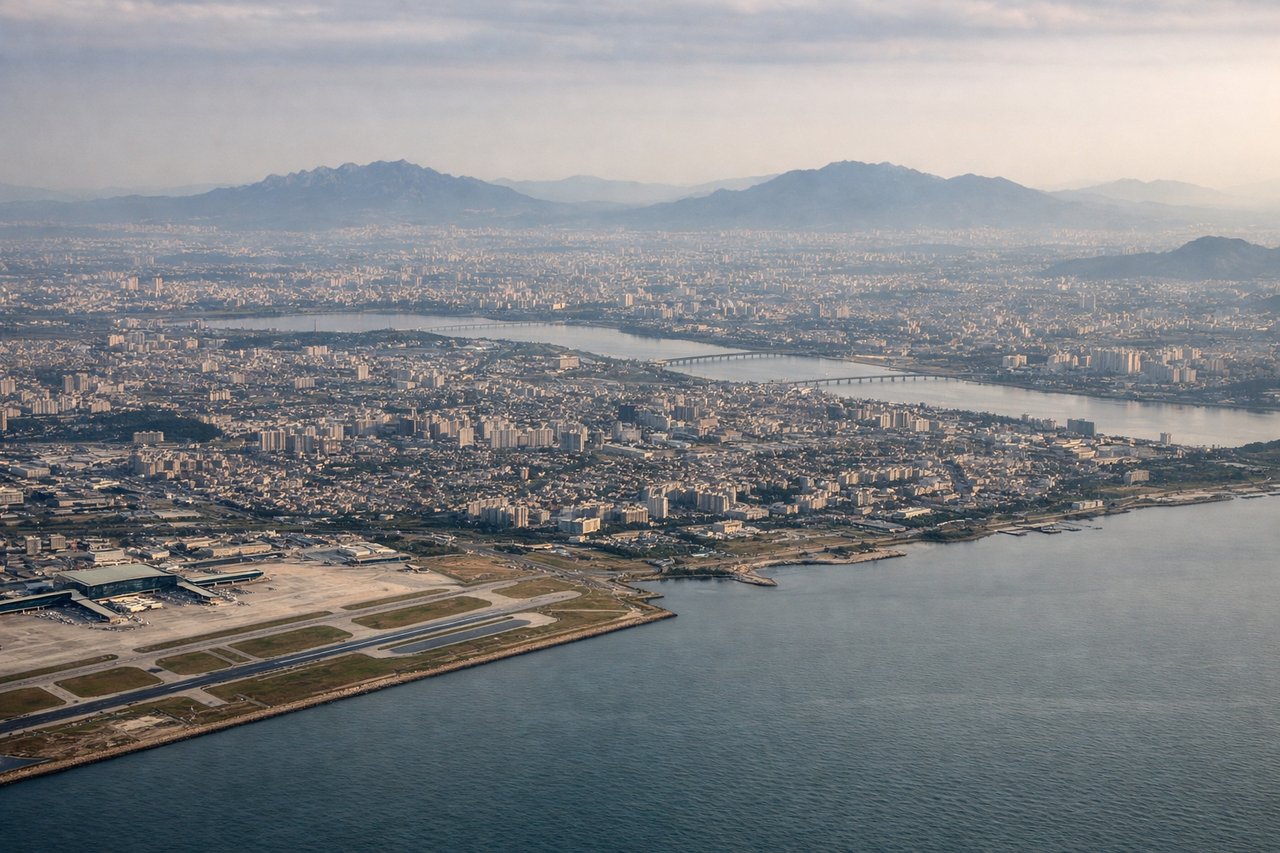
Landing at ICN
RIGHTArrivals into Incheon from the north typically bank south to align with the runways, putting Seoul's skyline and the Han River estuary on the right side during the final turn. The left side mainly faces the flatter Yellow Sea mudflats and reclaimed airport islands.
Landmarks on this routeAll landmarks →
Will your flight be in sunlight?
See exactly which side of the plane gets sun and shade at your departure time.
About This Route
Which side of the plane should I sit on flying from Sinop Airport (NOP) to Incheon International (ICN)?
Sit on the Left side of the plane for the best views on flights from Sinop to Seoul. The left side benefits from the Black Sea departure and, over the many hours of cruise, likely views of the Caucasus foothills, the Caspian Sea, and the Tian Shan and Altai ranges along the great-circle path's northern bulge, giving more sustained terrain variety than the ocean-heavy right side landing bonus alone.
What can I see during takeoff from Sinop Airport in Sinop?
During takeoff from Sinop Airport (NOP), sit on the Left side for the best views. Sinop's runway sits on a narrow peninsula, and departures give a clear view north over the Black Sea coastline, the Sinop cape, and its natural harbor before the aircraft turns onto its easterly heading. The right side mostly shows the forested Küre/Ilgaz foothills receding into haze. Notable sights include: Sinop peninsula and harbor, Black Sea coastline, Boztepe headland, Turkish coastal cliffs.
What can I see when landing at Incheon International in Seoul?
When landing at Incheon International (ICN), sit on the Right side for the best views. Arrivals into Incheon from the north typically bank south to align with the runways, putting Seoul's skyline and the Han River estuary on the right side during the final turn. The left side mainly faces the flatter Yellow Sea mudflats and reclaimed airport islands. Notable sights include: Han River estuary, distant Seoul skyline (Namsan Tower area), Ganghwa Island, Yellow Sea tidal flats.
How long is the flight from Sinop to Seoul?
The flight from Sinop Airport (NOP) to Incheon International (ICN) takes 9h 20m.
What does the Sinop to Seoul flight path pass over?
Caucasus Mountains foothills, northern Caspian Sea, Kazakh steppe, Tian Shan and Altai mountain ranges, Gobi Desert margins, Inner Mongolian plateau before descending toward the Yellow Sea and Korean coast