The right side wins across the whole journey: a coastal, island-dotted departure near Seoul, a cruise track that runs along the edge of the Gobi Desert's dunes and the mountain-fringed Mongolian and Kazakh steppe, and a scenic Black Sea coastal arrival at Sinop's historic peninsula. The left side spends most of the flight facing featureless steppe or open water with far less to see.
Flight Path
Gobi Desert and Mongolian steppe, Altai mountain foothills, Kazakh steppe, Caspian Sea/Caucasus foothills region, Black Sea crossing into northern Turkey
Great circle distance and headings ›

Phase by phase
Takeoff from ICN
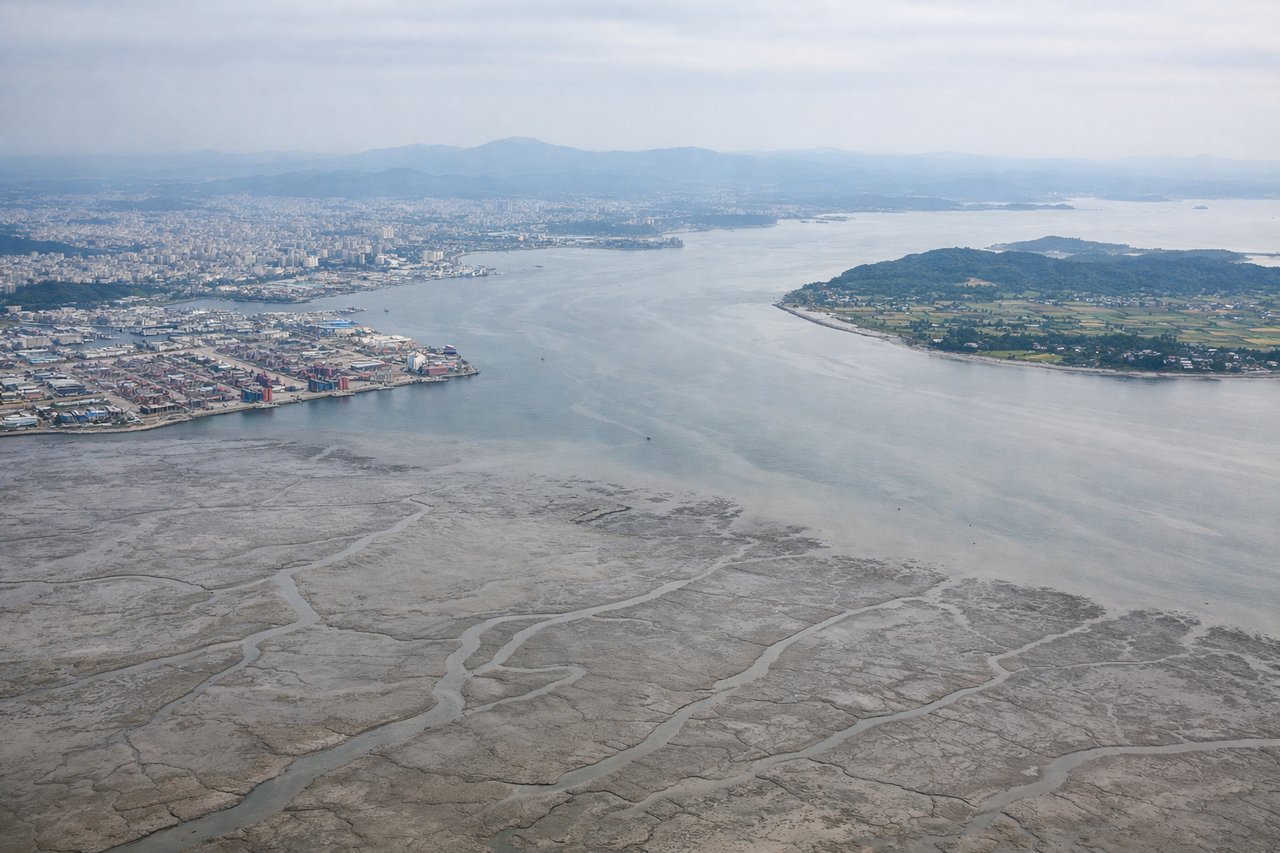
RIGHTDeparting ICN to the northwest, the right side looks out over the Incheon waterfront, its outlying islands, and the Han River estuary, with Seoul's skyline visible as a hazy silhouette in the distance. The left side faces the open Yellow Sea with little but water and haze.
Landing at NOP
RIGHTArriving at Sinop from over the Black Sea, the right side shows the town's historic peninsula, harbor, and rugged coastline as the aircraft turns onto final. The left side faces inland toward the comparatively plain Küre foothills.
Landmarks on this routeAll landmarks →
Will your flight be in sunlight?
See exactly which side of the plane gets sun and shade at your departure time.
About This Route
Which side of the plane should I sit on flying from Incheon International (ICN) to Sinop Airport (NOP)?
Sit on the Right side of the plane for the best views on flights from Seoul to Sinop. The right side wins across the whole journey: a coastal, island-dotted departure near Seoul, a cruise track that runs along the edge of the Gobi Desert's dunes and the mountain-fringed Mongolian and Kazakh steppe, and a scenic Black Sea coastal arrival at Sinop's historic peninsula. The left side spends most of the flight facing featureless steppe or open water with far less to see.
What can I see during takeoff from Incheon International in Seoul?
During takeoff from Incheon International (ICN), sit on the Right side for the best views. Departing ICN to the northwest, the right side looks out over the Incheon waterfront, its outlying islands, and the Han River estuary, with Seoul's skyline visible as a hazy silhouette in the distance. The left side faces the open Yellow Sea with little but water and haze. Notable sights include: Incheon port and Yeongjong Island, Han River estuary, distant Seoul skyline, Yellow Sea tidal islands.
What can I see when landing at Sinop Airport in Sinop?
When landing at Sinop Airport (NOP), sit on the Right side for the best views. Arriving at Sinop from over the Black Sea, the right side shows the town's historic peninsula, harbor, and rugged coastline as the aircraft turns onto final. The left side faces inland toward the comparatively plain Küre foothills. Notable sights include: Sinop peninsula and old town, Sinop harbor breakwater, Boztepe headland, Black Sea coastline.
How long is the flight from Seoul to Sinop?
The flight from Incheon International (ICN) to Sinop Airport (NOP) takes 10h 15m.
What does the Seoul to Sinop flight path pass over?
Gobi Desert and Mongolian steppe, Altai mountain foothills, Kazakh steppe, Caspian Sea/Caucasus foothills region, Black Sea crossing into northern Turkey