The right side delivers Seoul's skyline and mountains at departure, glimpses of Siberian ranges and Arctic terrain during the polar cruise, and a clear Manhattan skyline view on arrival, while the left side is dominated by the flat Yellow Sea at takeoff and open water or featureless tundra elsewhere.
Flown ICN to JFK? Did we get it right?
Flight Path
Seoul to New York is 6,890 miles (11,089 km), a flight of about 14 hours 5 minutes.
Sea of Okhotsk, Verkhoyansk mountain range in Siberia, Arctic Ocean ice pack near the pole, Canadian Arctic tundra, Hudson Bay coastline
Great circle distance and headings ›

Phase by phase
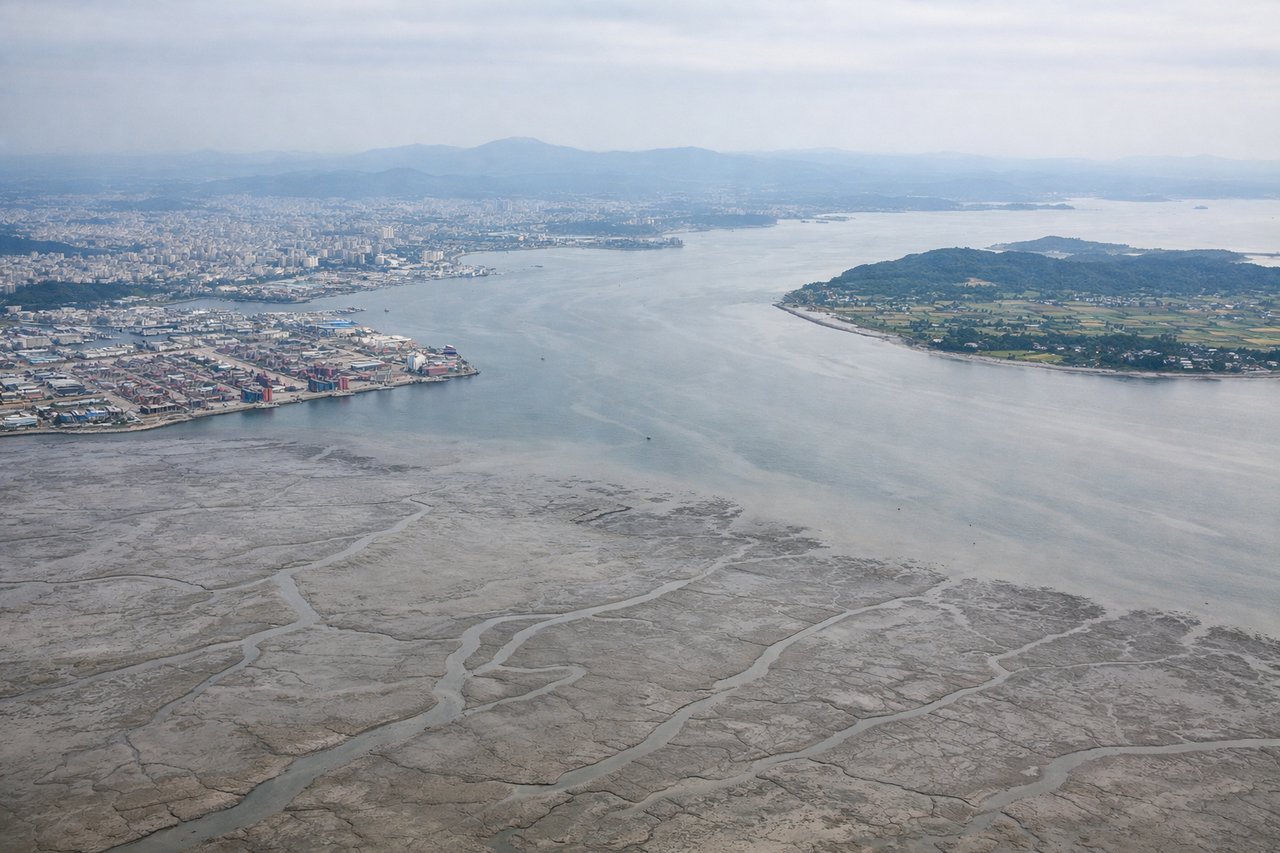
Takeoff from ICN
RIGHTDeparting ICN, the climb-out track curves north-northeast toward the polar routing, putting Seoul's skyline, the Han River, and the Bukhansan granite peaks on the right side. The left side only shows the flat, hazy Yellow Sea and Incheon's tidal flats.
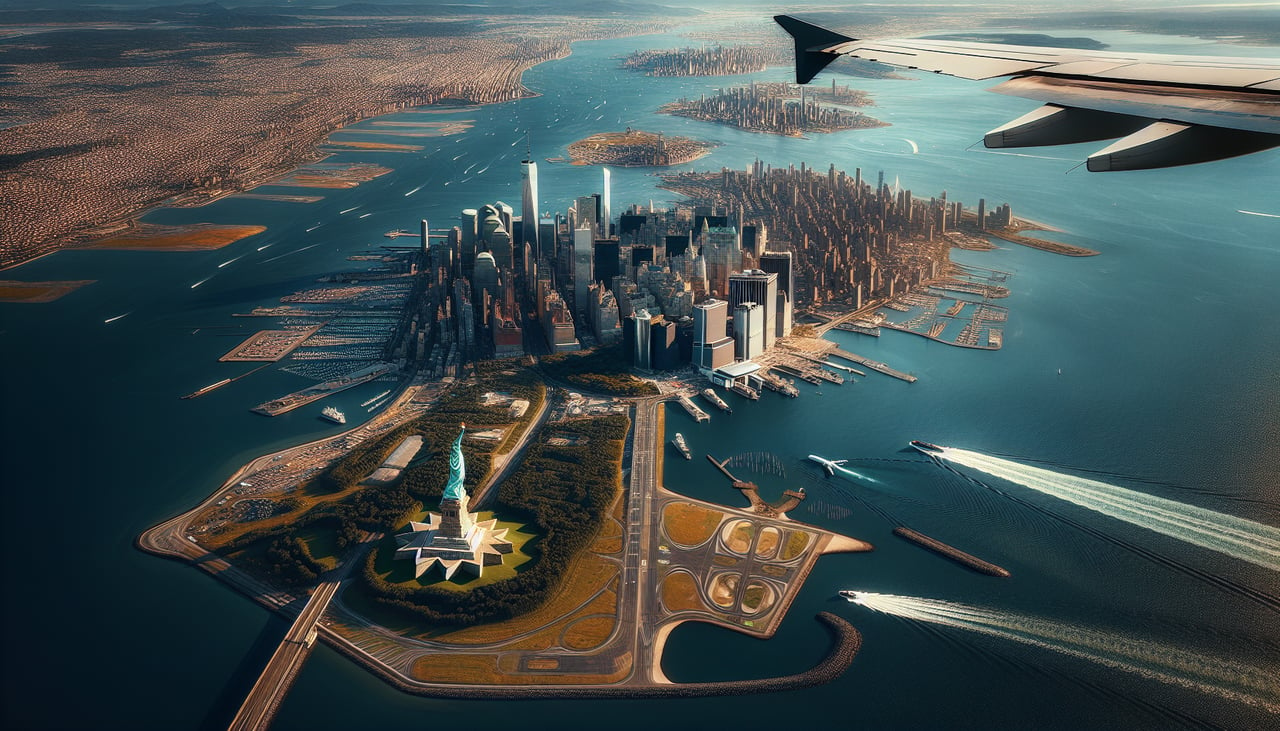
Landing at JFK
RIGHTOn the typical northeast-to-southwest approach into JFK's 22L/22R runways, the aircraft banks over Long Island Sound and Queens, placing the Manhattan skyline and Jamaica Bay's marsh islands on the right side. The left side mostly faces open water and the flat South Shore of Long Island.
Will your flight be in sunlight?
Pick a date and time in the Sun Map to watch the sun move across your whole flight.
About This Route
Which side of the plane should I sit on flying from Incheon International (ICN) to John F Kennedy International (JFK)?
Sit on the Right side of the plane for the best views on flights from Seoul to New York. The right side delivers Seoul's skyline and mountains at departure, glimpses of Siberian ranges and Arctic terrain during the polar cruise, and a clear Manhattan skyline view on arrival, while the left side is dominated by the flat Yellow Sea at takeoff and open water or featureless tundra elsewhere.
What can I see during takeoff from Incheon International in Seoul?
During takeoff from Incheon International (ICN), sit on the Right side for the best views. Departing ICN, the climb-out track curves north-northeast toward the polar routing, putting Seoul's skyline, the Han River, and the Bukhansan granite peaks on the right side. The left side only shows the flat, hazy Yellow Sea and Incheon's tidal flats. Notable sights include: Seoul skyline, Han River, Bukhansan Mountains, Yeongjong Island coastline.
What can I see when landing at John F Kennedy International in New York?
When landing at John F Kennedy International (JFK), sit on the Right side for the best views. On the typical northeast-to-southwest approach into JFK's 22L/22R runways, the aircraft banks over Long Island Sound and Queens, placing the Manhattan skyline and Jamaica Bay's marsh islands on the right side. The left side mostly faces open water and the flat South Shore of Long Island. Notable sights include: Manhattan skyline, Jamaica Bay wetlands, Rockaway Peninsula, Long Island Sound.
How long is the flight from Seoul to New York?
The flight from Incheon International (ICN) to John F Kennedy International (JFK) takes about 14 hours 5 minutes. The shortest flight path between them is 6,890 miles (11,089 km); winds and air traffic control usually add a few percent.
What does the Seoul to New York flight path pass over?
Sea of Okhotsk, Verkhoyansk mountain range in Siberia, Arctic Ocean ice pack near the pole, Canadian Arctic tundra, Hudson Bay coastline