While takeoff and landing offer only modest city views, the right side wins overall because the great-circle route over the Russian Far East and Alaska puts the Kamchatka volcanoes, the Alaska Range near Denali, and the northern Canadian Rockies in view to the south of the flight path during the long cruise phase, adding genuine mountain drama that the left side's ocean and flat tundra views can't match.
Flown ICN to DFW? Did we get it right?
Flight Path
Seoul to Dallas-Fort Worth is 6,827 miles (10,987 km), a flight of about 13 hours 45 minutes.
Sea of Okhotsk, Kamchatka Peninsula volcanoes, Bering Sea and Aleutian chain, Alaska Range near Denali, Canadian Rockies foothills, Great Plains of Alberta/Saskatchewan and the north-central United States
Great circle distance and headings ›


Phase by phase
Takeoff from ICN
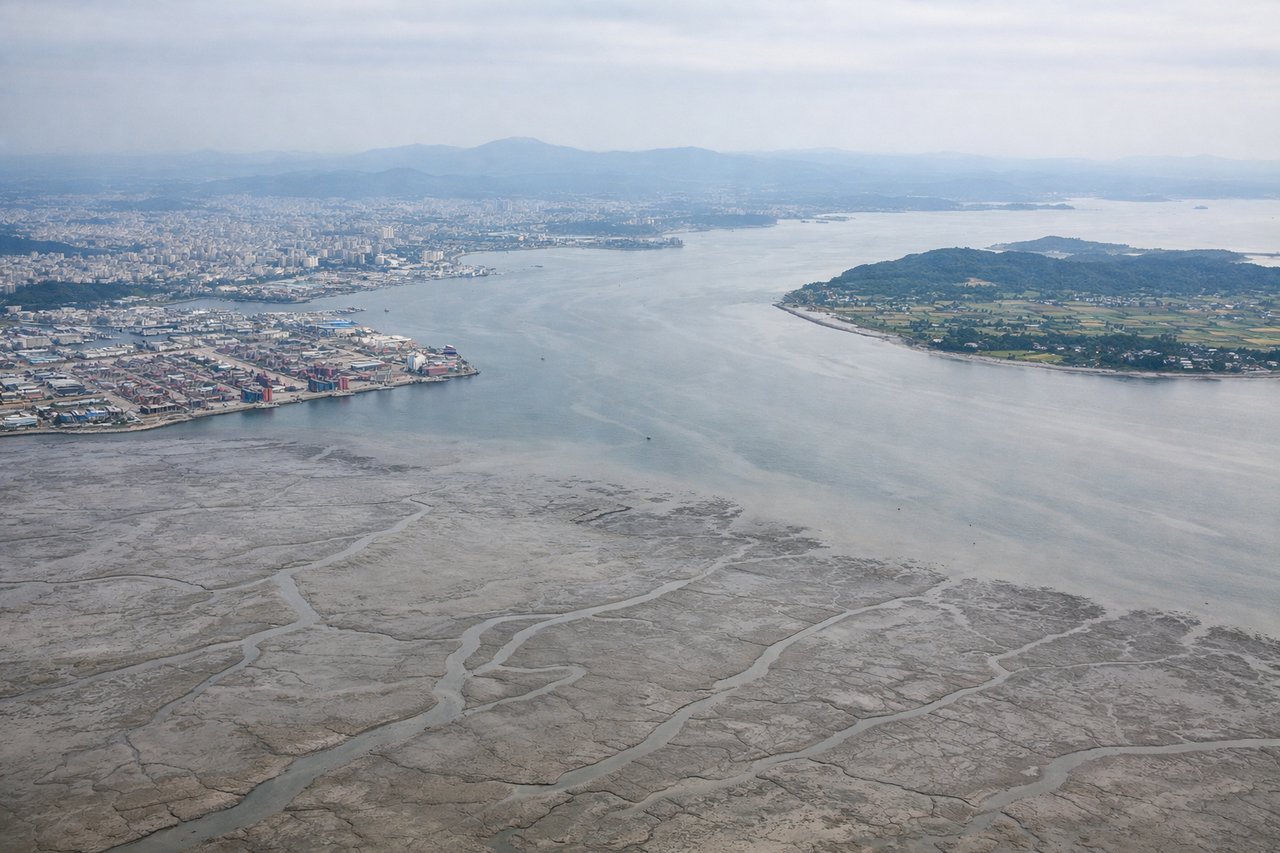
RIGHTAs the aircraft climbs out of Incheon and banks onto its northeasterly routing, the Seoul metropolitan skyline and the Han River become visible off the right side, with the Yellow Sea's tidal flats and reclaimed-land islands receding below. The left side mostly shows open Yellow Sea water with little variation.

Landing at DFW
LEFTOn approach to DFW from the north, the Dallas downtown skyline sits off the left side across Lake Ray Hubbard and the flat metroplex grid, offering the only real urban landmark in an otherwise flat landscape. The right side faces Fort Worth's lower-rise sprawl and open ranchland with less visual distinction.
Will your flight be in sunlight?
Pick a date and time in the Sun Map to watch the sun move across your whole flight.
About This Route
Which side of the plane should I sit on flying from Incheon International (ICN) to Dallas Fort Worth International (DFW)?
Sit on the Right side of the plane for the best views on flights from Seoul to Dallas-Fort Worth. While takeoff and landing offer only modest city views, the right side wins overall because the great-circle route over the Russian Far East and Alaska puts the Kamchatka volcanoes, the Alaska Range near Denali, and the northern Canadian Rockies in view to the south of the flight path during the long cruise phase, adding genuine mountain drama that the left side's ocean and flat tundra views can't match.
What can I see during takeoff from Incheon International in Seoul?
During takeoff from Incheon International (ICN), sit on the Right side for the best views. As the aircraft climbs out of Incheon and banks onto its northeasterly routing, the Seoul metropolitan skyline and the Han River become visible off the right side, with the Yellow Sea's tidal flats and reclaimed-land islands receding below. The left side mostly shows open Yellow Sea water with little variation. Notable sights include: Incheon Bridge, Yeongjong Island coastline, Seoul skyline along the Han River, Yellow Sea tidal flats.
What can I see when landing at Dallas Fort Worth International in Dallas-Fort Worth?
When landing at Dallas Fort Worth International (DFW), sit on the Left side for the best views. On approach to DFW from the north, the Dallas downtown skyline sits off the left side across Lake Ray Hubbard and the flat metroplex grid, offering the only real urban landmark in an otherwise flat landscape. The right side faces Fort Worth's lower-rise sprawl and open ranchland with less visual distinction. Notable sights include: Dallas downtown skyline (Reunion Tower, Bank of America Plaza), Lake Ray Hubbard, Lewisville Lake, North Texas grid suburbs.
How long is the flight from Seoul to Dallas-Fort Worth?
The flight from Incheon International (ICN) to Dallas Fort Worth International (DFW) takes about 13 hours 45 minutes. The shortest flight path between them is 6,827 miles (10,987 km); winds and air traffic control usually add a few percent.
What does the Seoul to Dallas-Fort Worth flight path pass over?
Sea of Okhotsk, Kamchatka Peninsula volcanoes, Bering Sea and Aleutian chain, Alaska Range near Denali, Canadian Rockies foothills, Great Plains of Alberta/Saskatchewan and the north-central United States