While the takeoff favors the right side over Seoul, the long cruise phase tips the balance left: this route arcs north across the Pacific past the Aleutians and Alaska Range, over the Canadian Rockies and boreal wilderness, then down over the Great Lakes and Appalachians into Atlanta, offering more sustained terrain variety on the northern/left-facing side than the largely featureless ocean and plains on the right.
Flight Path
Sea of Japan and Hokkaido shortly after departure, the North Pacific and Aleutian Islands approaching Alaska, the Alaska Range and Gulf of Alaska near Anchorage, the boreal forests and lakes of Yukon and Northwest Territories, the Canadian Prairies and Great Lakes basin, then the southern Appalachian foothills before descending into Atlanta.
Great circle distance and headings ›
.jpeg?width=600)
Phase by phase
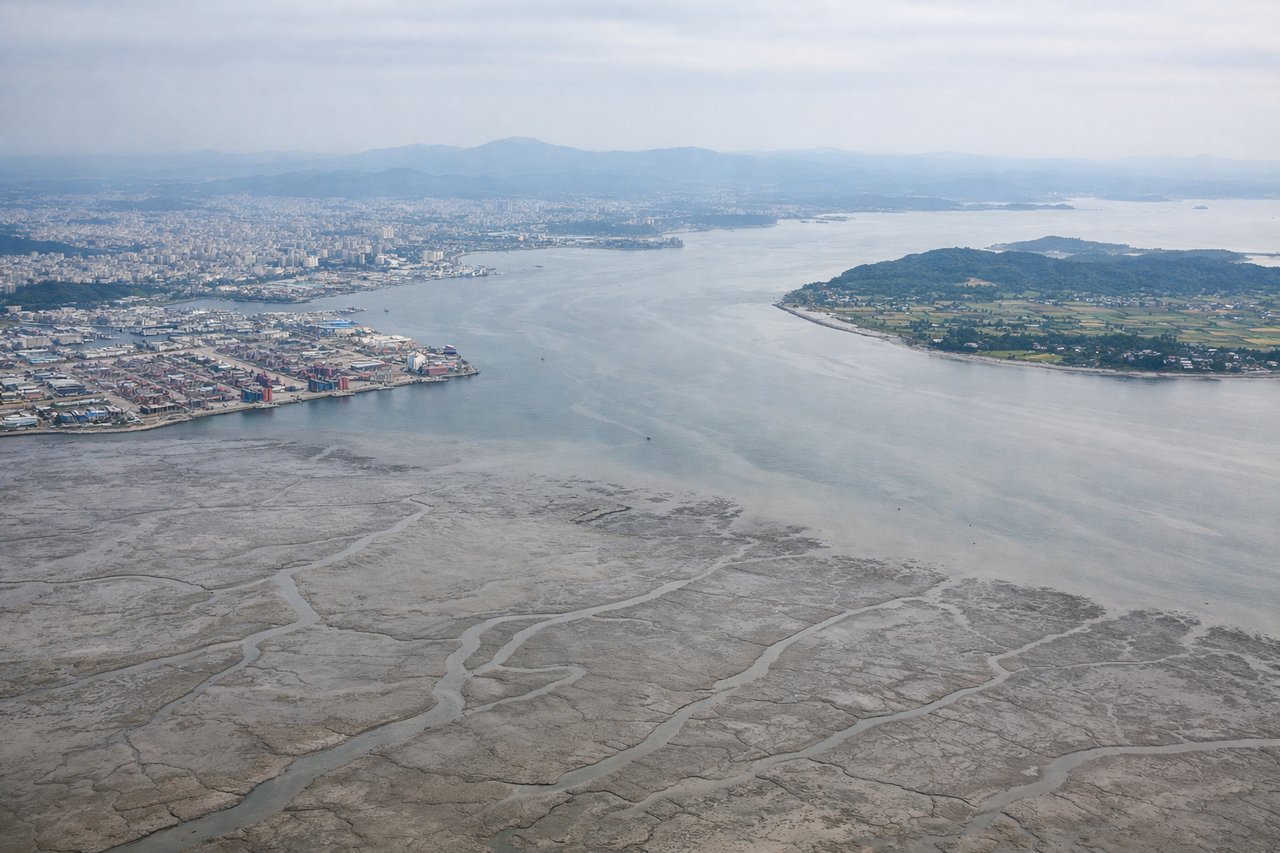
Takeoff from ICN
RIGHTDepartures from ICN routing toward the Pacific typically climb out across the Korean peninsula before turning east over the Sea of Japan, putting Seoul's skyline, the Han River, and the mountainous Gangwon province on the right side of the aircraft. The left side mostly shows the flat reclaimed land and Yellow Sea mudflats around Incheon.
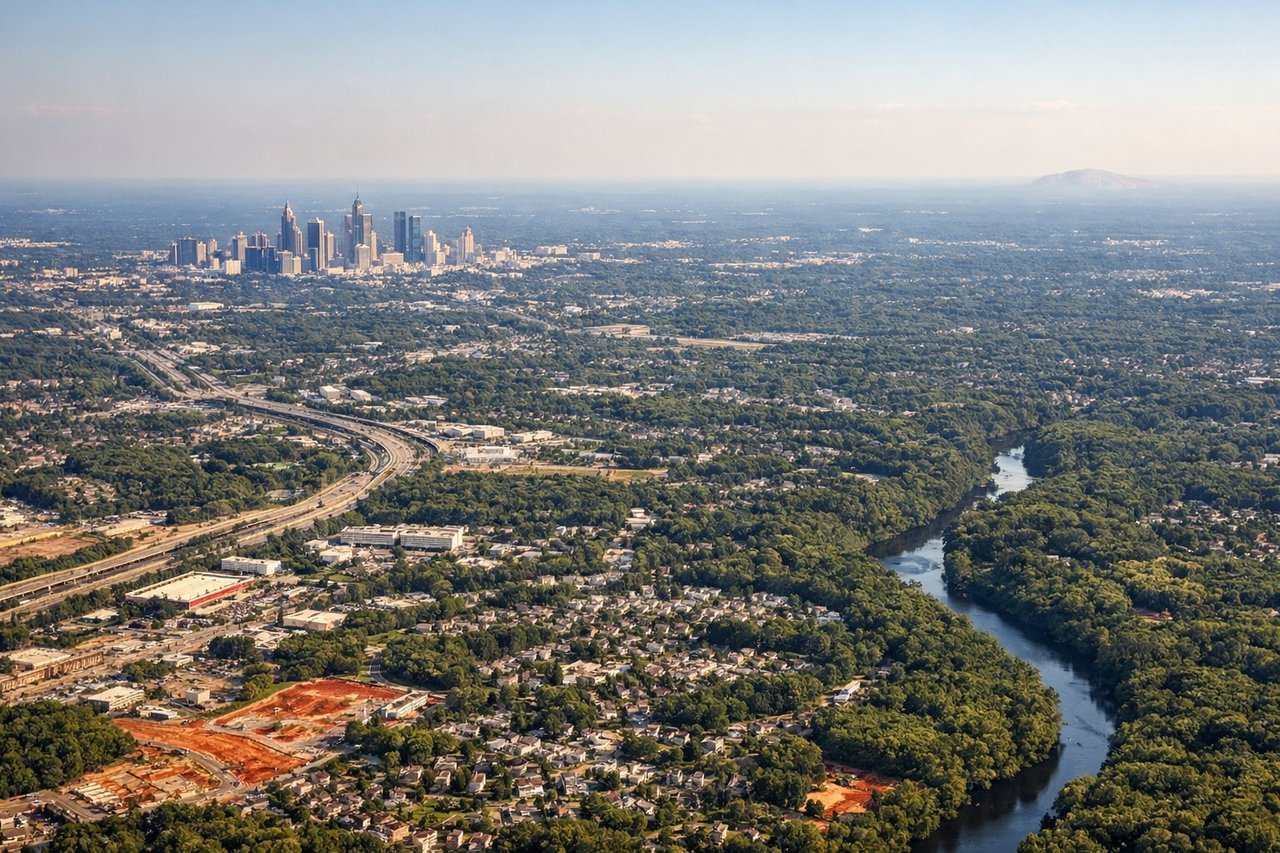
Landing at ATL
LEFTArriving into ATL from the north after crossing Tennessee and the Canadian/Great Lakes portion of the route, the aircraft descends over the southern Appalachian foothills and north Georgia's lake country before turning onto final approach, giving the left side a view of forested ridgelines, Lake Lanier, and the Atlanta skyline. The right side mostly faces open sky and flatter suburban sprawl with fewer distinct features.
Landmarks on this routeAll landmarks →
Will your flight be in sunlight?
See exactly which side of the plane gets sun and shade at your departure time.
About This Route
Which side of the plane should I sit on flying from Incheon International (ICN) to The William B Hartsfield Atlanta International (ATL)?
Sit on the Left side of the plane for the best views on flights from Seoul to Atlanta. While the takeoff favors the right side over Seoul, the long cruise phase tips the balance left: this route arcs north across the Pacific past the Aleutians and Alaska Range, over the Canadian Rockies and boreal wilderness, then down over the Great Lakes and Appalachians into Atlanta, offering more sustained terrain variety on the northern/left-facing side than the largely featureless ocean and plains on the right.
What can I see during takeoff from Incheon International in Seoul?
During takeoff from Incheon International (ICN), sit on the Right side for the best views. Departures from ICN routing toward the Pacific typically climb out across the Korean peninsula before turning east over the Sea of Japan, putting Seoul's skyline, the Han River, and the mountainous Gangwon province on the right side of the aircraft. The left side mostly shows the flat reclaimed land and Yellow Sea mudflats around Incheon. Notable sights include: Seoul skyline and Han River, Bukhansan mountain ridge, Gangwon province highlands, Incheon's Yeongjong Island coastline.
What can I see when landing at The William B Hartsfield Atlanta International in Atlanta?
When landing at The William B Hartsfield Atlanta International (ATL), sit on the Left side for the best views. Arriving into ATL from the north after crossing Tennessee and the Canadian/Great Lakes portion of the route, the aircraft descends over the southern Appalachian foothills and north Georgia's lake country before turning onto final approach, giving the left side a view of forested ridgelines, Lake Lanier, and the Atlanta skyline. The right side mostly faces open sky and flatter suburban sprawl with fewer distinct features. Notable sights include: Blue Ridge foothills of north Georgia, Lake Lanier, Chattahoochee River, downtown Atlanta skyline.
How long is the flight from Seoul to Atlanta?
The flight from Incheon International (ICN) to The William B Hartsfield Atlanta International (ATL) takes 14h 25m.
What does the Seoul to Atlanta flight path pass over?
Sea of Japan and Hokkaido shortly after departure, the North Pacific and Aleutian Islands approaching Alaska, the Alaska Range and Gulf of Alaska near Anchorage, the boreal forests and lakes of Yukon and Northwest Territories, the Canadian Prairies and Great Lakes basin, then the southern Appalachian foothills before descending into Atlanta.