The left side holds the terrain-facing view for almost the entire flight: the Gulf of Alaska's coastal mountains and glaciers, the British Columbia and Cascade volcanic peaks, and finally the Southern California coast and San Gabriel Mountains on approach. The right side, by contrast, faces the open North Pacific for the vast majority of the roughly 11-hour crossing, with only a brief Seoul skyline view at departure to compensate.
Flight Path
The great-circle track curves north of the direct line, passing south of the Aleutian Islands and along the Gulf of Alaska before descending along the British Columbia, Washington, and Oregon coastlines, where the Cascade volcanoes (Mount Baker, Rainier, Hood, Shasta) can be visible on clear days on the approach to California.
Great circle distance and headings ›

.jpg?width=600)
Phase by phase
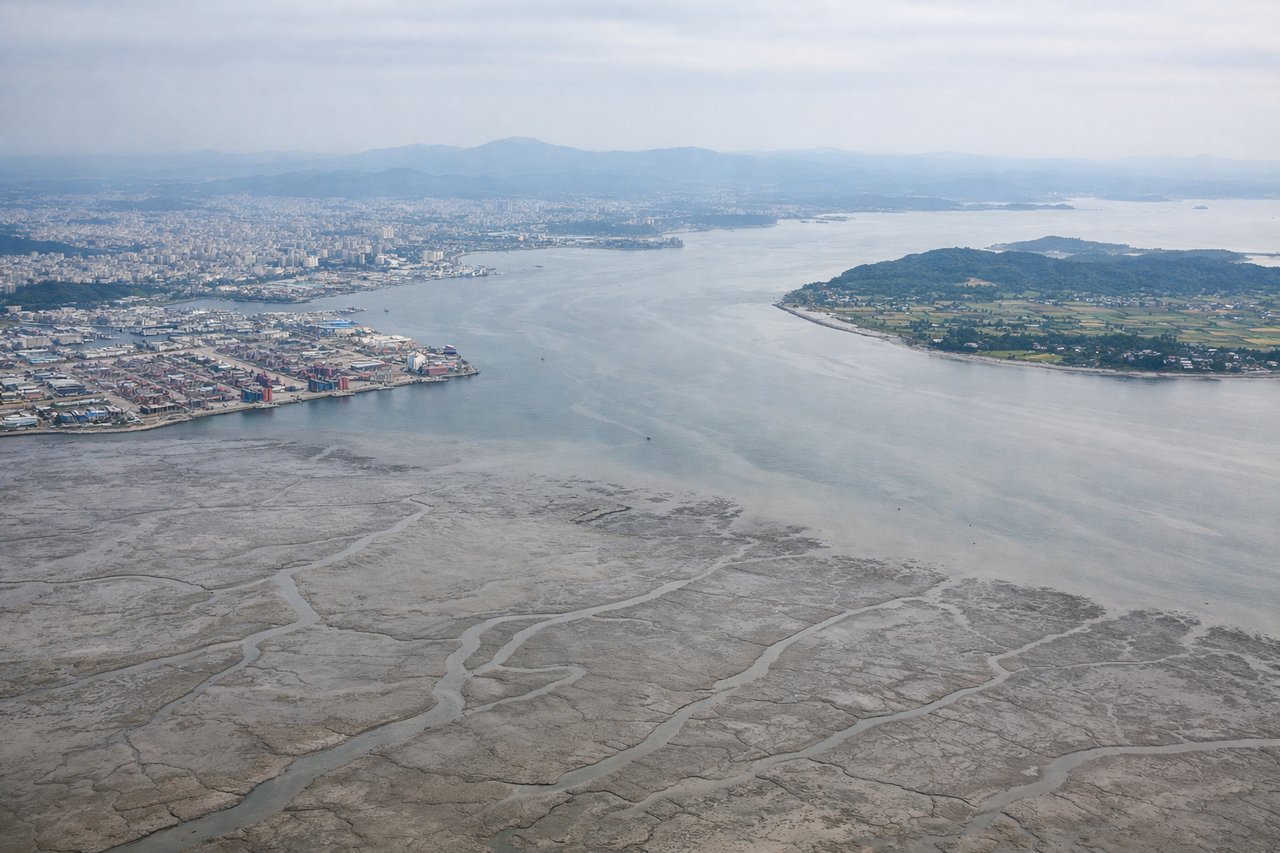
Takeoff from ICN
RIGHTDeparting ICN, the aircraft climbs out and banks right onto its northeasterly oceanic track, swinging the right side toward Seoul. Passengers get a brief but clear look at the capital's skyline along the Han River before the plane settles onto its Pacific heading.

Landing at LAX
LEFTOn the descent into LAX in the standard west-flow pattern, the aircraft tracks south along the Southern California coast before turning to land over the ocean. Left-side passengers see the San Gabriel Mountains and the Los Angeles basin sprawl for several minutes, a far more dynamic view than the open water on the right.
Landmarks on this routeAll landmarks →
Will your flight be in sunlight?
See exactly which side of the plane gets sun and shade at your departure time.
About This Route
Which side of the plane should I sit on flying from Incheon International (ICN) to Los Angeles International (LAX)?
Sit on the Left side of the plane for the best views on flights from Seoul to Los Angeles. The left side holds the terrain-facing view for almost the entire flight: the Gulf of Alaska's coastal mountains and glaciers, the British Columbia and Cascade volcanic peaks, and finally the Southern California coast and San Gabriel Mountains on approach. The right side, by contrast, faces the open North Pacific for the vast majority of the roughly 11-hour crossing, with only a brief Seoul skyline view at departure to compensate.
What can I see during takeoff from Incheon International in Seoul?
During takeoff from Incheon International (ICN), sit on the Right side for the best views. Departing ICN, the aircraft climbs out and banks right onto its northeasterly oceanic track, swinging the right side toward Seoul. Passengers get a brief but clear look at the capital's skyline along the Han River before the plane settles onto its Pacific heading. Notable sights include: Seoul skyline and Namsan Tower, Han River, Incheon's Yellow Sea coastline and islands (Ganghwa Island).
What can I see when landing at Los Angeles International in Los Angeles?
When landing at Los Angeles International (LAX), sit on the Left side for the best views. On the descent into LAX in the standard west-flow pattern, the aircraft tracks south along the Southern California coast before turning to land over the ocean. Left-side passengers see the San Gabriel Mountains and the Los Angeles basin sprawl for several minutes, a far more dynamic view than the open water on the right. Notable sights include: San Gabriel Mountains, Downtown Los Angeles skyline, Hollywood Hills, Santa Monica Bay coastline.
How long is the flight from Seoul to Los Angeles?
The flight from Incheon International (ICN) to Los Angeles International (LAX) takes 11h 35m.
What does the Seoul to Los Angeles flight path pass over?
The great-circle track curves north of the direct line, passing south of the Aleutian Islands and along the Gulf of Alaska before descending along the British Columbia, Washington, and Oregon coastlines, where the Cascade volcanoes (Mount Baker, Rainier, Hood, Shasta) can be visible on clear days on the approach to California.