The right side offers a scenic coastal departure from LA, brief but genuine glimpses of the Aleutian Islands and Kamchatka Peninsula breaking up the long Pacific crossing, and a rare skyline view of Seoul on final approach — while the left side is dominated by featureless ocean for nearly the entire flight.
Flight Path
The flight's midpoint lies over the open North Pacific near the Aleutian Islands chain, with the Alaska Peninsula and Bering Sea to the north and thousands of miles of open water in all other directions.
Great circle distance and headings ›.jpg?width=600)


Phase by phase

Takeoff from LAX
RIGHTIn LAX's typical west-flow departure, aircraft climb out over Santa Monica Bay and then bank right (north) to intercept the great-circle track toward the North Pacific, tracing the Malibu coastline before heading offshore. Left-side passengers mainly see open ocean and the Palos Verdes Peninsula receding behind.
Landing at ICN
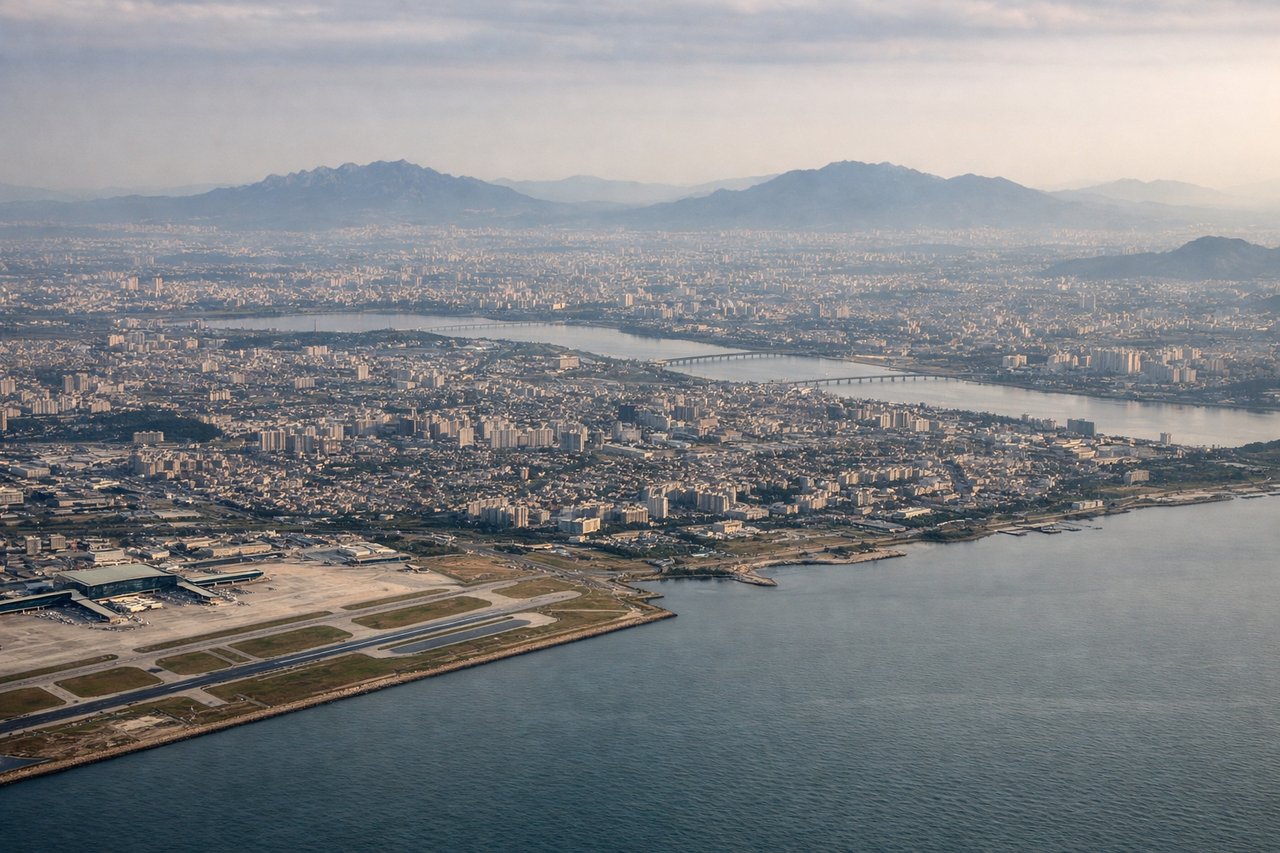
RIGHTOn approach to ICN's northwest-facing runways (common in the prevailing wind pattern), arriving flights track over the Seoul metropolitan area before turning onto final, putting the Han River and Seoul's skyline on the right side of the aircraft. Left-side passengers instead see the flatter Yellow Sea coastline and reclaimed tidal flats near the airport.
Landmarks on this routeAll landmarks →
Will your flight be in sunlight?
See exactly which side of the plane gets sun and shade at your departure time.
About This Route
Which side of the plane should I sit on flying from Los Angeles International (LAX) to Incheon International (ICN)?
Sit on the Right side of the plane for the best views on flights from Los Angeles to Seoul. The right side offers a scenic coastal departure from LA, brief but genuine glimpses of the Aleutian Islands and Kamchatka Peninsula breaking up the long Pacific crossing, and a rare skyline view of Seoul on final approach — while the left side is dominated by featureless ocean for nearly the entire flight.
What can I see during takeoff from Los Angeles International in Los Angeles?
During takeoff from Los Angeles International (LAX), sit on the Right side for the best views. In LAX's typical west-flow departure, aircraft climb out over Santa Monica Bay and then bank right (north) to intercept the great-circle track toward the North Pacific, tracing the Malibu coastline before heading offshore. Left-side passengers mainly see open ocean and the Palos Verdes Peninsula receding behind. Notable sights include: Santa Monica Mountains, Malibu coastline and Point Dume, Channel Islands offshore, Santa Monica Bay.
What can I see when landing at Incheon International in Seoul?
When landing at Incheon International (ICN), sit on the Right side for the best views. On approach to ICN's northwest-facing runways (common in the prevailing wind pattern), arriving flights track over the Seoul metropolitan area before turning onto final, putting the Han River and Seoul's skyline on the right side of the aircraft. Left-side passengers instead see the flatter Yellow Sea coastline and reclaimed tidal flats near the airport. Notable sights include: Seoul skyline along the Han River, Namsan Tower area, Incheon Bridge, Yellow Sea coastal islands.
How long is the flight from Los Angeles to Seoul?
The flight from Los Angeles International (LAX) to Incheon International (ICN) takes 13h 45m.
What does the Los Angeles to Seoul flight path pass over?
The flight's midpoint lies over the open North Pacific near the Aleutian Islands chain, with the Alaska Peninsula and Bering Sea to the north and thousands of miles of open water in all other directions.