The left side wins on the strength of the Manhattan skyline at departure and, over the many hours of polar cruise, a better vantage on the Canadian archipelago, Hudson Bay's coastline, and the Siberian mountains near Chukotka — all more visually engaging than the largely featureless Arctic Ocean ice pack that dominates the right side for most of the flight.
Flight Path
The route's midpoint lies over the Arctic Ocean ice pack near the Chukchi Sea, between Alaska's north slope and Siberia's Chukotka Peninsula, after crossing Hudson Bay and Baffin Island and before descending toward the Sea of Okhotsk and the Korean peninsula.
Great circle distance and headings ›.jpg?width=600)
.jpeg?width=600)
Phase by phase
Takeoff from JFK
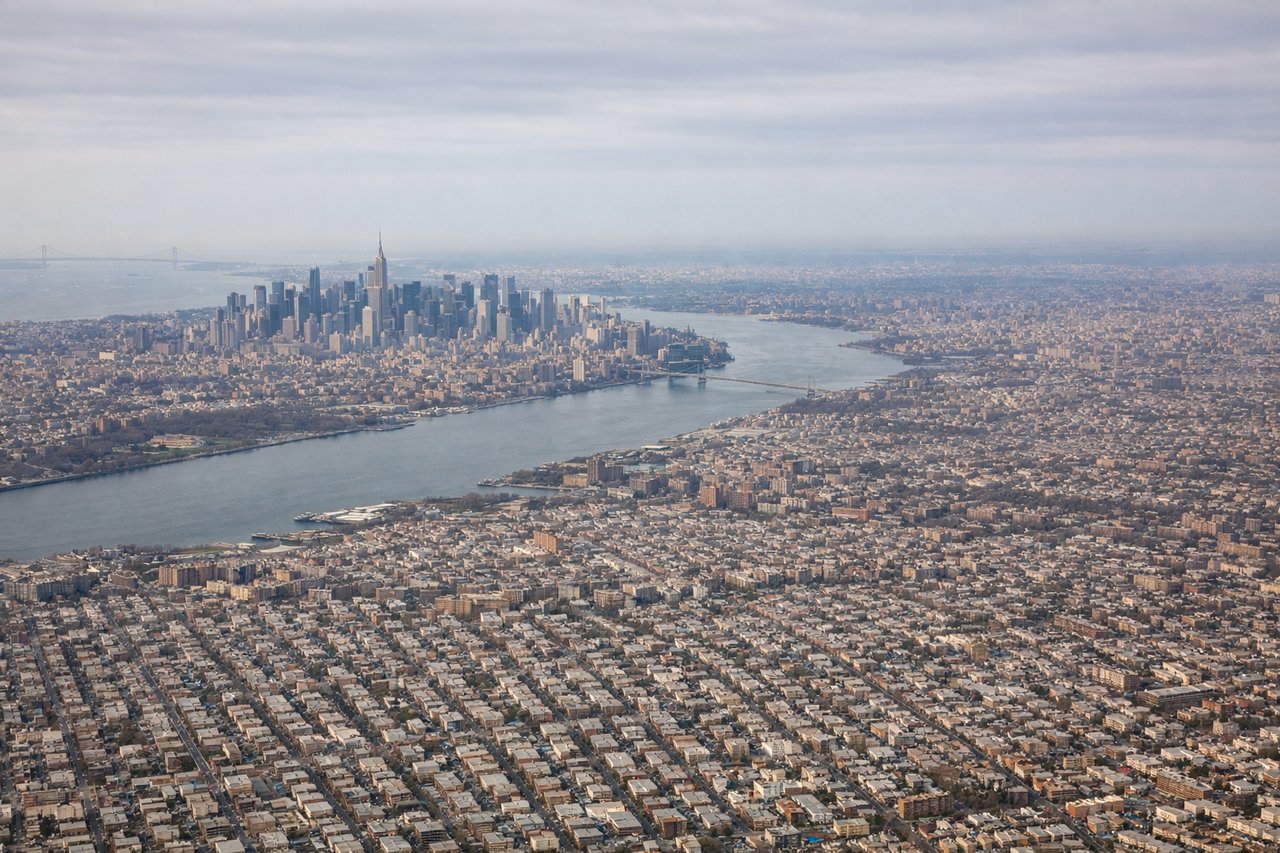
LEFTDepartures from JFK on a polar routing typically climb out northbound over Queens and Long Island, putting the Manhattan skyline and East River squarely on the left side of the aircraft. The right side mostly shows Long Island Sound and flat suburban sprawl, which is far less distinctive.
Landing at ICN
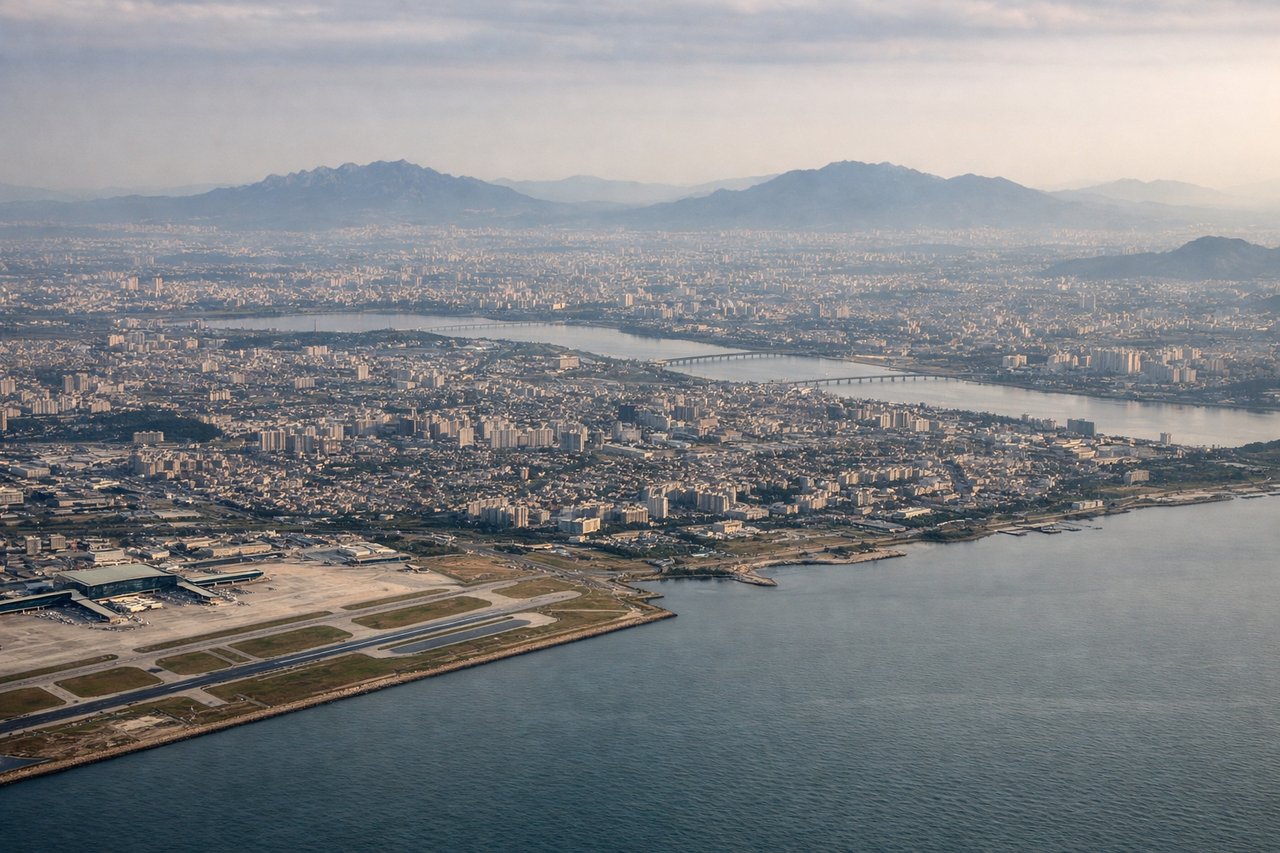
RIGHTOn approach into Incheon, flights crossing the Korean peninsula from the east typically pass just north of the direct line to the airport, putting Seoul's skyline and the Han River on the right side of the cabin before the final turn over the Yellow Sea's island-studded coastline. The left side during this phase shows mostly open water with less visual interest.
Landmarks on this routeAll landmarks →
Will your flight be in sunlight?
See exactly which side of the plane gets sun and shade at your departure time.
About This Route
Which side of the plane should I sit on flying from John F Kennedy International (JFK) to Incheon International (ICN)?
Sit on the Left side of the plane for the best views on flights from New York to Seoul. The left side wins on the strength of the Manhattan skyline at departure and, over the many hours of polar cruise, a better vantage on the Canadian archipelago, Hudson Bay's coastline, and the Siberian mountains near Chukotka — all more visually engaging than the largely featureless Arctic Ocean ice pack that dominates the right side for most of the flight.
What can I see during takeoff from John F Kennedy International in New York?
During takeoff from John F Kennedy International (JFK), sit on the Left side for the best views. Departures from JFK on a polar routing typically climb out northbound over Queens and Long Island, putting the Manhattan skyline and East River squarely on the left side of the aircraft. The right side mostly shows Long Island Sound and flat suburban sprawl, which is far less distinctive. Notable sights include: Manhattan skyline (One World Trade, Empire State Building), East River, Hudson River mouth, Long Island Sound.
What can I see when landing at Incheon International in Seoul?
When landing at Incheon International (ICN), sit on the Right side for the best views. On approach into Incheon, flights crossing the Korean peninsula from the east typically pass just north of the direct line to the airport, putting Seoul's skyline and the Han River on the right side of the cabin before the final turn over the Yellow Sea's island-studded coastline. The left side during this phase shows mostly open water with less visual interest. Notable sights include: Seoul skyline and Han River, Yellow Sea tidal islands, Incheon Bridge, Ganghwa Island.
How long is the flight from New York to Seoul?
The flight from John F Kennedy International (JFK) to Incheon International (ICN) takes 14h 25m.
What does the New York to Seoul flight path pass over?
The route's midpoint lies over the Arctic Ocean ice pack near the Chukchi Sea, between Alaska's north slope and Siberia's Chukotka Peninsula, after crossing Hudson Bay and Baffin Island and before descending toward the Sea of Okhotsk and the Korean peninsula.