Beijing to Irkutsk is 1,022 miles (1,644 km), a flight of about 2 hours 40 minutes.
While takeoff offers mountain scenery, the landing view of Lake Baikal—one of Earth's most geographically distinctive features—is exceptional and worth prioritizing. Right seats capture Baikal's immense scale and unique crescent shape on approach.
Flight Path
The flight path crosses the Mongolian Plateau (sparse grassland and desert terrain), then enters the Siberian taiga forest zone. The Khangai Mountains appear roughly midway, followed by transition into the Lake Baikal basin. The Selenga River valley becomes visible approaching IKT. Visibility of these features depends on weather; the plateau section offers wide-open terrain with minimal landmarks, while the taiga appears as unbroken dark green forest with occasional river valleys.
Great circle distance and headings ›Phase by phase
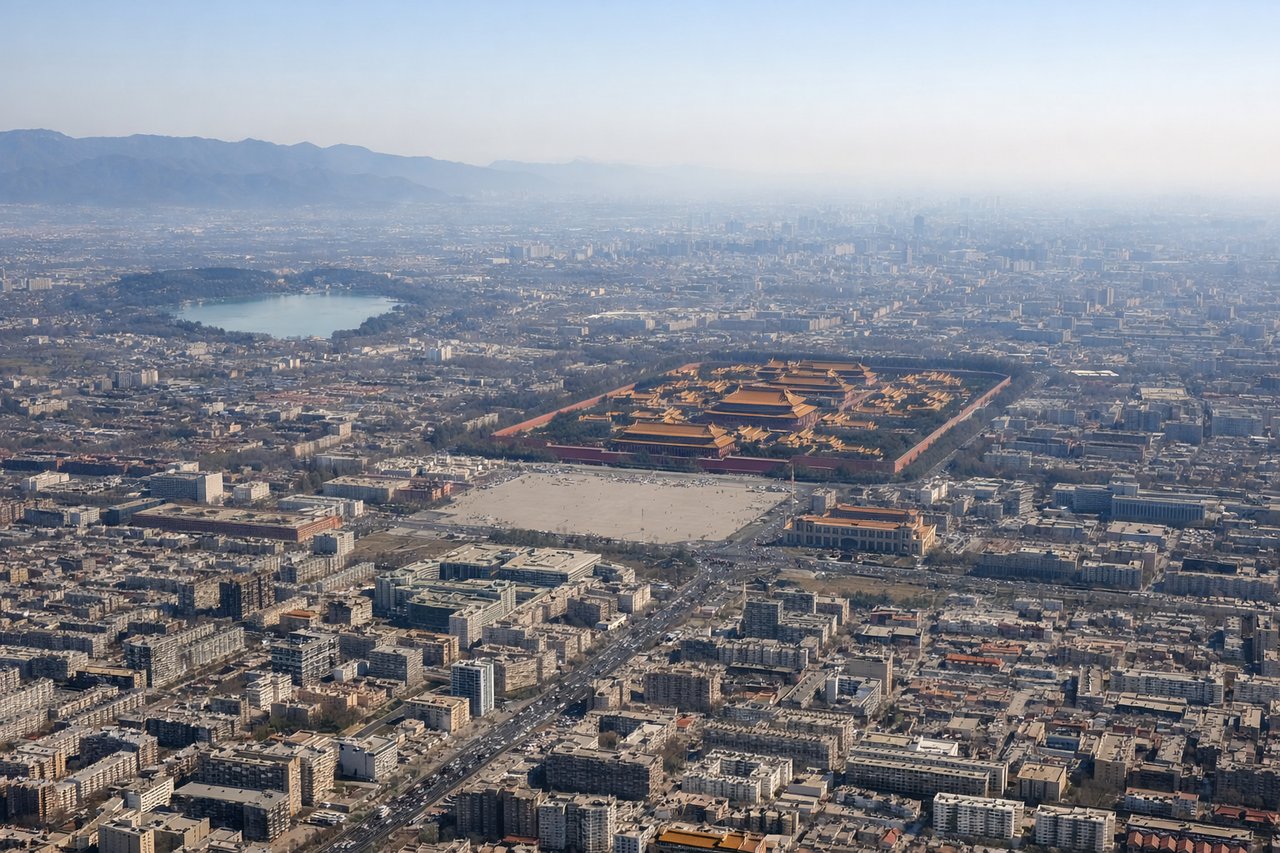
Takeoff from PEK
LEFTPEK typically departs northbound (runways 01L/01R). Left seats face west toward the Yanshan Mountains and the Great Wall sections north of Beijing. Right seats look east over the North China Plain with fewer distinctive features.
Landing at IKT
RIGHTIKT approaches from the southwest (typical runway 10 heading). Right seats face north-northeast toward Lake Baikal, the world's deepest freshwater lake and the dominant visual feature. Left seats see only the Angara River valley and taiga forest.
Landmarks on this routeAll landmarks →
Will your flight be in sunlight?
Pick a date and time in the Sun Map to watch the sun move across your whole flight.
About This Route
Which side of the plane should I sit on flying from Capital (PEK) to Irkutsk (IKT)?
Sit on the Right side of the plane for the best views on flights from Beijing to Irkutsk. While takeoff offers mountain scenery, the landing view of Lake Baikal—one of Earth's most geographically distinctive features—is exceptional and worth prioritizing. Right seats capture Baikal's immense scale and unique crescent shape on approach.
What can I see during takeoff from Capital in Beijing?
During takeoff from Capital (PEK), sit on the Left side for the best views. PEK typically departs northbound (runways 01L/01R). Left seats face west toward the Yanshan Mountains and the Great Wall sections north of Beijing. Right seats look east over the North China Plain with fewer distinctive features. Notable sights include: Yanshan Mountains (western horizon), Great Wall of China (visible as linear feature on ridgelines northwest), Miyun Reservoir (large water body north of airport), Huairou District urban sprawl.
What can I see when landing at Irkutsk in Irkutsk?
When landing at Irkutsk (IKT), sit on the Right side for the best views. IKT approaches from the southwest (typical runway 10 heading). Right seats face north-northeast toward Lake Baikal, the world's deepest freshwater lake and the dominant visual feature. Left seats see only the Angara River valley and taiga forest. Notable sights include: Lake Baikal (massive crescent-shaped water body), Angara River (flowing northwest from Baikal), Khamar-Daban Mountains (southern shore of Baikal), Irkutsk city sprawl along Angara.
How long is the flight from Beijing to Irkutsk?
The flight from Capital (PEK) to Irkutsk (IKT) takes about 2 hours 40 minutes. The shortest flight path between them is 1,022 miles (1,644 km); winds and air traffic control usually add a few percent.
What does the Beijing to Irkutsk flight path pass over?
The flight path crosses the Mongolian Plateau (sparse grassland and desert terrain), then enters the Siberian taiga forest zone. The Khangai Mountains appear roughly midway, followed by transition into the Lake Baikal basin. The Selenga River valley becomes visible approaching IKT. Visibility of these features depends on weather; the plateau section offers wide-open terrain with minimal landmarks, while the taiga appears as unbroken dark green forest with occasional river valleys.