San Diego to Seattle is 1,057 miles (1,700 km), a flight of about 2 hours 15 minutes.
Right-side seats capture the most dramatic geography: the San Diego departure over the coast and bay, the Pacific coastline during the northbound climb, and reasonable views during approach. While left seats excel on landing, right seats provide superior views for the majority of the flight's most visually interesting segments.
Flight Path
The flight path heads north-northwest from San Diego, passing over the Pacific Ocean and the California coast. Notable features include the Santa Lucia Mountains visible inland from the central California coast (around Monterey area, 200+ miles into flight), Point Conception at the southern edge of the Big Sur region, and the Channel Islands visible as small landmasses off the coast. As the flight progresses northward, the Sierra Nevada mountains appear as a distant eastern horizon feature. Approaching the Pacific Northwest, the Cascade Range becomes visible to the east, and the flight descends over Puget Sound's distinctive water features before landing at Seattle.
Great circle distance and headings ›.jpg?width=600)


Phase by phase
Takeoff from SAN
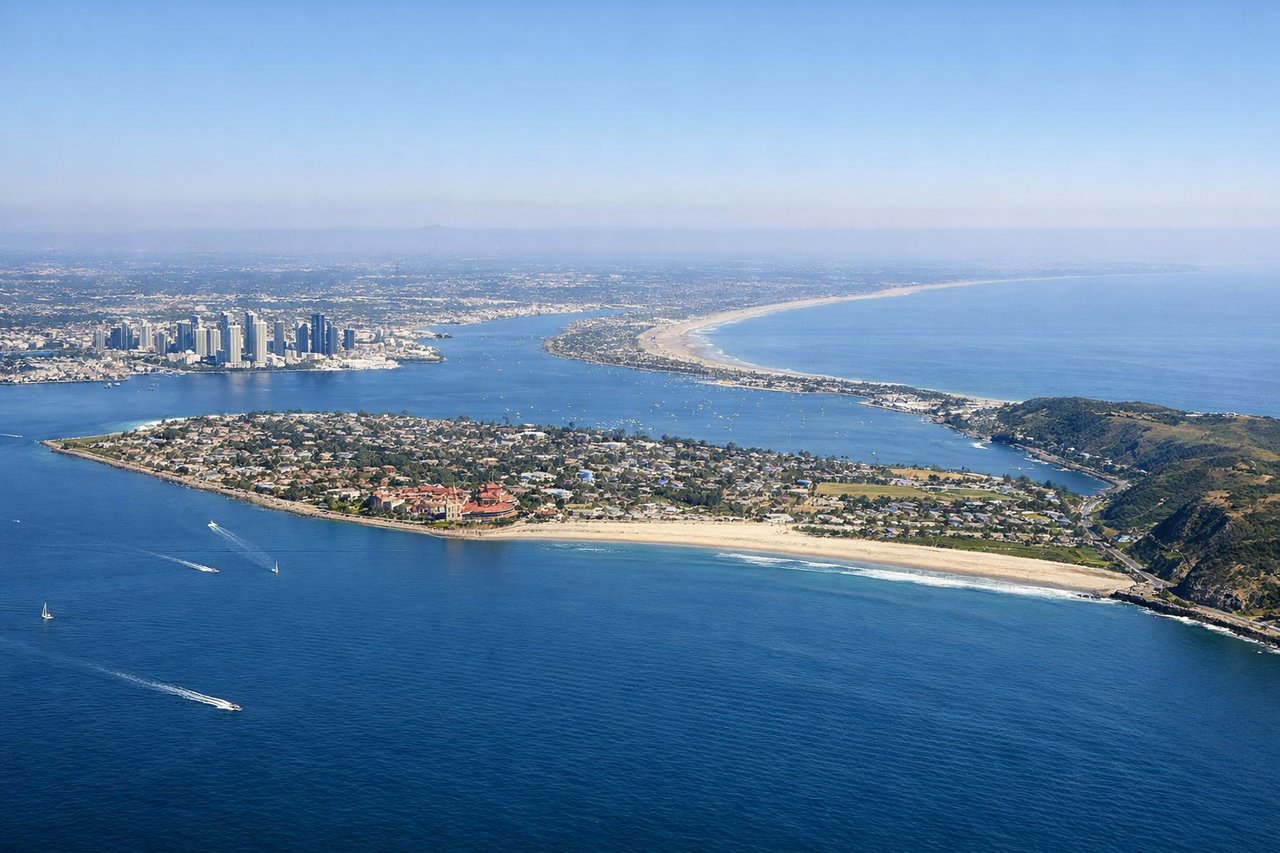
RIGHTSAN typically departs runway 09L or 09R heading northwest. Right-side seats offer immediate views of San Diego Bay, the downtown skyline, and the initial climb over the Pacific coastal terrain. Left seats face inland toward less dramatic urban sprawl.
Landing at BFI
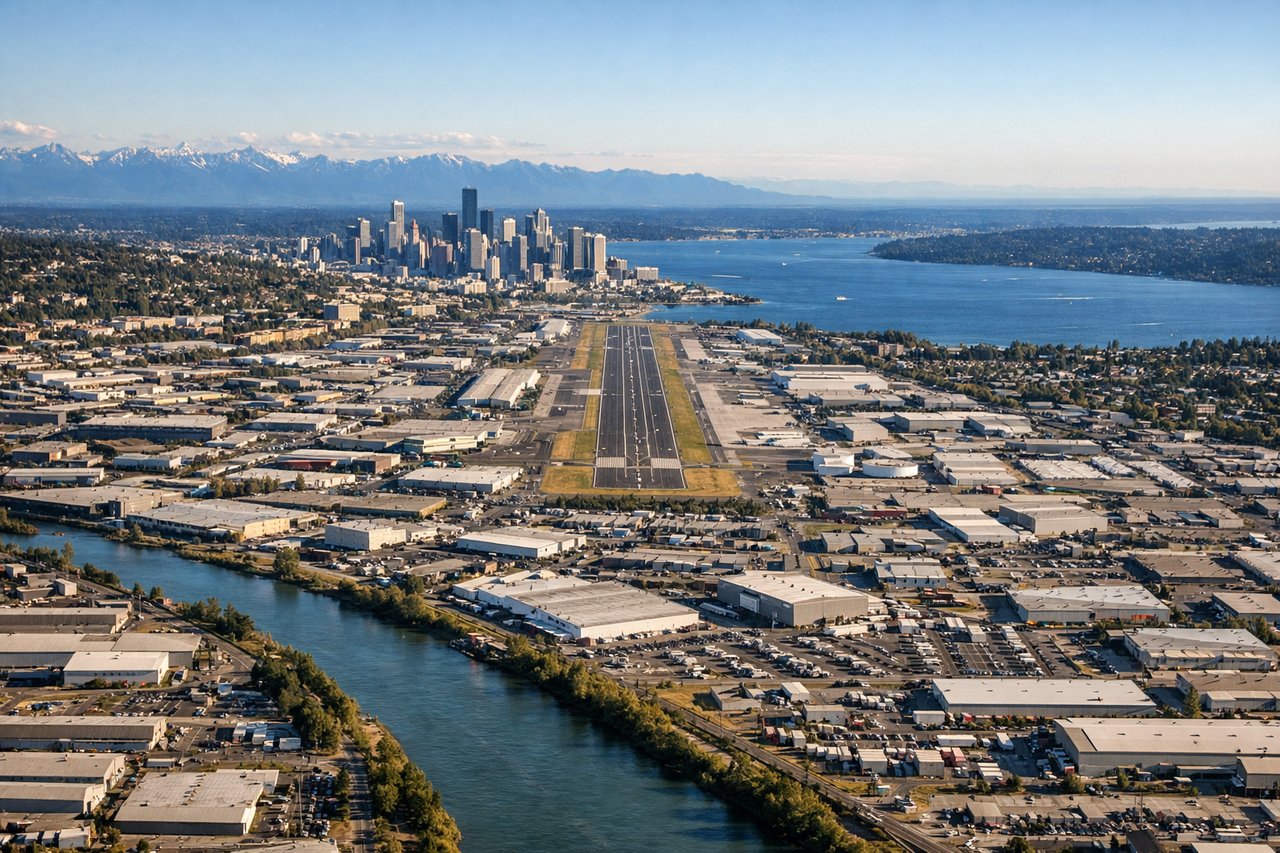
LEFTApproaching SAN on runway 09L or 09R from the north, left-side seats provide excellent views during descent over the San Diego metropolitan area, Mission Bay, and the final approach corridor. Right seats face the Pacific and offer less distinctive geography during the critical descent phase.
Landmarks on this routeAll landmarks →
Will your flight be in sunlight?
Pick a date and time in the Sun Map to watch the sun move across your whole flight.
About This Route
Which side of the plane should I sit on flying from San Diego International Lindbergh Fld (SAN) to Boeing Fld King Co International (BFI)?
Sit on the Right side of the plane for the best views on flights from San Diego to Seattle. Right-side seats capture the most dramatic geography: the San Diego departure over the coast and bay, the Pacific coastline during the northbound climb, and reasonable views during approach. While left seats excel on landing, right seats provide superior views for the majority of the flight's most visually interesting segments.
What can I see during takeoff from San Diego International Lindbergh Fld in San Diego?
During takeoff from San Diego International Lindbergh Fld (SAN), sit on the Right side for the best views. SAN typically departs runway 09L or 09R heading northwest. Right-side seats offer immediate views of San Diego Bay, the downtown skyline, and the initial climb over the Pacific coastal terrain. Left seats face inland toward less dramatic urban sprawl. Notable sights include: San Diego Bay, downtown San Diego skyline, Point Loma peninsula, Pacific Ocean.
What can I see when landing at Boeing Fld King Co International in Seattle?
When landing at Boeing Fld King Co International (BFI), sit on the Left side for the best views. Approaching SAN on runway 09L or 09R from the north, left-side seats provide excellent views during descent over the San Diego metropolitan area, Mission Bay, and the final approach corridor. Right seats face the Pacific and offer less distinctive geography during the critical descent phase. Notable sights include: Mission Bay, downtown San Diego, San Diego Bay, Coronado Bridge.
How long is the flight from San Diego to Seattle?
The flight from San Diego International Lindbergh Fld (SAN) to Boeing Fld King Co International (BFI) takes about 2 hours 15 minutes. The shortest flight path between them is 1,057 miles (1,700 km); winds and air traffic control usually add a few percent.
What does the San Diego to Seattle flight path pass over?
The flight path heads north-northwest from San Diego, passing over the Pacific Ocean and the California coast. Notable features include the Santa Lucia Mountains visible inland from the central California coast (around Monterey area, 200+ miles into flight), Point Conception at the southern edge of the Big Sur region, and the Channel Islands visible as small landmasses off the coast. As the flight progresses northward, the Sierra Nevada mountains appear as a distant eastern horizon feature. Approaching the Pacific Northwest, the Cascade Range becomes visible to the east, and the flight descends over Puget Sound's distinctive water features before landing at Seattle.