The right side delivers a more consistent scenic narrative across the entire flight: Cascade peaks and Rainier at departure, then the Alaska Peninsula, Aleutian Islands, and Kamchatka's volcanic ridgeline visible to the north during the long North Pacific great-circle crossing, followed by the Yellow Sea coastline and islands on arrival. The left side spends most of the long cruise phase over open ocean with little landmass to break up the view.
Flown SEA to ICN? Did we get it right?
Flight Path
Seattle to Seoul is 5,203 miles (8,373 km), a flight of about 10 hours 15 minutes.
Gulf of Alaska, Alaska Peninsula and Aleutian Islands, Kamchatka Peninsula's volcanic ridgeline, and the Sea of Japan approaching the Korean Peninsula
Great circle distance and headings ›Phase by phase
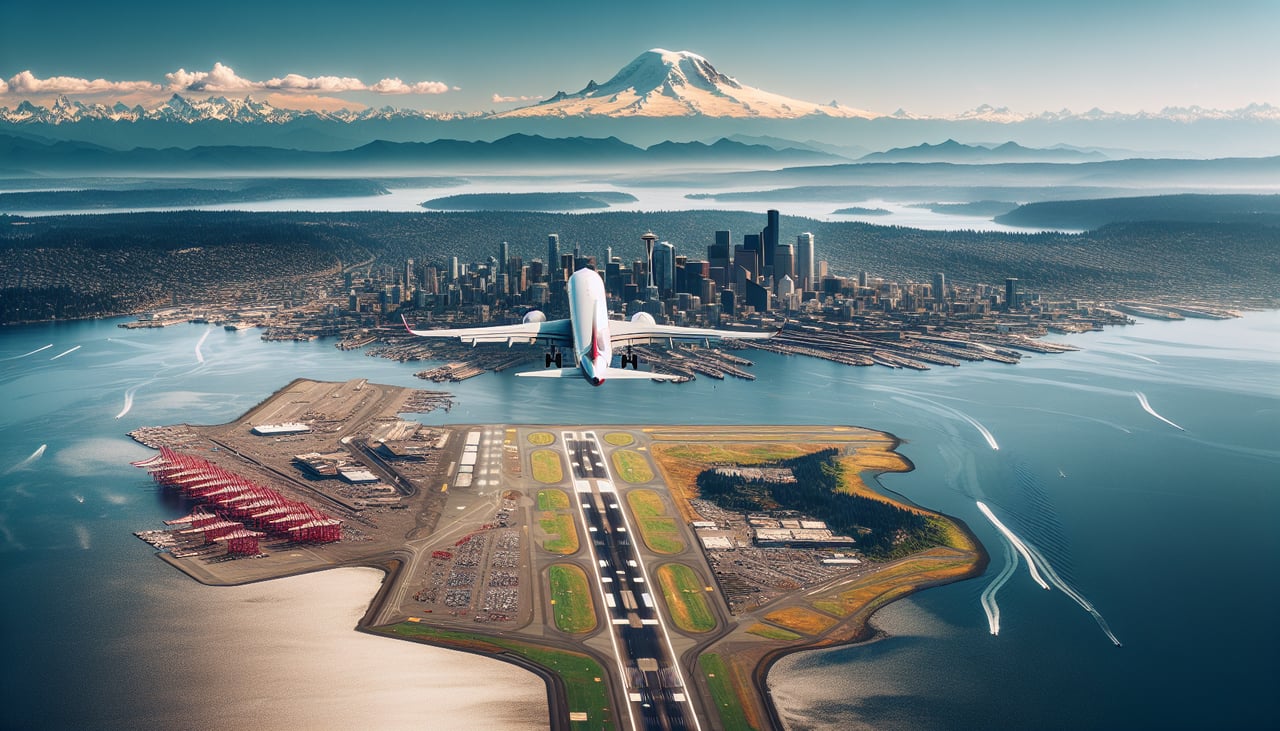
Takeoff from SEA
RIGHTDeparting SEA northbound, the right side faces the Cascade foothills, Lake Washington, and the Seattle skyline, with Mount Rainier's glaciated summit visible to the south as the aircraft climbs and banks toward the open Pacific. The left side shows Puget Sound and the Olympic Mountains, which are scenic but lower and less distinctive than the volcanic Cascades.
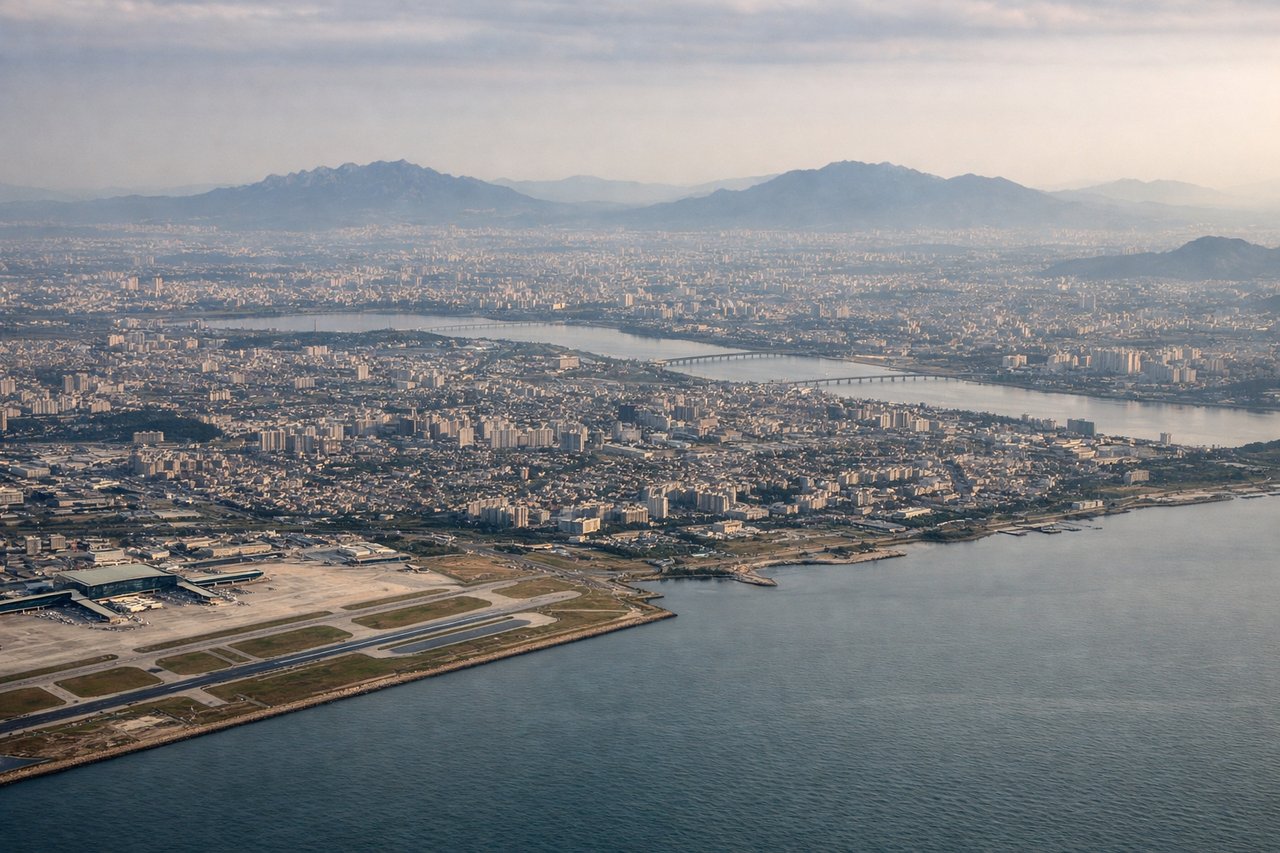
Landing at ICN
RIGHTOn approach into Incheon, the right side typically faces the Yellow Sea coastline north of the airport, with its scattering of small islands, tidal flats, and the long span of the Incheon Bridge visible as the aircraft descends. This gives a clear sense of the estuarine geography around Incheon before touchdown, more distinctive than the open water often seen from the opposite side.
Will your flight be in sunlight?
Pick a date and time in the Sun Map to watch the sun move across your whole flight.
About This Route
Which side of the plane should I sit on flying from Seattle Tacoma International (SEA) to Incheon International (ICN)?
Sit on the Right side of the plane for the best views on flights from Seattle to Seoul. The right side delivers a more consistent scenic narrative across the entire flight: Cascade peaks and Rainier at departure, then the Alaska Peninsula, Aleutian Islands, and Kamchatka's volcanic ridgeline visible to the north during the long North Pacific great-circle crossing, followed by the Yellow Sea coastline and islands on arrival. The left side spends most of the long cruise phase over open ocean with little landmass to break up the view.
What can I see during takeoff from Seattle Tacoma International in Seattle?
During takeoff from Seattle Tacoma International (SEA), sit on the Right side for the best views. Departing SEA northbound, the right side faces the Cascade foothills, Lake Washington, and the Seattle skyline, with Mount Rainier's glaciated summit visible to the south as the aircraft climbs and banks toward the open Pacific. The left side shows Puget Sound and the Olympic Mountains, which are scenic but lower and less distinctive than the volcanic Cascades. Notable sights include: Mount Rainier, Lake Washington, Seattle skyline, Cascade foothills.
What can I see when landing at Incheon International in Seoul?
When landing at Incheon International (ICN), sit on the Right side for the best views. On approach into Incheon, the right side typically faces the Yellow Sea coastline north of the airport, with its scattering of small islands, tidal flats, and the long span of the Incheon Bridge visible as the aircraft descends. This gives a clear sense of the estuarine geography around Incheon before touchdown, more distinctive than the open water often seen from the opposite side. Notable sights include: Incheon Bridge, Yellow Sea islands (Yeongjong and Muuido), tidal mudflats, Songdo skyline in the distance.
How long is the flight from Seattle to Seoul?
The flight from Seattle Tacoma International (SEA) to Incheon International (ICN) takes about 10 hours 15 minutes. The shortest flight path between them is 5,203 miles (8,373 km); winds and air traffic control usually add a few percent.
What does the Seattle to Seoul flight path pass over?
Gulf of Alaska, Alaska Peninsula and Aleutian Islands, Kamchatka Peninsula's volcanic ridgeline, and the Sea of Japan approaching the Korean Peninsula