Tbilisi to Vienna is 1,449 miles (2,333 km), a flight of about 3 hours 45 minutes.
While takeoff favors the right (Caucasus views), landing is more dramatic with the Danube and Vienna city center on the left. The landing sequence is longer and more visually rewarding, making left the better overall choice for this route.
Flight Path
The flight path crosses the Carpathian Mountains (visible as a forested ridge system around 1.5 hours into flight, roughly 45°N 24°E), then transitions over the Hungarian Plain (flat, agricultural landscape), before reaching the Danube basin approaching Vienna. The Carpathians appear as a distinct north-south trending mountain range with visible valleys; the Hungarian Plain is notably flat and featureless. No major bodies of water are crossed mid-route, but the Danube becomes visible in the final 30 minutes of descent.
Great circle distance and headings ›.jpg?width=600)

.jpg?width=600)
Phase by phase
Takeoff from TBS
RIGHTTbilisi typically departs eastbound (runways 13L/13R). Right-side seats face north toward the Greater Caucasus range, which dominates the northern skyline. Left seats look south toward the flat Mtkvari valley and suburbs.
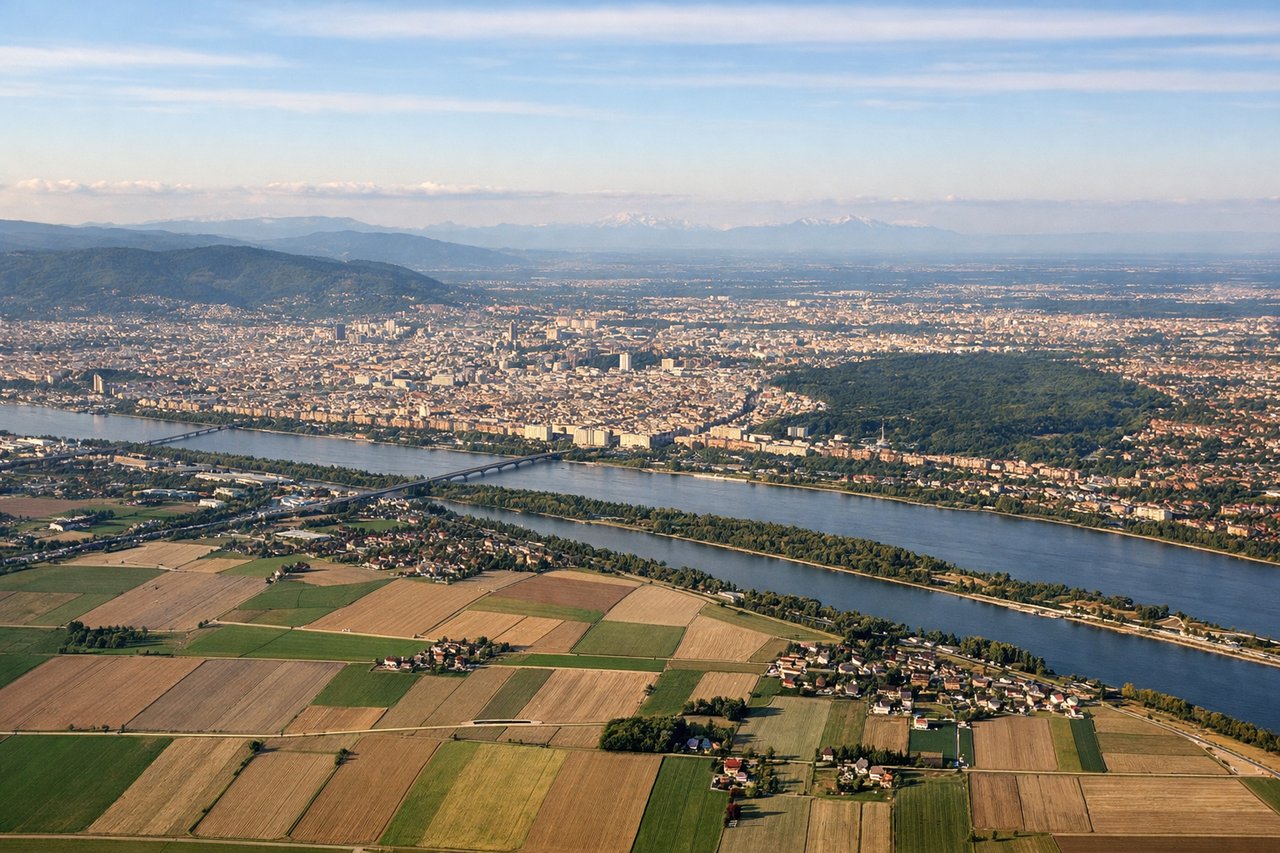
Landing at VIE
LEFTVienna typically lands westbound (runways 11L/11R). Left-side seats face south toward the Danube River and the city center as you descend. Right seats see the flat northern plains and airport industrial zones.
Landmarks on this routeAll landmarks →
Will your flight be in sunlight?
Pick a date and time in the Sun Map to watch the sun move across your whole flight.
About This Route
Which side of the plane should I sit on flying from Tbilisi International Airport (TBS) to Schwechat (VIE)?
Sit on the Left side of the plane for the best views on flights from Tbilisi to Vienna. While takeoff favors the right (Caucasus views), landing is more dramatic with the Danube and Vienna city center on the left. The landing sequence is longer and more visually rewarding, making left the better overall choice for this route.
What can I see during takeoff from Tbilisi International Airport in Tbilisi?
During takeoff from Tbilisi International Airport (TBS), sit on the Right side for the best views. Tbilisi typically departs eastbound (runways 13L/13R). Right-side seats face north toward the Greater Caucasus range, which dominates the northern skyline. Left seats look south toward the flat Mtkvari valley and suburbs. Notable sights include: Greater Caucasus Mountains (snow-capped peaks 30-50 km north), Mtkvari River valley (winding southeast through the city), Tbilisi city grid (spreading below), Mount Mtatsminda (1,051 m, visible as a prominent hill on the city's west edge).
What can I see when landing at Schwechat in Vienna?
When landing at Schwechat (VIE), sit on the Left side for the best views. Vienna typically lands westbound (runways 11L/11R). Left-side seats face south toward the Danube River and the city center as you descend. Right seats see the flat northern plains and airport industrial zones. Notable sights include: Danube River (wide, meandering, clearly visible in final approach), Vienna city center with St. Stephen's Cathedral spire (visible as a small point in the urban core), Schwechat Airport runways (grid pattern below), Eastern Alps foothills (low ridges on the southern horizon).
How long is the flight from Tbilisi to Vienna?
The flight from Tbilisi International Airport (TBS) to Schwechat (VIE) takes about 3 hours 45 minutes. The shortest flight path between them is 1,449 miles (2,333 km); winds and air traffic control usually add a few percent.
What does the Tbilisi to Vienna flight path pass over?
The flight path crosses the Carpathian Mountains (visible as a forested ridge system around 1.5 hours into flight, roughly 45°N 24°E), then transitions over the Hungarian Plain (flat, agricultural landscape), before reaching the Danube basin approaching Vienna. The Carpathians appear as a distinct north-south trending mountain range with visible valleys; the Hungarian Plain is notably flat and featureless. No major bodies of water are crossed mid-route, but the Danube becomes visible in the final 30 minutes of descent.