Right-side seats offer superior scenery for the majority of the flight. The takeoff views of the Caucasus are exceptional, and the northwestward routing means right-side passengers see the Carpathian Mountains and Danube valley during the cruise phase—more dramatic than left-side views of Hungary's plains.
Flight Path
The flight path crosses the Black Sea coast near Batumi, then proceeds northwest over Turkey and the Balkans. Notable midpoint features include the Carpathian Mountains (visible on the right during cruise), the Danube River valley in Romania and Hungary, and Lake Balaton in Hungary. The terrain transitions from the high Caucasus through lower Anatolian plateaus, then rises again into the Carpathians before descending into the Bavarian plains.
Great circle distance and headings ›.jpg?width=600)

.jpg?width=600)
Phase by phase
Takeoff from TBS
RIGHTRight-side seats offer the best views during the northwestward climb-out from Tbilisi. You'll see the Caucasus Mountains rising dramatically to the north and east, with the city sprawling below. The Mtkvari River valley is visible cutting through the urban landscape.
Landing at MUC
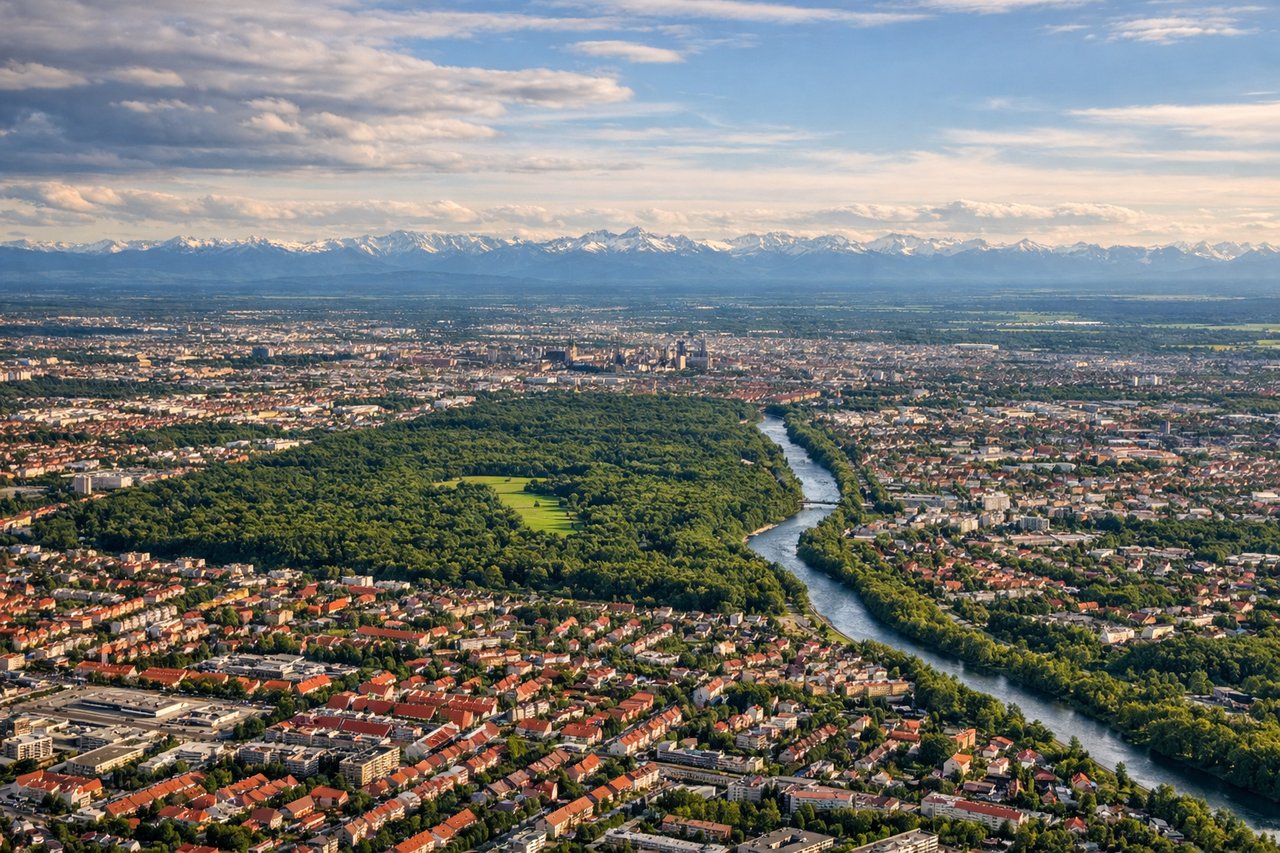
LEFTLeft-side seats provide excellent views during the southeastern approach into Munich. The Isar River is clearly visible winding through the city, and you'll see the Bavarian Alps rising to the south and southeast. The city's distinctive layout with English Garden and surrounding suburbs is well-framed from this side.
Landmarks on this routeAll landmarks →
Will your flight be in sunlight?
See exactly which side of the plane gets sun and shade at your departure time.
About This Route
Which side of the plane should I sit on flying from Tbilisi International Airport (TBS) to Munich (MUC)?
Sit on the Right side of the plane for the best views on flights from Tbilisi to Munich. Right-side seats offer superior scenery for the majority of the flight. The takeoff views of the Caucasus are exceptional, and the northwestward routing means right-side passengers see the Carpathian Mountains and Danube valley during the cruise phase—more dramatic than left-side views of Hungary's plains.
What can I see during takeoff from Tbilisi International Airport in Tbilisi?
During takeoff from Tbilisi International Airport (TBS), sit on the Right side for the best views. Right-side seats offer the best views during the northwestward climb-out from Tbilisi. You'll see the Caucasus Mountains rising dramatically to the north and east, with the city sprawling below. The Mtkvari River valley is visible cutting through the urban landscape. Notable sights include: Caucasus Mountains (northern horizon), Mtkvari River valley, Tbilisi city grid, Mount Mtatsminda.
What can I see when landing at Munich in Munich?
When landing at Munich (MUC), sit on the Left side for the best views. Left-side seats provide excellent views during the southeastern approach into Munich. The Isar River is clearly visible winding through the city, and you'll see the Bavarian Alps rising to the south and southeast. The city's distinctive layout with English Garden and surrounding suburbs is well-framed from this side. Notable sights include: Bavarian Alps (southern horizon), Isar River, Munich city center, English Garden.
How long is the flight from Tbilisi to Munich?
The flight from Tbilisi International Airport (TBS) to Munich (MUC) takes Approximately 4 hours 15 minutes.
What does the Tbilisi to Munich flight path pass over?
The flight path crosses the Black Sea coast near Batumi, then proceeds northwest over Turkey and the Balkans. Notable midpoint features include the Carpathian Mountains (visible on the right during cruise), the Danube River valley in Romania and Hungary, and Lake Balaton in Hungary. The terrain transitions from the high Caucasus through lower Anatolian plateaus, then rises again into the Carpathians before descending into the Bavarian plains.