Trondheim to Munich is 1,044 miles (1,680 km), a flight of about 3 hours 15 minutes.
Right side captures the most dramatic scenery: the Trondheim Fjord system during departure and the Bavarian Alps during descent. The flight path itself (TRD to MUC) runs roughly south-southeast, favoring right-side views of major geographic features throughout.
Flight Path
The flight crosses the North Sea coast near Denmark, then passes over the Jutland Peninsula and German lowlands. Notable midpoint features include the Kattegat Strait (between Denmark and Sweden), the Danish-German border region, and the North German Plain before reaching the Alpine foothills south of Munich. The route generally avoids major mountain ranges until the final descent into Bavaria.
Great circle distance and headings ›Phase by phase
Takeoff from TRD
RIGHTRight side offers immediate views of Trondheim's fjord system and the surrounding forested terrain. The aircraft departs southeastward, so right-side seats face the Trondheim Fjord and coastal landscape during climb-out.
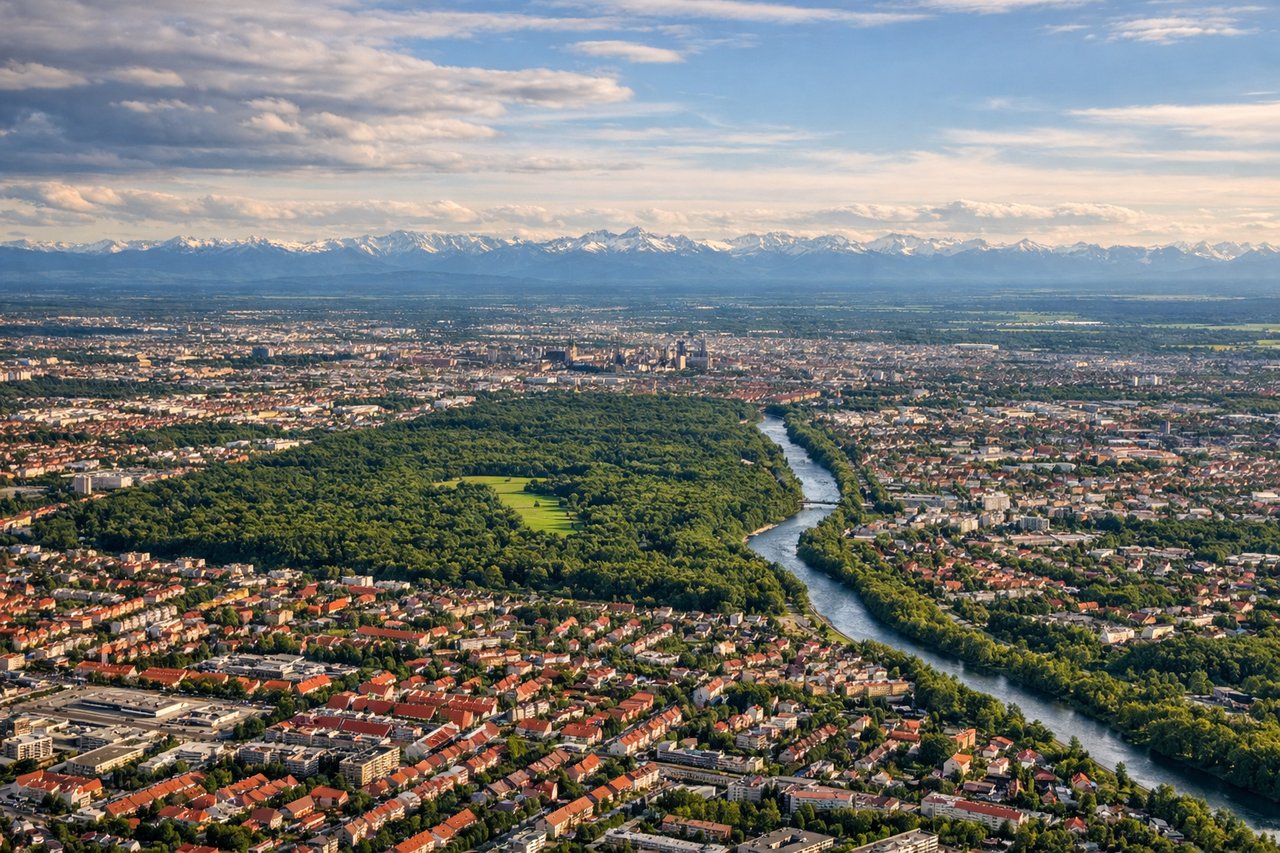
Landing at MUC
LEFTLeft side provides views of the Bavarian Alps and the approach corridor into Munich. The aircraft descends from the north, so left-side seats face the Alpine foothills and the city's western approaches during final descent.
Will your flight be in sunlight?
Pick a date and time in the Sun Map to watch the sun move across your whole flight.
About This Route
Which side of the plane should I sit on flying from Trondheim Vaernes (TRD) to Munich (MUC)?
Sit on the Right side of the plane for the best views on flights from Trondheim to Munich. Right side captures the most dramatic scenery: the Trondheim Fjord system during departure and the Bavarian Alps during descent. The flight path itself (TRD to MUC) runs roughly south-southeast, favoring right-side views of major geographic features throughout.
What can I see during takeoff from Trondheim Vaernes in Trondheim?
During takeoff from Trondheim Vaernes (TRD), sit on the Right side for the best views. Right side offers immediate views of Trondheim's fjord system and the surrounding forested terrain. The aircraft departs southeastward, so right-side seats face the Trondheim Fjord and coastal landscape during climb-out. Notable sights include: Trondheim Fjord, Nidaros Cathedral (city center), Trondheimsfjorden waterway, forested valleys of Sør-Trøndelag.
What can I see when landing at Munich in Munich?
When landing at Munich (MUC), sit on the Left side for the best views. Left side provides views of the Bavarian Alps and the approach corridor into Munich. The aircraft descends from the north, so left-side seats face the Alpine foothills and the city's western approaches during final descent. Notable sights include: Bavarian Alps (northern edge), Isar River valley, Munich city sprawl, Ammersee lake.
How long is the flight from Trondheim to Munich?
The flight from Trondheim Vaernes (TRD) to Munich (MUC) takes about 3 hours 15 minutes. The shortest flight path between them is 1,044 miles (1,680 km); winds and air traffic control usually add a few percent.
What does the Trondheim to Munich flight path pass over?
The flight crosses the North Sea coast near Denmark, then passes over the Jutland Peninsula and German lowlands. Notable midpoint features include the Kattegat Strait (between Denmark and Sweden), the Danish-German border region, and the North German Plain before reaching the Alpine foothills south of Munich. The route generally avoids major mountain ranges until the final descent into Bavaria.