Munich to Trondheim is 1,044 miles (1,680 km), a flight of about 2 hours 30 minutes.
The left side delivers the best views at both ends of the flight — Alpine scenery on departure and the Trondheimsfjord on arrival. During the cruise over Scandinavia, the left side also faces generally west, offering views over the Norwegian coastal landscape and fjord systems as the route tracks northwest.
Flight Path
The route crosses southern Germany, then Denmark or southern Sweden, before tracking northwest over the Scandinavian Peninsula. Notable features include the Danish straits and Kattegat sea, the Swedish lake district around Vänern and Vättern, the forested uplands of central Sweden, and the transition into the Norwegian highlands before descending toward the Trøndelag coast.
Great circle distance and headings ›Phase by phase
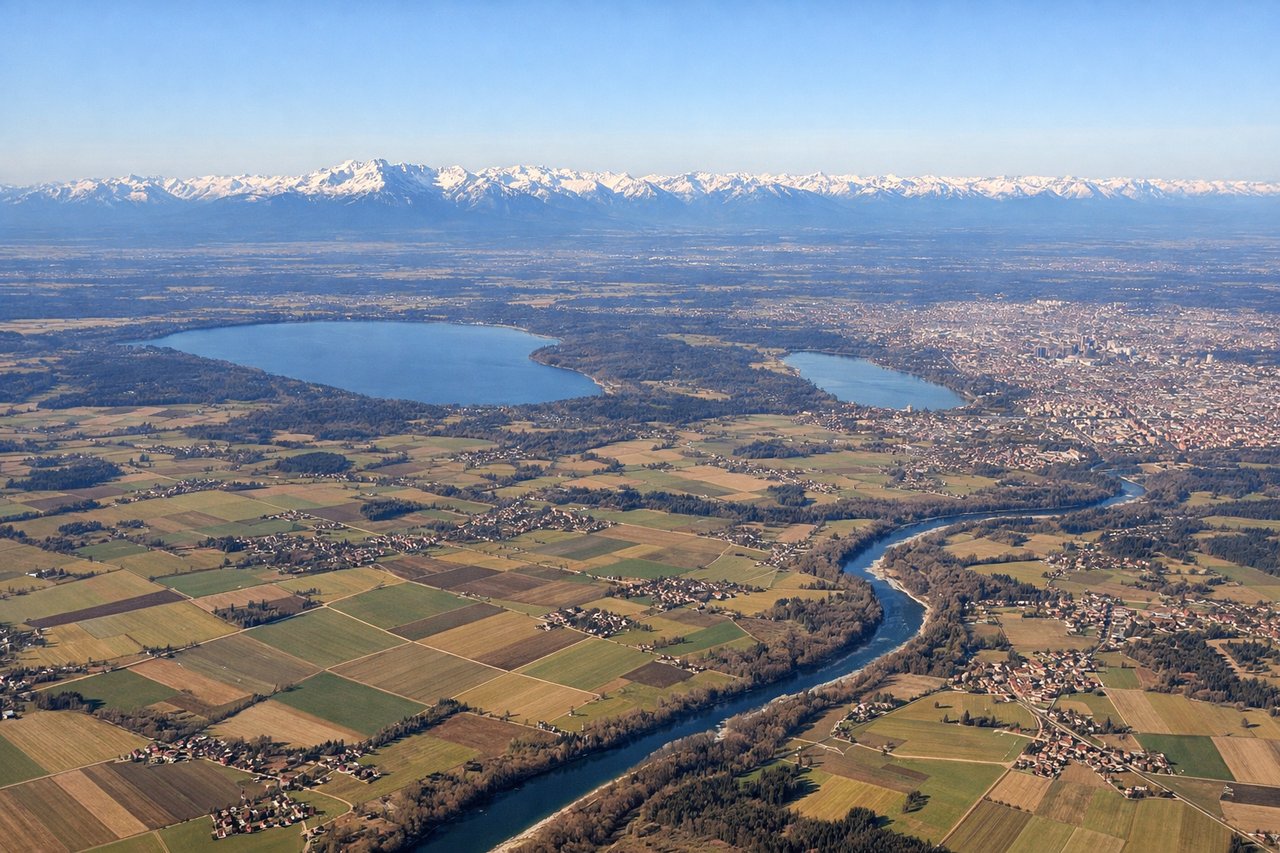
Takeoff from MUC
LEFTMunich typically departs on runway 08R/26L or 08L/26R. Departing eastward on 08, a left-side seat looks north over Munich city center and the Bavarian plain. Departing westward on 26, the left side faces south toward the Alps, giving a clear view of the Bavarian Alps foothills and the Inn Valley.
Landing at TRD
LEFTTrondheim Vaernes typically lands on runway 09 (eastbound approach) or 27 (westbound). On the common westbound approach to runway 27, aircraft come in from the east over the Stjørdal valley. The left side faces south over the Trondheimsfjord, giving a panoramic view of the fjord and the city of Trondheim at its head.
Will your flight be in sunlight?
Pick a date and time in the Sun Map to watch the sun move across your whole flight.
About This Route
Which side of the plane should I sit on flying from Munich (MUC) to Trondheim Vaernes (TRD)?
Sit on the Left side of the plane for the best views on flights from Munich to Trondheim. The left side delivers the best views at both ends of the flight — Alpine scenery on departure and the Trondheimsfjord on arrival. During the cruise over Scandinavia, the left side also faces generally west, offering views over the Norwegian coastal landscape and fjord systems as the route tracks northwest.
What can I see during takeoff from Munich in Munich?
During takeoff from Munich (MUC), sit on the Left side for the best views. Munich typically departs on runway 08R/26L or 08L/26R. Departing eastward on 08, a left-side seat looks north over Munich city center and the Bavarian plain. Departing westward on 26, the left side faces south toward the Alps, giving a clear view of the Bavarian Alps foothills and the Inn Valley. Notable sights include: Bavarian Alps foothills to the south, Munich city center and Marienplatz area, Isar River valley, Ammersee and Starnberger See lakes to the southwest.
What can I see when landing at Trondheim Vaernes in Trondheim?
When landing at Trondheim Vaernes (TRD), sit on the Left side for the best views. Trondheim Vaernes typically lands on runway 09 (eastbound approach) or 27 (westbound). On the common westbound approach to runway 27, aircraft come in from the east over the Stjørdal valley. The left side faces south over the Trondheimsfjord, giving a panoramic view of the fjord and the city of Trondheim at its head. Notable sights include: Trondheimsfjord, Trondheim city center and Nidaros Cathedral area, Stjørdal valley, Gauldal river valley to the south.
How long is the flight from Munich to Trondheim?
The flight from Munich (MUC) to Trondheim Vaernes (TRD) takes about 2 hours 30 minutes. The shortest flight path between them is 1,044 miles (1,680 km); winds and air traffic control usually add a few percent.
What does the Munich to Trondheim flight path pass over?
The route crosses southern Germany, then Denmark or southern Sweden, before tracking northwest over the Scandinavian Peninsula. Notable features include the Danish straits and Kattegat sea, the Swedish lake district around Vänern and Vättern, the forested uplands of central Sweden, and the transition into the Norwegian highlands before descending toward the Trøndelag coast.