The left side delivers the Alpine departure view which is genuinely spectacular and rare for most travelers. The landing views on the right are excellent but the Alpine panorama on departure is the highlight of this route.
Flight Path
The route tracks northwest over southern Germany and France, crosses the North Atlantic near Greenland's southern tip and the Davis Strait, passes over Hudson Bay or northern Canada depending on the jet stream routing, then crosses the Rocky Mountains over Nevada or Utah before descending into Southern California. Greenland's ice sheet and the Canadian Rockies are the most dramatic midpoint features, though both are best seen in daylight which depends on departure timing.
Great circle distance and headings ›
.jpg?width=600)
.jpg?width=600)


.jpg?width=600)
Phase by phase
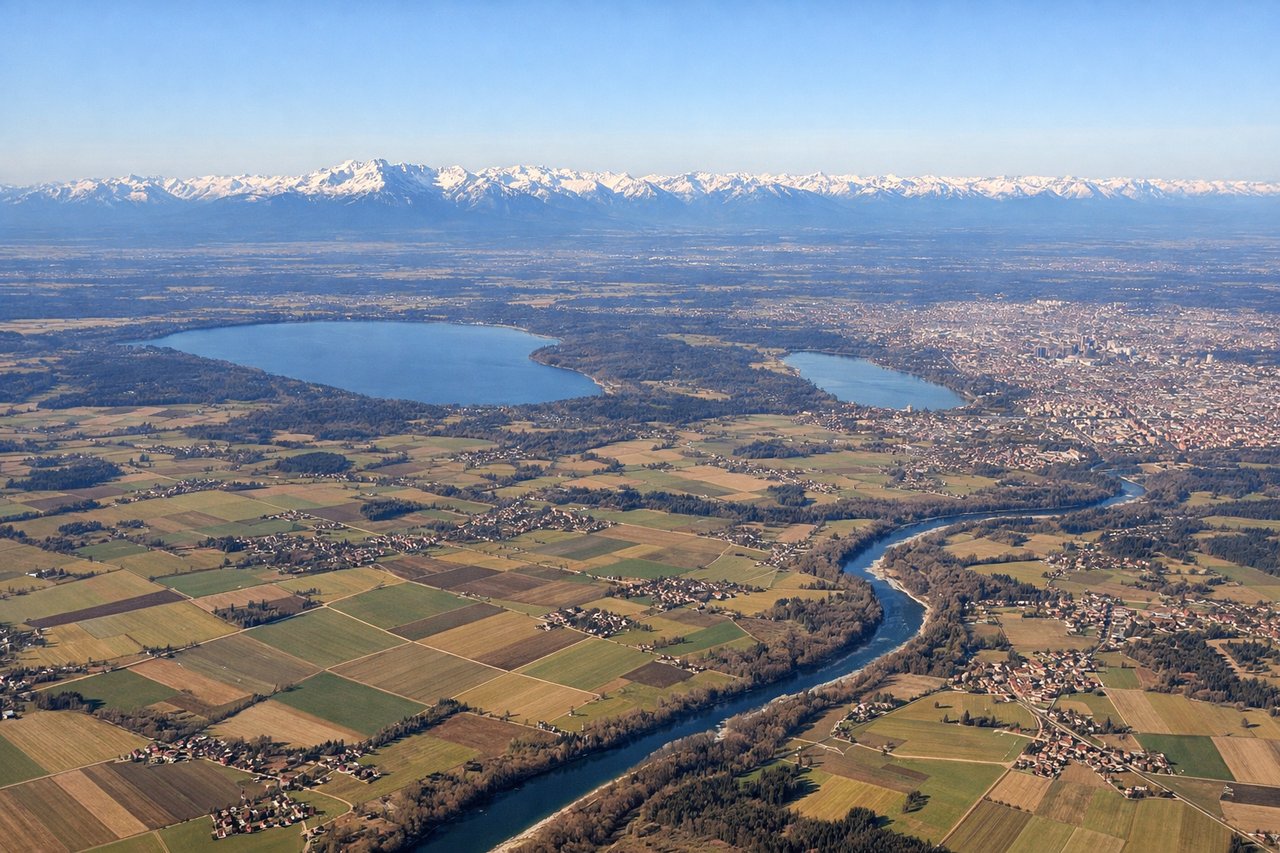
Takeoff from MUC
LEFTMunich departures on runway 26L/26R head westward, putting the Bavarian Alps on the left (south) side. You get a clear view of the Alps including the Zugspitze and the Inn Valley as the aircraft climbs and turns northwest toward the transatlantic route.
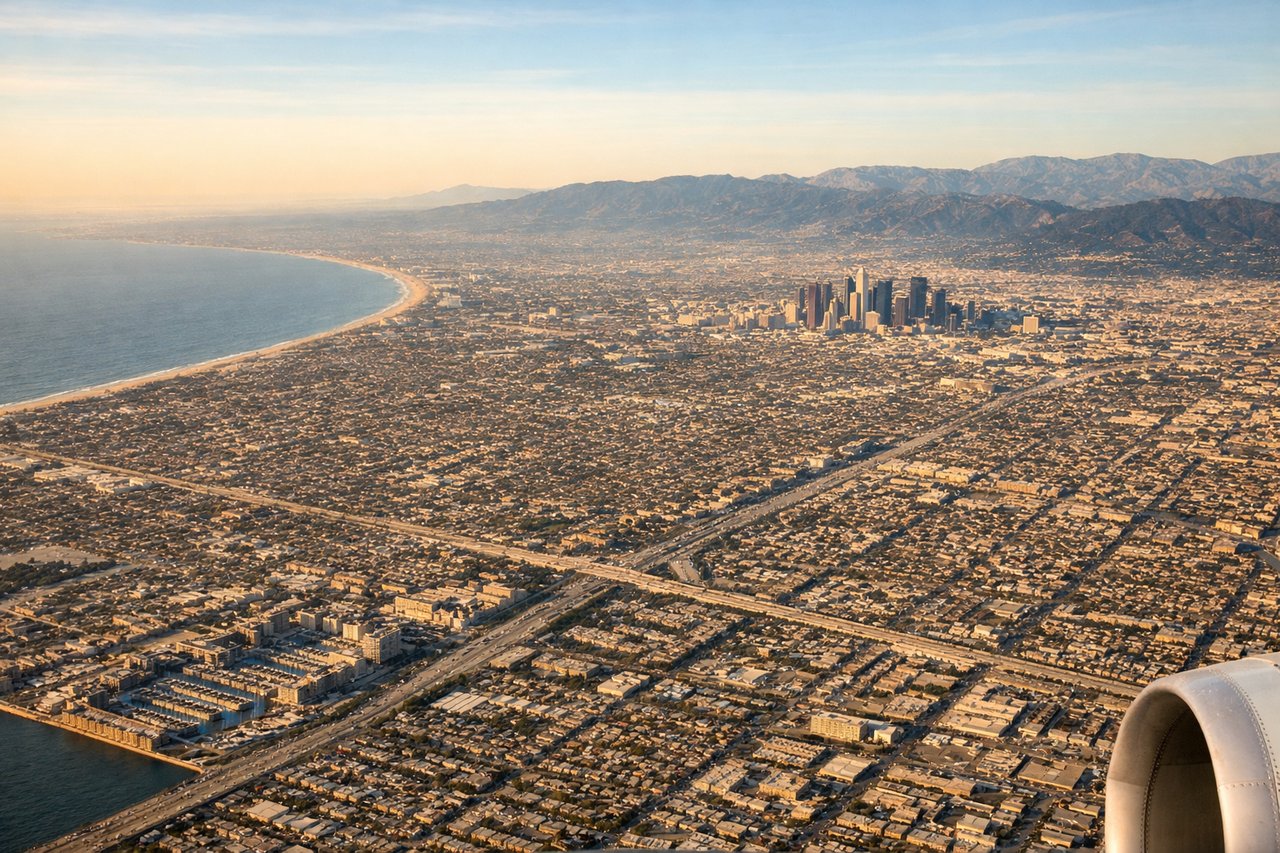
Landing at LAX
RIGHTLAX arrivals typically come in from the east or northeast on runways 24L/24R heading southwest, meaning the right side faces northwest toward Santa Monica Bay, Malibu, and the Santa Monica Mountains. The left side faces inland toward the urban sprawl of the LA Basin.
Landmarks on this routeAll landmarks →
Will your flight be in sunlight?
See exactly which side of the plane gets sun and shade at your departure time.
About This Route
Which side of the plane should I sit on flying from Munich (MUC) to Los Angeles International (LAX)?
Sit on the Left side of the plane for the best views on flights from Munich to Los Angeles. The left side delivers the Alpine departure view which is genuinely spectacular and rare for most travelers. The landing views on the right are excellent but the Alpine panorama on departure is the highlight of this route.
What can I see during takeoff from Munich in Munich?
During takeoff from Munich (MUC), sit on the Left side for the best views. Munich departures on runway 26L/26R head westward, putting the Bavarian Alps on the left (south) side. You get a clear view of the Alps including the Zugspitze and the Inn Valley as the aircraft climbs and turns northwest toward the transatlantic route. Notable sights include: Bavarian Alps including Zugspitze (Germany's highest peak), Inn Valley, Ammersee and Starnberger See lakes, Munich city center to the northeast.
What can I see when landing at Los Angeles International in Los Angeles?
When landing at Los Angeles International (LAX), sit on the Right side for the best views. LAX arrivals typically come in from the east or northeast on runways 24L/24R heading southwest, meaning the right side faces northwest toward Santa Monica Bay, Malibu, and the Santa Monica Mountains. The left side faces inland toward the urban sprawl of the LA Basin. Notable sights include: Santa Monica Bay and Pacific coastline, Malibu coast and Santa Monica Mountains, Palos Verdes Peninsula, Los Angeles urban grid and downtown skyline in the distance.
How long is the flight from Munich to Los Angeles?
The flight from Munich (MUC) to Los Angeles International (LAX) takes Approximately 11 to 12 hours.
What does the Munich to Los Angeles flight path pass over?
The route tracks northwest over southern Germany and France, crosses the North Atlantic near Greenland's southern tip and the Davis Strait, passes over Hudson Bay or northern Canada depending on the jet stream routing, then crosses the Rocky Mountains over Nevada or Utah before descending into Southern California. Greenland's ice sheet and the Canadian Rockies are the most dramatic midpoint features, though both are best seen in daylight which depends on departure timing.