Aguascalientes to Dublin is 5,265 miles (8,473 km), a flight of about 11 hours 10 minutes.
While takeoff offers good views of Mexico's high desert and mountains, the landing into Dublin provides more dramatic and varied geography—the Irish Sea, Wicklow Mountains, and Dublin Bay create a more visually compelling final descent. Left seats dominate the approach.
Flight Path
The flight crosses the Gulf of Mexico (visible 1-2 hours after departure), then tracks northeast over the Atlantic. You'll pass south of Newfoundland and the Grand Banks fishing grounds (around 7-8 hours into flight), then approach the Irish coast near County Waterford or County Cork before routing to Dublin. The mid-Atlantic crossing offers minimal landmarks—open ocean with occasional weather systems. The approach to Ireland reveals the Celtic Sea, Irish coastline with its characteristic rocky headlands, and inland terrain rising toward the Wicklow Mountains.
Great circle distance and headings ›

.jpeg?width=600)
Phase by phase
Takeoff from AGU
RIGHTAguascalientes typically departs runway 01/19. Climbing northeast or southwest, the right side captures the Sierra Fría mountains and the high-altitude plateau terrain that defines central Mexico's geography. Right seats get the dramatic escarpment edges and the transition from the Mexican Altiplano.
Landing at DUB
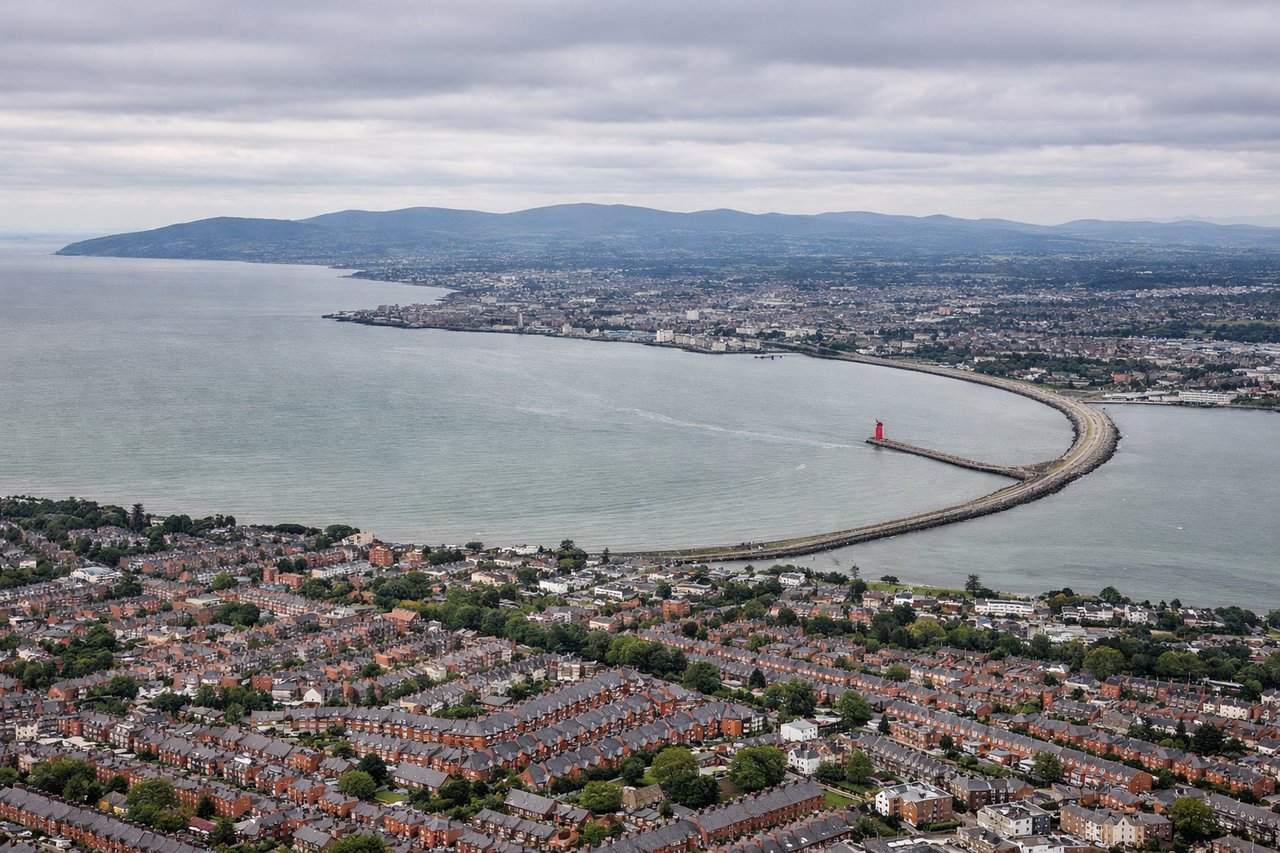
LEFTDublin approaches typically use runways 10/28 or 06/24 depending on wind. On descent into Dublin from the southwest, left seats face the Irish Sea and the Wicklow Mountains inland. You'll see the Dublin Bay coastline, the city's position on the Liffey estuary, and the dramatic granite peaks of Wicklow to the south—far more visually distinctive than the flat terrain to the right.
Landmarks on this routeAll landmarks →
Will your flight be in sunlight?
Pick a date and time in the Sun Map to watch the sun move across your whole flight.
About This Route
Which side of the plane should I sit on flying from Jesus Teran International (AGU) to Dublin (DUB)?
Sit on the Left side of the plane for the best views on flights from Aguascalientes to Dublin. While takeoff offers good views of Mexico's high desert and mountains, the landing into Dublin provides more dramatic and varied geography—the Irish Sea, Wicklow Mountains, and Dublin Bay create a more visually compelling final descent. Left seats dominate the approach.
What can I see during takeoff from Jesus Teran International in Aguascalientes?
During takeoff from Jesus Teran International (AGU), sit on the Right side for the best views. Aguascalientes typically departs runway 01/19. Climbing northeast or southwest, the right side captures the Sierra Fría mountains and the high-altitude plateau terrain that defines central Mexico's geography. Right seats get the dramatic escarpment edges and the transition from the Mexican Altiplano. Notable sights include: Sierra Fría mountain range (east), Aguascalientes city grid (directly below during initial climb), high desert plateau extending toward the horizon, occasional volcanic cones in the distance.
What can I see when landing at Dublin in Dublin?
When landing at Dublin (DUB), sit on the Left side for the best views. Dublin approaches typically use runways 10/28 or 06/24 depending on wind. On descent into Dublin from the southwest, left seats face the Irish Sea and the Wicklow Mountains inland. You'll see the Dublin Bay coastline, the city's position on the Liffey estuary, and the dramatic granite peaks of Wicklow to the south—far more visually distinctive than the flat terrain to the right. Notable sights include: Irish Sea (west and north), Wicklow Mountains (south, granite peaks), Dublin Bay and Liffey estuary (city center), Dublin city sprawl and suburban rings.
How long is the flight from Aguascalientes to Dublin?
The flight from Jesus Teran International (AGU) to Dublin (DUB) takes about 11 hours 10 minutes. The shortest flight path between them is 5,265 miles (8,473 km); winds and air traffic control usually add a few percent.
What does the Aguascalientes to Dublin flight path pass over?
The flight crosses the Gulf of Mexico (visible 1-2 hours after departure), then tracks northeast over the Atlantic. You'll pass south of Newfoundland and the Grand Banks fishing grounds (around 7-8 hours into flight), then approach the Irish coast near County Waterford or County Cork before routing to Dublin. The mid-Atlantic crossing offers minimal landmarks—open ocean with occasional weather systems. The approach to Ireland reveals the Celtic Sea, Irish coastline with its characteristic rocky headlands, and inland terrain rising toward the Wicklow Mountains.