While the takeoff offers good views of New Zealand's volcanic landscape, the landing approach into Amman provides more dramatic and geographically distinctive scenery—the Dead Sea and Jordan Rift Valley are globally unique features. Right-side seats capture the most visually striking portion of the descent.
Flown AKL to AMM? Did we get it right?
Flight Path
Auckland to Amman is 10,077 miles (16,217 km), a flight of about 17 hours 30 minutes.
This route typically transits over the Indian Ocean, the Arabian Peninsula (including the Red Sea and Persian Gulf regions), and approaches the Levant from the west. Notable features along the actual flight path include the Himalayas (if routed via South Asia), the Arabian Desert, and the Dead Sea/Jordan Rift Valley system. The exact routing depends on prevailing winds and geopolitical factors, but most flights follow a path across South Asia, the Arabian Peninsula, and into the Levant.
Great circle distance and headings ›


Phase by phase
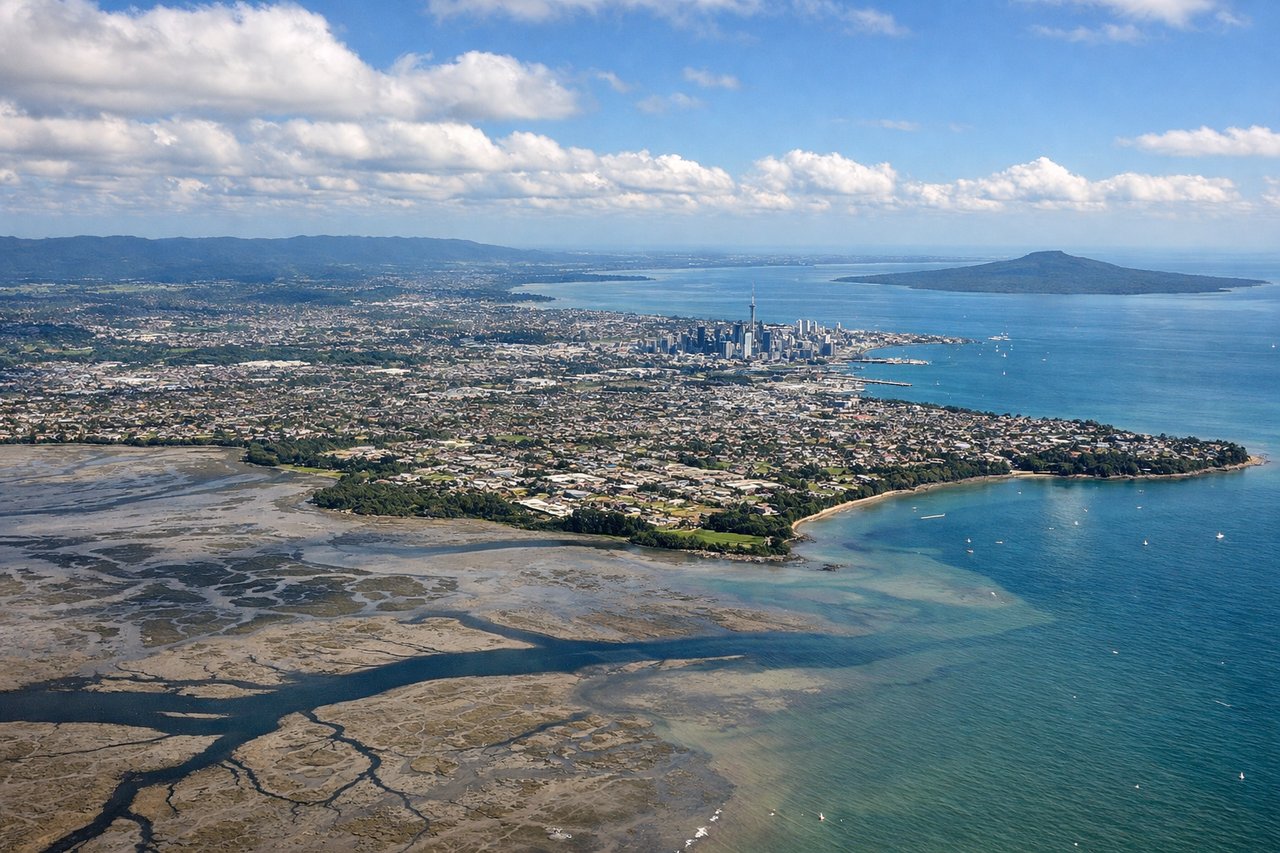
Takeoff from AKL
LEFTLeft-side seats offer views of the Waitakere Ranges and Tasman Sea as the aircraft climbs westward out of Auckland. The volcanic landscape and coastal waters provide immediate scenic interest during the initial climb.
Landing at AMM
RIGHTRight-side seats provide views of the Dead Sea and the Jordanian highlands during descent into Amman. The dramatic rift valley topography and the shimmering Dead Sea are striking visual features as the aircraft approaches from the west.
Will your flight be in sunlight?
Pick a date and time in the Sun Map to watch the sun move across your whole flight.
About This Route
Which side of the plane should I sit on flying from Auckland International (AKL) to Queen Alia International (AMM)?
Sit on the Right side of the plane for the best views on flights from Auckland to Amman. While the takeoff offers good views of New Zealand's volcanic landscape, the landing approach into Amman provides more dramatic and geographically distinctive scenery—the Dead Sea and Jordan Rift Valley are globally unique features. Right-side seats capture the most visually striking portion of the descent.
What can I see during takeoff from Auckland International in Auckland?
During takeoff from Auckland International (AKL), sit on the Left side for the best views. Left-side seats offer views of the Waitakere Ranges and Tasman Sea as the aircraft climbs westward out of Auckland. The volcanic landscape and coastal waters provide immediate scenic interest during the initial climb. Notable sights include: Waitakere Ranges (volcanic ridge west of Auckland), Tasman Sea (western coastline), Auckland's urban sprawl receding eastward, Manukau Harbour (visible to the south).
What can I see when landing at Queen Alia International in Amman?
When landing at Queen Alia International (AMM), sit on the Right side for the best views. Right-side seats provide views of the Dead Sea and the Jordanian highlands during descent into Amman. The dramatic rift valley topography and the shimmering Dead Sea are striking visual features as the aircraft approaches from the west. Notable sights include: Dead Sea (lowest point on Earth, visible as a distinctive elongated water body), West Bank highlands (elevated terrain to the west), Jordan Valley (rift valley floor), Amman's urban sprawl on surrounding hills.
How long is the flight from Auckland to Amman?
The flight from Auckland International (AKL) to Queen Alia International (AMM) takes about 17 hours 30 minutes. The shortest flight path between them is 10,077 miles (16,217 km); winds and air traffic control usually add a few percent.
What does the Auckland to Amman flight path pass over?
This route typically transits over the Indian Ocean, the Arabian Peninsula (including the Red Sea and Persian Gulf regions), and approaches the Levant from the west. Notable features along the actual flight path include the Himalayas (if routed via South Asia), the Arabian Desert, and the Dead Sea/Jordan Rift Valley system. The exact routing depends on prevailing winds and geopolitical factors, but most flights follow a path across South Asia, the Arabian Peninsula, and into the Levant.