Auckland to Guangzhou is 5,779 miles (9,300 km), a flight of about 11 hours 10 minutes.
The right side captures Auckland's harbour and skyline during the departure turn and the Pearl River Delta's urban sprawl on arrival, while the left side faces mostly featureless ocean for both phases; the cruise itself is overwhelmingly open water on both sides, so these bookend views decide the winner.
Flight Path
Coral Sea and open Pacific waters, scattered Philippine islands (Mindanao, Palawan) visible far to the right during cruise, then the South China Sea approaching Hainan and the Chinese coast
Great circle distance and headings ›

Phase by phase
Takeoff from AKL
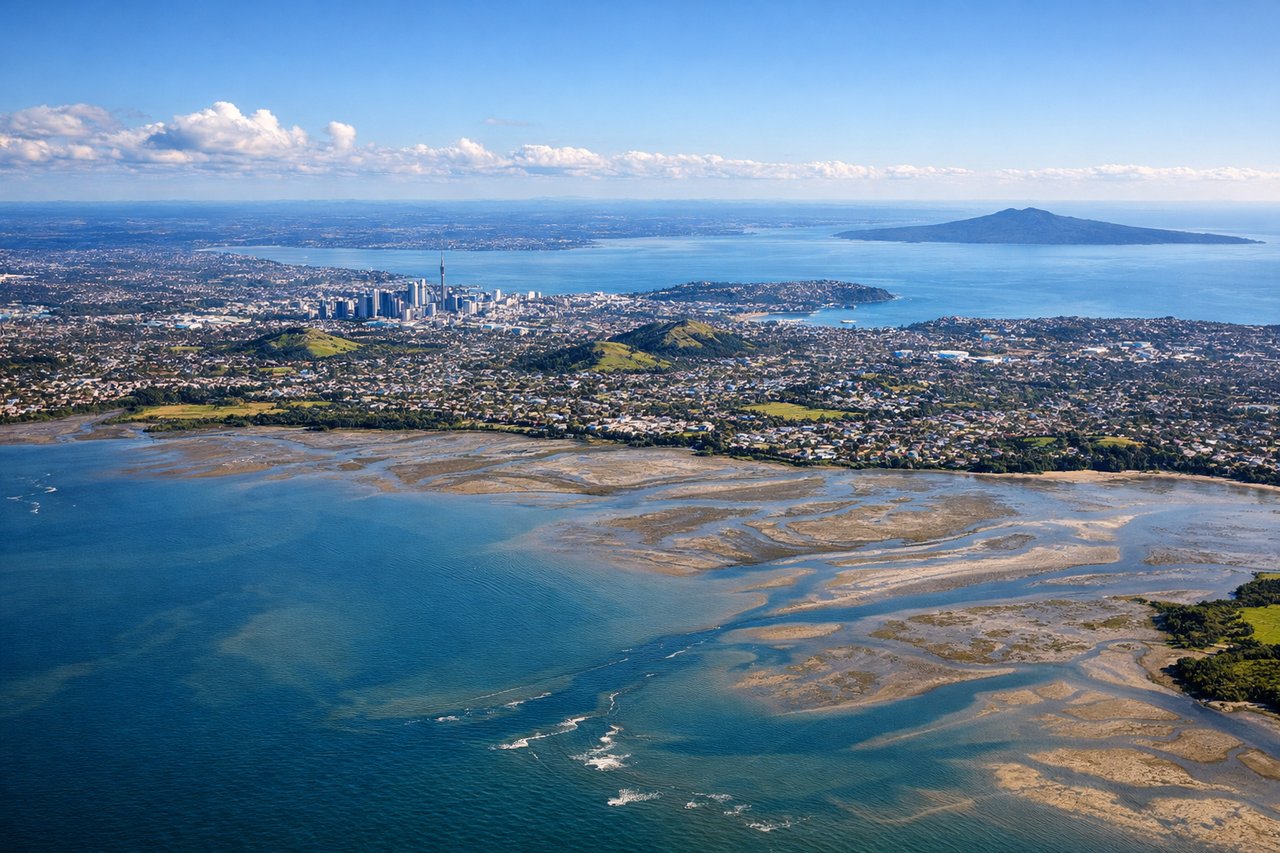
RIGHTAKL departs southwest on runway 23L then banks right toward the northwest heading for Asia, swinging the right side of the aircraft over Auckland's Waitemata Harbour, the Sky Tower skyline, and Rangitoto's distinctive volcanic cone before leveling out over the Tasman Sea.
Landing at CAN
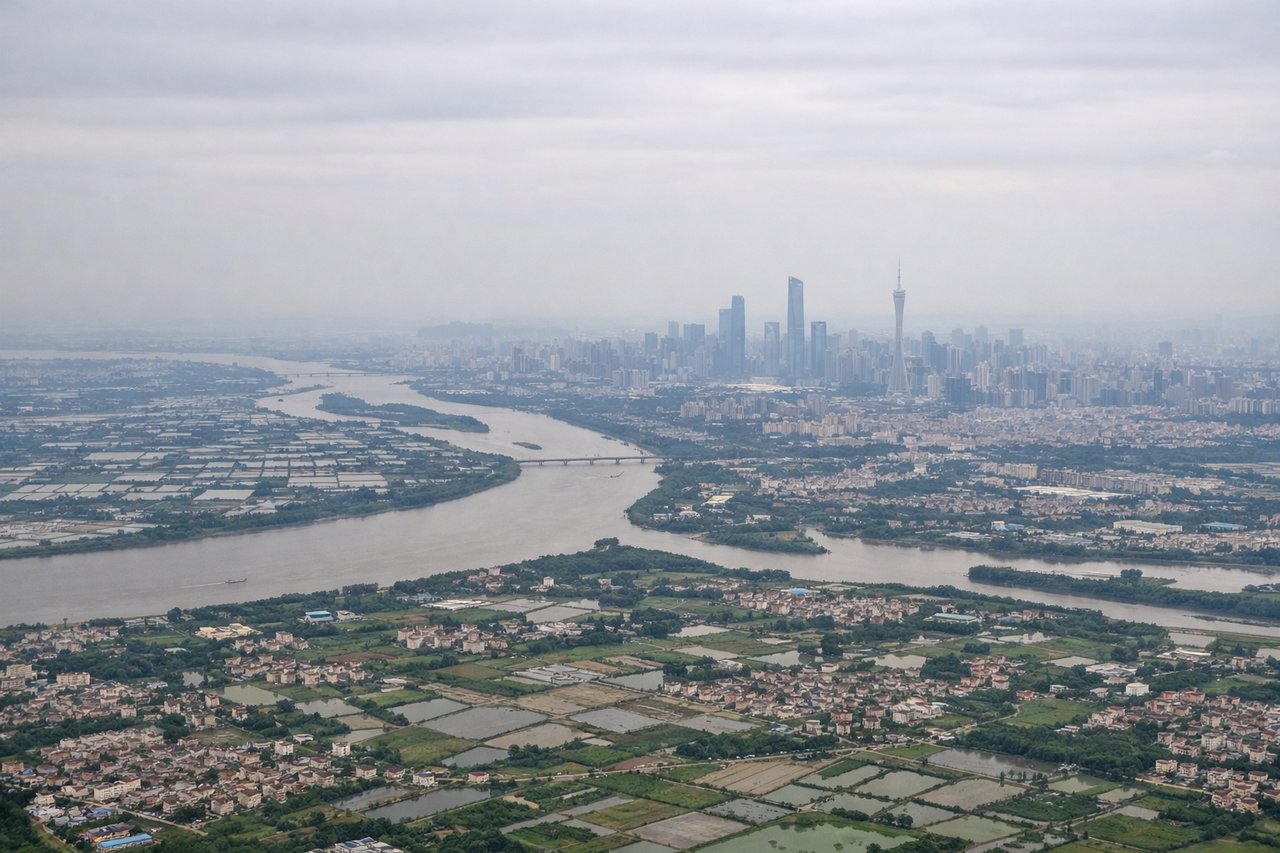
RIGHTArriving into CAN from the south over the South China Sea, the approach path skirts the eastern Pearl River Delta, giving right-side passengers glimpses of the dense Shenzhen-Dongguan urban corridor and the Pearl River's braided channels before the final turn onto Guangzhou's north-south runways.
Landmarks on this routeAll landmarks →
Will your flight be in sunlight?
Pick a date and time in the Sun Map to watch the sun move across your whole flight.
About This Route
Which side of the plane should I sit on flying from Auckland International (AKL) to Guangzhou Baiyun International Airport (CAN)?
Sit on the Right side of the plane for the best views on flights from Auckland to Guangzhou. The right side captures Auckland's harbour and skyline during the departure turn and the Pearl River Delta's urban sprawl on arrival, while the left side faces mostly featureless ocean for both phases; the cruise itself is overwhelmingly open water on both sides, so these bookend views decide the winner.
What can I see during takeoff from Auckland International in Auckland?
During takeoff from Auckland International (AKL), sit on the Right side for the best views. AKL departs southwest on runway 23L then banks right toward the northwest heading for Asia, swinging the right side of the aircraft over Auckland's Waitemata Harbour, the Sky Tower skyline, and Rangitoto's distinctive volcanic cone before leveling out over the Tasman Sea. Notable sights include: Auckland Sky Tower and CBD, Waitemata Harbour, Rangitoto Island, Hauraki Gulf islands.
What can I see when landing at Guangzhou Baiyun International Airport in Guangzhou?
When landing at Guangzhou Baiyun International Airport (CAN), sit on the Right side for the best views. Arriving into CAN from the south over the South China Sea, the approach path skirts the eastern Pearl River Delta, giving right-side passengers glimpses of the dense Shenzhen-Dongguan urban corridor and the Pearl River's braided channels before the final turn onto Guangzhou's north-south runways. Notable sights include: Pearl River Delta waterways, Dongguan-Shenzhen urban sprawl, Baiyun Mountain near Guangzhou, Pearl River.
How long is the flight from Auckland to Guangzhou?
The flight from Auckland International (AKL) to Guangzhou Baiyun International Airport (CAN) takes about 11 hours 10 minutes. The shortest flight path between them is 5,779 miles (9,300 km); winds and air traffic control usually add a few percent.
What does the Auckland to Guangzhou flight path pass over?
Coral Sea and open Pacific waters, scattered Philippine islands (Mindanao, Palawan) visible far to the right during cruise, then the South China Sea approaching Hainan and the Chinese coast