Auckland to Perth is 3,316 miles (5,337 km), a flight of about 5 hours 35 minutes.
The left side captures the only real terrain variety on this route — Auckland's harbour at departure and the Darling Range/Swan River scenery on arrival — while the right side sees mostly featureless ocean and flat outback for most of the flight.
Flight Path
Tasman Sea open water, southern Australian coastline near the Great Australian Bight, flat Nullarbor-adjacent plains before descent into the Perth basin
Great circle distance and headings ›

Phase by phase
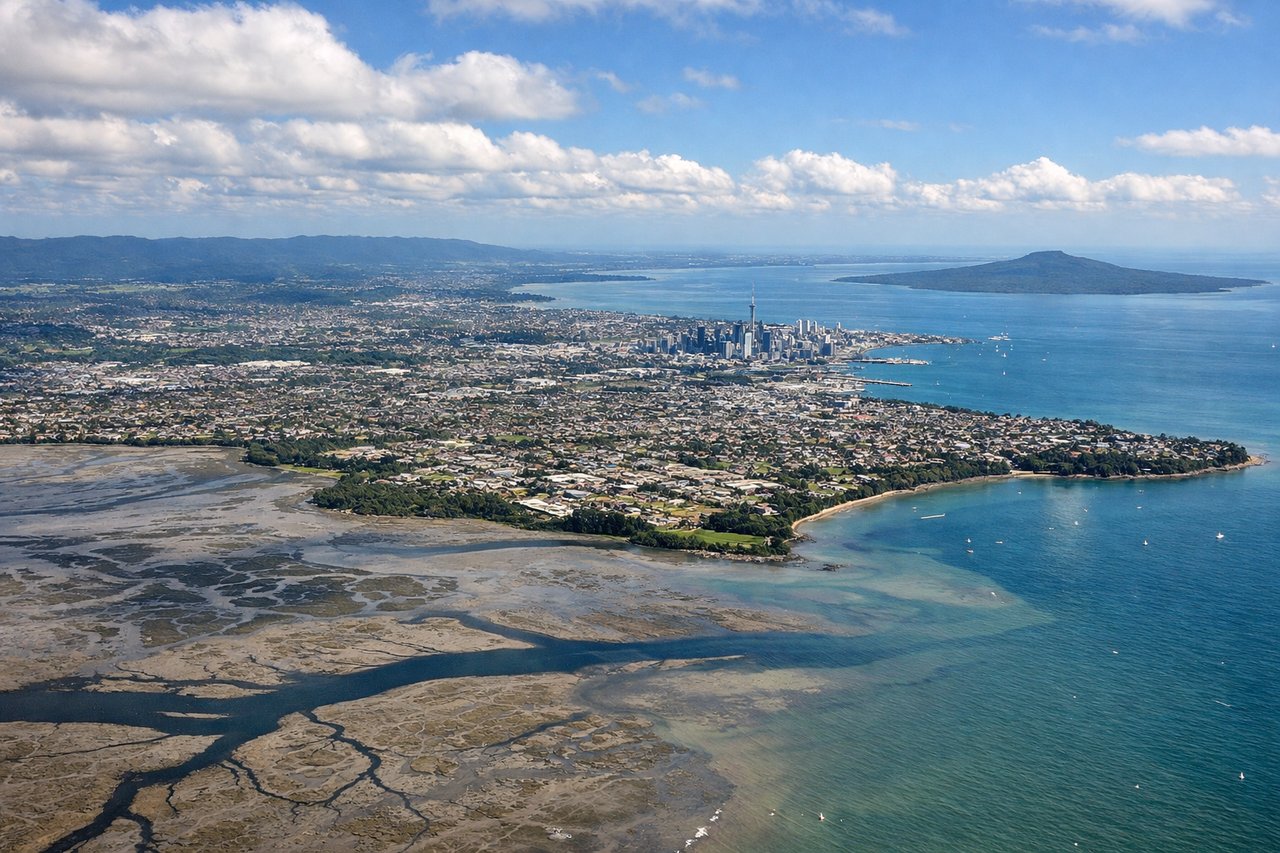
Takeoff from AKL
LEFTDeparting AKL on runway 23L, the climb-out banks over Manukau Harbour's tidal flats and the West Auckland coastline, giving left-side passengers a brief but distinct look at inlets and green hills before the long ocean crossing begins.
Landing at JAD
LEFTOn approach into Jandakot from the east, the descent path crosses the Darling Range escarpment south of Perth, offering views of forested scarp country and the Swan River estuary opening into the Indian Ocean before final approach.
Landmarks on this routeAll landmarks →
Will your flight be in sunlight?
Pick a date and time in the Sun Map to watch the sun move across your whole flight.
About This Route
Which side of the plane should I sit on flying from Auckland International (AKL) to Perth Jandakot (JAD)?
Sit on the Left side of the plane for the best views on flights from Auckland to Perth. The left side captures the only real terrain variety on this route — Auckland's harbour at departure and the Darling Range/Swan River scenery on arrival — while the right side sees mostly featureless ocean and flat outback for most of the flight.
What can I see during takeoff from Auckland International in Auckland?
During takeoff from Auckland International (AKL), sit on the Left side for the best views. Departing AKL on runway 23L, the climb-out banks over Manukau Harbour's tidal flats and the West Auckland coastline, giving left-side passengers a brief but distinct look at inlets and green hills before the long ocean crossing begins. Notable sights include: Manukau Harbour, Waitakere Ranges foothills, Tasman Sea coastline.
What can I see when landing at Perth Jandakot in Perth?
When landing at Perth Jandakot (JAD), sit on the Left side for the best views. On approach into Jandakot from the east, the descent path crosses the Darling Range escarpment south of Perth, offering views of forested scarp country and the Swan River estuary opening into the Indian Ocean before final approach. Notable sights include: Darling Range escarpment, Swan River estuary, Perth city skyline, Indian Ocean coastline.
How long is the flight from Auckland to Perth?
The flight from Auckland International (AKL) to Perth Jandakot (JAD) takes about 5 hours 35 minutes. The shortest flight path between them is 3,316 miles (5,337 km); winds and air traffic control usually add a few percent.
What does the Auckland to Perth flight path pass over?
Tasman Sea open water, southern Australian coastline near the Great Australian Bight, flat Nullarbor-adjacent plains before descent into the Perth basin