Angouleme to Seoul is 5,789 miles (9,317 km), a flight of about 11 hours 15 minutes.
While left offers pleasant European scenery during departure, right side captures the more dramatic and geographically significant features during the long approach to Seoul—the Han River estuary and Incheon's extensive waterfront are visually distinctive and worth the extended viewing time.
Flight Path
The flight path crosses the Alps (visible from cruising altitude as a snow-capped ridge roughly 2 hours after departure), the Danube River valley in Austria and Hungary, the Black Sea's northern coast, the Caucasus Mountains, the Caspian Sea's eastern shore, the steppes of Kazakhstan and western Mongolia, and finally the Korean Peninsula's western approach over the Yellow Sea. Most dramatic midpoint features are the Alps and Caucasus ranges, visible as white-topped ridges on the horizon during daylight cruise segments.
Great circle distance and headings ›Phase by phase
Takeoff from ANG
LEFTLeft side offers views of the Charente River valley and the rolling terrain of the Nouvelle-Aquitaine region as the aircraft climbs northeast. Right side faces inland toward less distinctive agricultural plains.
Landing at ICN
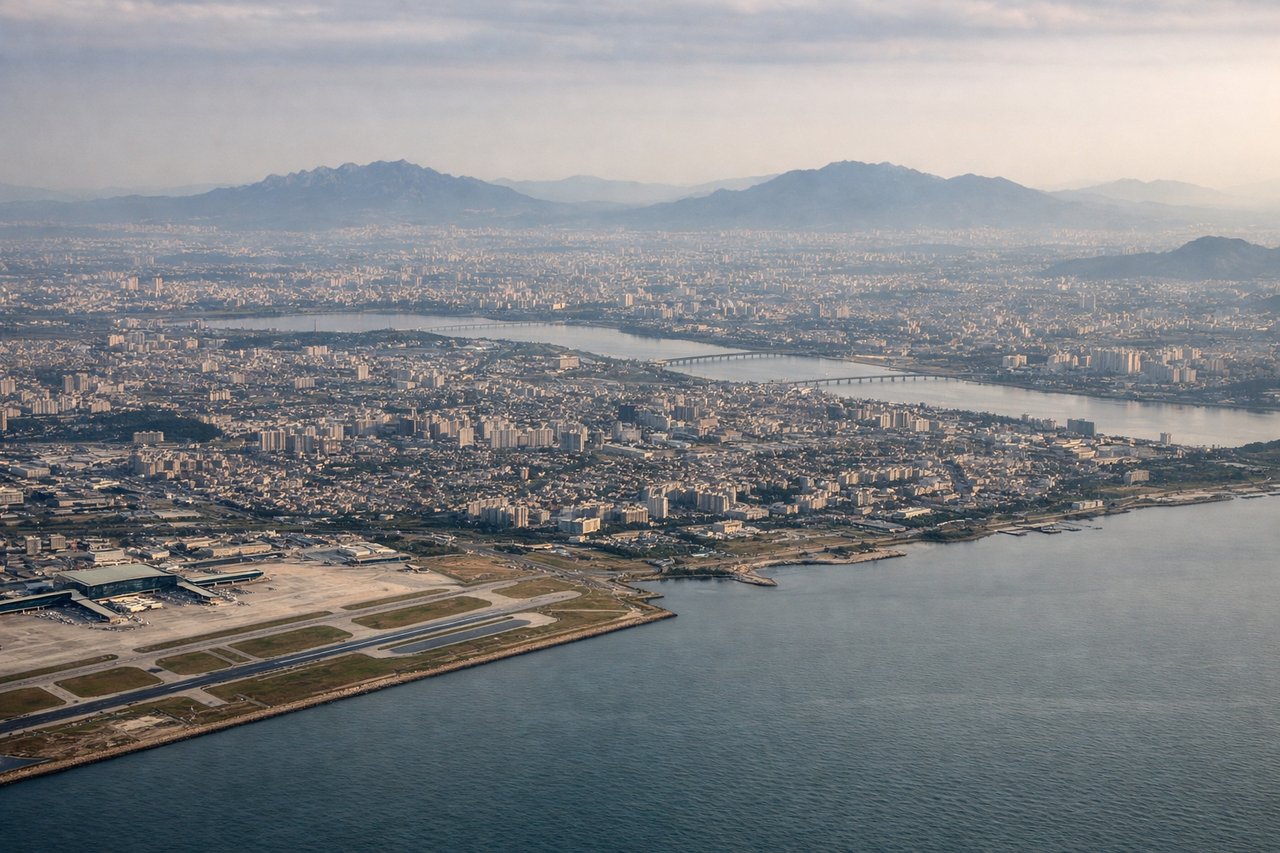
RIGHTRight side provides views of the Han River estuary, Incheon's industrial waterfront, and the approach over the Yellow Sea. The aircraft descends from the west, making right-side seats ideal for viewing the water and coastal infrastructure.
Landmarks on this routeAll landmarks →
Will your flight be in sunlight?
Pick a date and time in the Sun Map to watch the sun move across your whole flight.
About This Route
Which side of the plane should I sit on flying from Brie Champniers (ANG) to Incheon International (ICN)?
Sit on the Right side of the plane for the best views on flights from Angouleme to Seoul. While left offers pleasant European scenery during departure, right side captures the more dramatic and geographically significant features during the long approach to Seoul—the Han River estuary and Incheon's extensive waterfront are visually distinctive and worth the extended viewing time.
What can I see during takeoff from Brie Champniers in Angouleme?
During takeoff from Brie Champniers (ANG), sit on the Left side for the best views. Left side offers views of the Charente River valley and the rolling terrain of the Nouvelle-Aquitaine region as the aircraft climbs northeast. Right side faces inland toward less distinctive agricultural plains. Notable sights include: Charente River (winding through the valley below), Angouleme city center (visible briefly during initial climb), Atlantic coastal plains to the northwest horizon.
What can I see when landing at Incheon International in Seoul?
When landing at Incheon International (ICN), sit on the Right side for the best views. Right side provides views of the Han River estuary, Incheon's industrial waterfront, and the approach over the Yellow Sea. The aircraft descends from the west, making right-side seats ideal for viewing the water and coastal infrastructure. Notable sights include: Han River estuary (wide, muddy-colored waterway), Incheon's port facilities and reclaimed land areas, Yellow Sea coastline, Seoul's urban sprawl visible inland to the southeast.
How long is the flight from Angouleme to Seoul?
The flight from Brie Champniers (ANG) to Incheon International (ICN) takes about 11 hours 15 minutes. The shortest flight path between them is 5,789 miles (9,317 km); winds and air traffic control usually add a few percent.
What does the Angouleme to Seoul flight path pass over?
The flight path crosses the Alps (visible from cruising altitude as a snow-capped ridge roughly 2 hours after departure), the Danube River valley in Austria and Hungary, the Black Sea's northern coast, the Caucasus Mountains, the Caspian Sea's eastern shore, the steppes of Kazakhstan and western Mongolia, and finally the Korean Peninsula's western approach over the Yellow Sea. Most dramatic midpoint features are the Alps and Caucasus ranges, visible as white-topped ridges on the horizon during daylight cruise segments.