Right-side seats capture the superior takeoff scenery (MacDonnell Ranges are more visually striking than the western ranges), and while landing favors the left, the dramatic eastern departure view makes right the better overall choice for this route.
Flown ASP to TPE? Did we get it right?
Flight Path
Alice Springs to Taipei is 3,482 miles (5,604 km), a flight of about 6 hours.
The flight path crosses the Arafura Sea and Timor Sea heading northwest, passing east of Darwin and over the Indonesian archipelago (Timor, Flores, and surrounding islands). The Timor Sea crossing offers open water views for roughly 2-3 hours mid-flight. As the aircraft approaches Taiwan, it crosses the Luzon Strait between the Philippines and Taiwan, with the northern Philippines visible to the southwest before final approach into the Taipei Basin.
Great circle distance and headings ›Phase by phase
Takeoff from ASP
RIGHTAlice Springs typically departs to the east or northeast. Right-side seats offer views of the MacDonnell Ranges immediately east of the airport, which rise dramatically from the red desert floor and are visible for the first 15-20 minutes of climb.
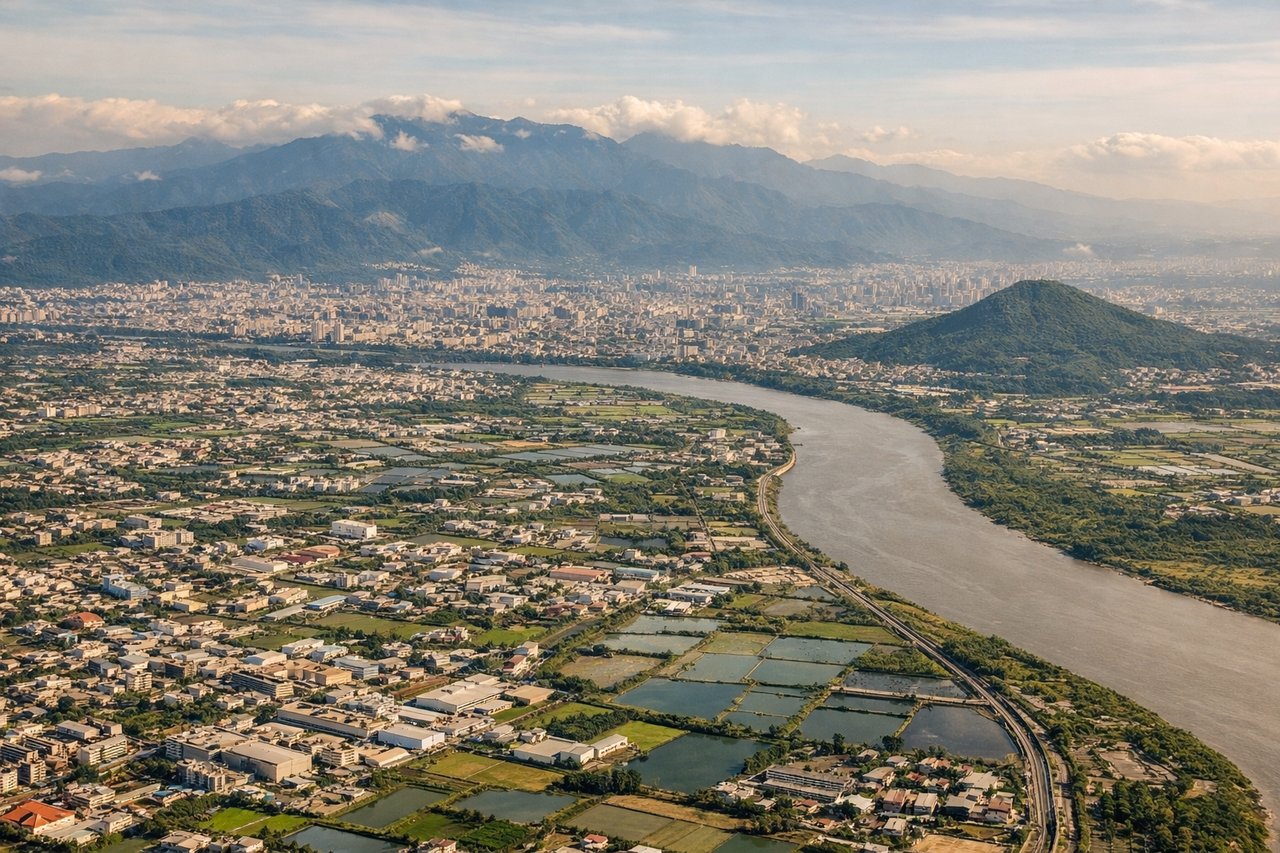
Landing at TPE
LEFTTaipei typically lands from the northwest on runways 05L/05R. Left-side seats during descent offer views of the Taipei Basin, the Tamsui River delta, and the northern coastal plains. The approach path crosses over the basin's urban sprawl and agricultural areas before final descent.
Will your flight be in sunlight?
Pick a date and time in the Sun Map to watch the sun move across your whole flight.
About This Route
Which side of the plane should I sit on flying from Alice Springs (ASP) to Chiang Kai Shek International (TPE)?
Sit on the Right side of the plane for the best views on flights from Alice Springs to Taipei. Right-side seats capture the superior takeoff scenery (MacDonnell Ranges are more visually striking than the western ranges), and while landing favors the left, the dramatic eastern departure view makes right the better overall choice for this route.
What can I see during takeoff from Alice Springs in Alice Springs?
During takeoff from Alice Springs (ASP), sit on the Right side for the best views. Alice Springs typically departs to the east or northeast. Right-side seats offer views of the MacDonnell Ranges immediately east of the airport, which rise dramatically from the red desert floor and are visible for the first 15-20 minutes of climb. Notable sights include: MacDonnell Ranges (east), West MacDonnell Ranges (west, visible on left but less dramatic), Alice Springs town grid (directly below initially), red desert plains extending north toward Tennant Creek.
What can I see when landing at Chiang Kai Shek International in Taipei?
When landing at Chiang Kai Shek International (TPE), sit on the Left side for the best views. Taipei typically lands from the northwest on runways 05L/05R. Left-side seats during descent offer views of the Taipei Basin, the Tamsui River delta, and the northern coastal plains. The approach path crosses over the basin's urban sprawl and agricultural areas before final descent. Notable sights include: Taipei 101 and downtown Taipei (visible as a dense urban cluster in the basin), Tamsui River and its delta (silvery waterway), Yangmingshan volcanic plateau (northwest of basin), northern Taiwan coastal plains.
How long is the flight from Alice Springs to Taipei?
The flight from Alice Springs (ASP) to Chiang Kai Shek International (TPE) takes about 6 hours. The shortest flight path between them is 3,482 miles (5,604 km); winds and air traffic control usually add a few percent.
What does the Alice Springs to Taipei flight path pass over?
The flight path crosses the Arafura Sea and Timor Sea heading northwest, passing east of Darwin and over the Indonesian archipelago (Timor, Flores, and surrounding islands). The Timor Sea crossing offers open water views for roughly 2-3 hours mid-flight. As the aircraft approaches Taiwan, it crosses the Luzon Strait between the Philippines and Taiwan, with the northern Philippines visible to the southwest before final approach into the Taipei Basin.