While the takeoff offers pleasant Aegean coastal views, the landing approach on the right provides more dramatic and distinctive scenery—the Montserrat peaks are iconic and visually striking, making the right side the better choice for the overall flight experience.
Flown ATH to BCN? Did we get it right?
Flight Path
Athens to Barcelona is 1,183 miles (1,905 km), a flight of about 3 hours 15 minutes.
The flight path crosses the Ionian Sea and central Mediterranean, passing over the Peloponnese peninsula (visible during early climb with the Gulf of Corinth), then over the Ionian islands (Corfu, Cephalonia visible as dark landmasses), across open Mediterranean water, and approaching the Spanish coast near the Ebro River delta before turning toward Barcelona. The Tyrrhenian Sea and Sardinia may be visible to the north depending on exact routing. The central Mediterranean crossing offers mostly open water with occasional glimpses of small islands.
Great circle distance and headings ›


Phase by phase
Takeoff from ATH
LEFTLeft side offers immediate views of the Saronic Gulf and the Attica coastline as the aircraft climbs out northwestward. You'll see the irregular rocky shoreline and small islands dotting the water before the aircraft turns west toward the Ionian Sea.
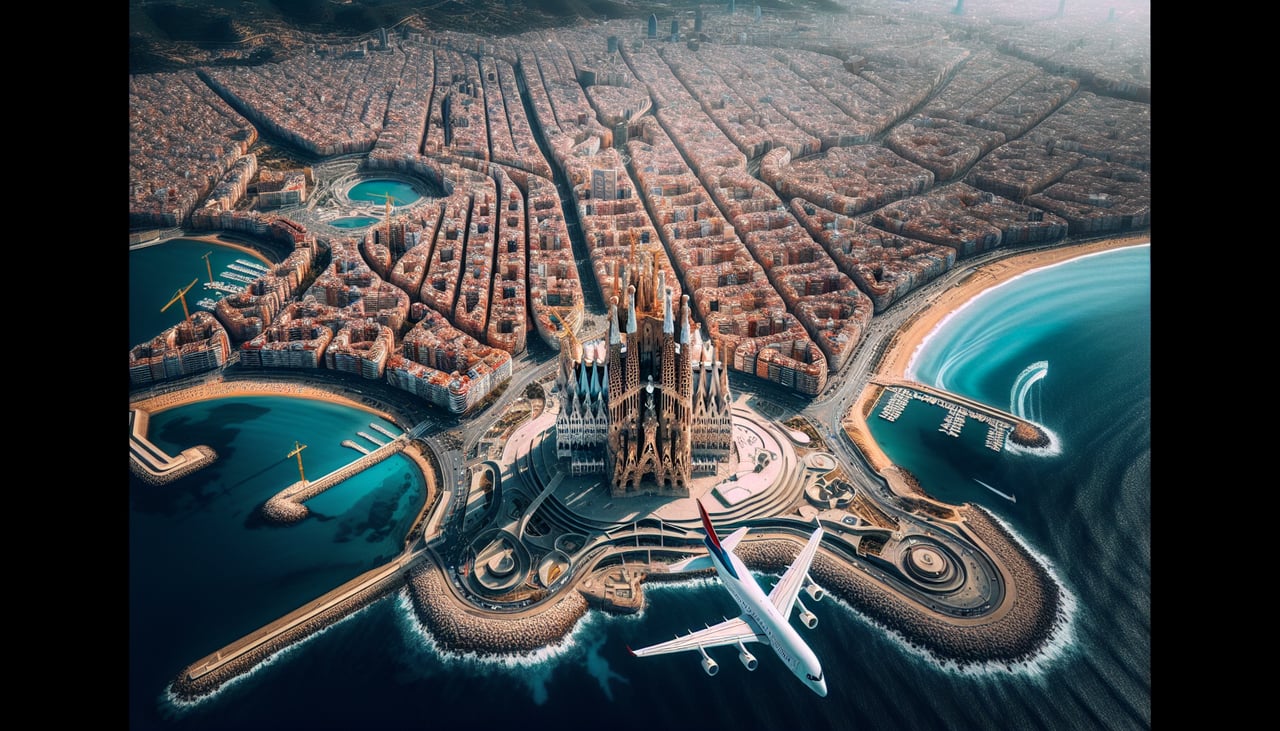
Landing at BCN
RIGHTRight side provides excellent views during the descent approach into Barcelona. You'll see the Montserrat mountain range rising dramatically inland, and the Llobregat River delta with its distinctive agricultural grid pattern as the aircraft descends toward the coastal airport.
Will your flight be in sunlight?
Pick a date and time in the Sun Map to watch the sun move across your whole flight.
About This Route
Which side of the plane should I sit on flying from Athens International Eleftherios Venizelos (ATH) to Barcelona (BCN)?
Sit on the Right side of the plane for the best views on flights from Athens to Barcelona. While the takeoff offers pleasant Aegean coastal views, the landing approach on the right provides more dramatic and distinctive scenery—the Montserrat peaks are iconic and visually striking, making the right side the better choice for the overall flight experience.
What can I see during takeoff from Athens International Eleftherios Venizelos in Athens?
During takeoff from Athens International Eleftherios Venizelos (ATH), sit on the Left side for the best views. Left side offers immediate views of the Saronic Gulf and the Attica coastline as the aircraft climbs out northwestward. You'll see the irregular rocky shoreline and small islands dotting the water before the aircraft turns west toward the Ionian Sea. Notable sights include: Saronic Gulf, Attica Peninsula coastline, small Aegean islands (Salamis, Aegina visible as dark shapes in the water), Athens urban sprawl receding below.
What can I see when landing at Barcelona in Barcelona?
When landing at Barcelona (BCN), sit on the Right side for the best views. Right side provides excellent views during the descent approach into Barcelona. You'll see the Montserrat mountain range rising dramatically inland, and the Llobregat River delta with its distinctive agricultural grid pattern as the aircraft descends toward the coastal airport. Notable sights include: Montserrat mountain range (distinctive jagged peaks), Llobregat River delta with geometric field patterns, Mediterranean coastline near Barcelona, Collserola Hills.
How long is the flight from Athens to Barcelona?
The flight from Athens International Eleftherios Venizelos (ATH) to Barcelona (BCN) takes about 3 hours 15 minutes. The shortest flight path between them is 1,183 miles (1,905 km); winds and air traffic control usually add a few percent.
What does the Athens to Barcelona flight path pass over?
The flight path crosses the Ionian Sea and central Mediterranean, passing over the Peloponnese peninsula (visible during early climb with the Gulf of Corinth), then over the Ionian islands (Corfu, Cephalonia visible as dark landmasses), across open Mediterranean water, and approaching the Spanish coast near the Ebro River delta before turning toward Barcelona. The Tyrrhenian Sea and Sardinia may be visible to the north depending on exact routing. The central Mediterranean crossing offers mostly open water with occasional glimpses of small islands.