The left side captures the more visually interesting departure over Abu Dhabi's island city and the shallow turquoise Gulf waters. The flight is short and largely over open water, so the takeoff phase offers the most concentrated scenery, and the left side wins that decisively.
Flown AUH to DOH? Did we get it right?
Flight Path
Abu Dhabi to Doha is 199 miles (320 km), a flight of about 1 hour 5 minutes.
The flight crosses the Arabian Gulf almost entirely over open water. The Qatar coastline becomes visible on the right side roughly 20-25 minutes before landing. The shallow Bahraini shelf waters give the Gulf a distinctive pale turquoise color at lower altitudes. No significant land features are crossed mid-flight — it is essentially a water crossing between two low-lying coastal capitals.
Great circle distance and headings ›Phase by phase
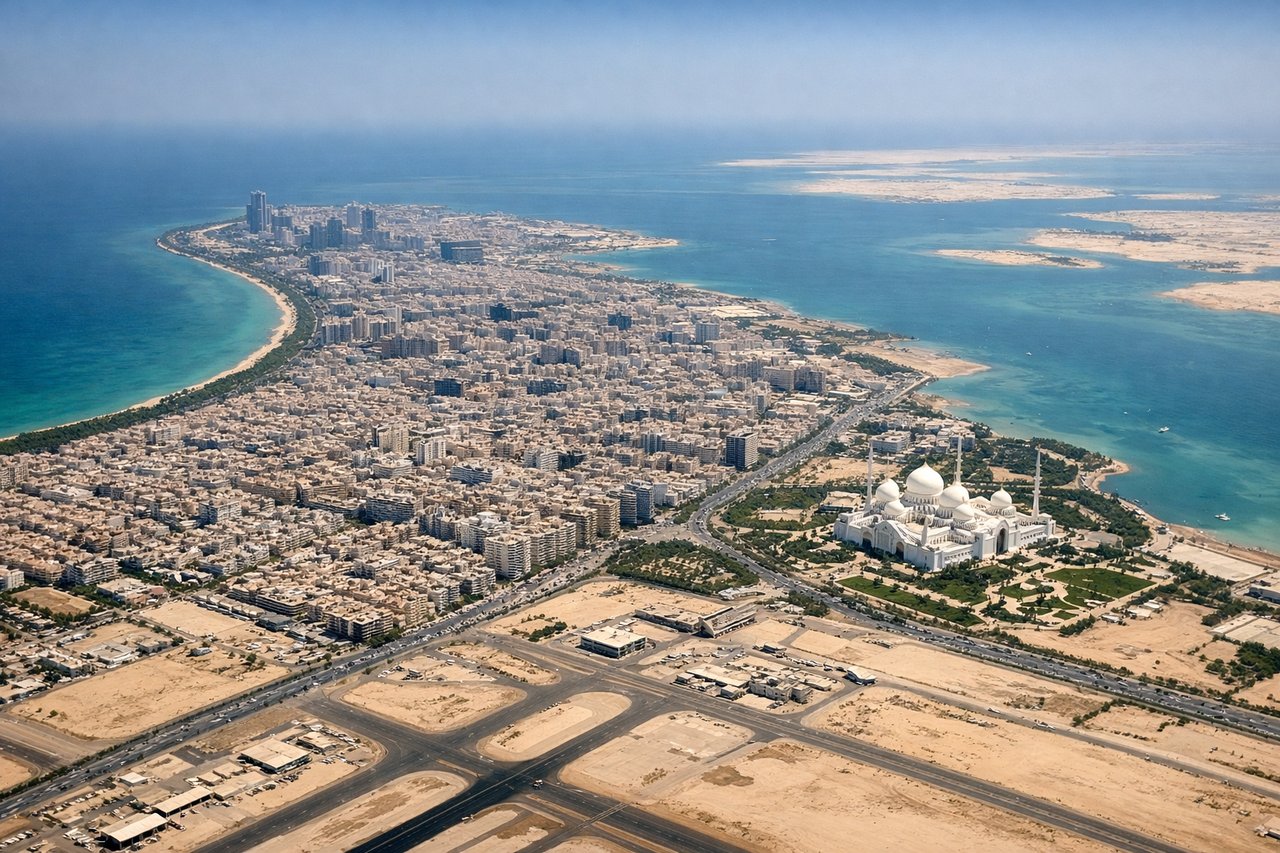
Takeoff from AUH
LEFTAbu Dhabi International's primary departure runway 31L/31R sends aircraft northwest before turning northeast toward Qatar. A left-side seat gives you a clear view over Abu Dhabi city, the Corniche waterfront, and the dense island development of the capital as you climb out over the Arabian Gulf.
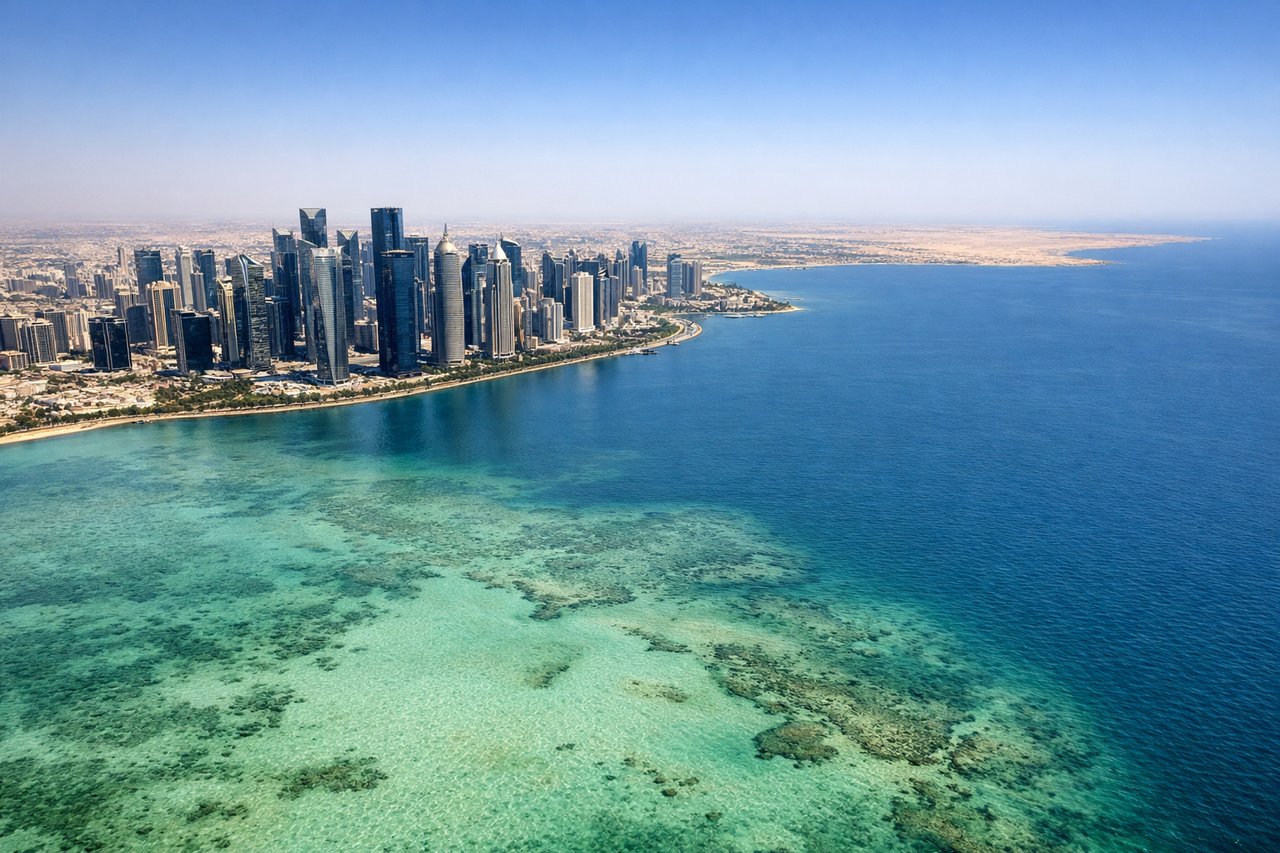
Landing at DOH
RIGHTDoha's old international airport (now used for cargo and some operations) sits on the eastern edge of the city, with approaches typically from the east or northeast over the Gulf. A right-side seat on approach gives you a view over Doha Bay, the West Bay skyline cluster, and the distinctive curvature of the Corniche as you descend.
Will your flight be in sunlight?
Pick a date and time in the Sun Map to watch the sun move across your whole flight.
About This Route
Which side of the plane should I sit on flying from Abu Dhabi International (AUH) to Hamad International Airport (DOH)?
Sit on the Left side of the plane for the best views on flights from Abu Dhabi to Doha. The left side captures the more visually interesting departure over Abu Dhabi's island city and the shallow turquoise Gulf waters. The flight is short and largely over open water, so the takeoff phase offers the most concentrated scenery, and the left side wins that decisively.
What can I see during takeoff from Abu Dhabi International in Abu Dhabi?
During takeoff from Abu Dhabi International (AUH), sit on the Left side for the best views. Abu Dhabi International's primary departure runway 31L/31R sends aircraft northwest before turning northeast toward Qatar. A left-side seat gives you a clear view over Abu Dhabi city, the Corniche waterfront, and the dense island development of the capital as you climb out over the Arabian Gulf. Notable sights include: Abu Dhabi Corniche and city center, Yas Island and its distinctive circuit layout, the shallow turquoise waters of the inner Abu Dhabi archipelago, Saadiyat Island.
What can I see when landing at Hamad International Airport in Doha?
When landing at Hamad International Airport (DOH), sit on the Right side for the best views. Doha's old international airport (now used for cargo and some operations) sits on the eastern edge of the city, with approaches typically from the east or northeast over the Gulf. A right-side seat on approach gives you a view over Doha Bay, the West Bay skyline cluster, and the distinctive curvature of the Corniche as you descend. Notable sights include: Doha Bay and its curved shoreline, West Bay skyscraper cluster, the Qatar Peninsula coastline, Palm Tree Island near the Corniche.
How long is the flight from Abu Dhabi to Doha?
The flight from Abu Dhabi International (AUH) to Hamad International Airport (DOH) takes about 1 hour 5 minutes. The shortest flight path between them is 199 miles (320 km); winds and air traffic control usually add a few percent.
What does the Abu Dhabi to Doha flight path pass over?
The flight crosses the Arabian Gulf almost entirely over open water. The Qatar coastline becomes visible on the right side roughly 20-25 minutes before landing. The shallow Bahraini shelf waters give the Gulf a distinctive pale turquoise color at lower altitudes. No significant land features are crossed mid-flight — it is essentially a water crossing between two low-lying coastal capitals.