The takeoff experience from Abu Dhabi is significantly more scenic than the landing approach to Tokyo. The Persian Gulf and Hajar Mountains provide striking visual contrast immediately after departure, while the Tokyo approach, though urban-dense, offers less dramatic natural features. Right-side seats capture the superior early-flight scenery.
Flown AUH to HND? Did we get it right?
Flight Path
Abu Dhabi to Tokyo is 4,998 miles (8,044 km), a flight of about 9 hours 50 minutes.
The flight path crosses the Arabian Sea, the Indian subcontinent (with the Western Ghats visible on clear days), the Bay of Bengal, and Southeast Asia. Notable midpoint landmarks include the Deccan Plateau, the Irrawaddy Delta in Myanmar, and the Andaman Sea. The route typically passes over or near the Himalayas' southern foothills when crossing into South Asia, though these are often obscured by haze. The South China Sea crossing offers views of scattered islands and shipping lanes. Sunrise or sunset occurs during the midpoint, depending on departure time.
Great circle distance and headings ›


Phase by phase
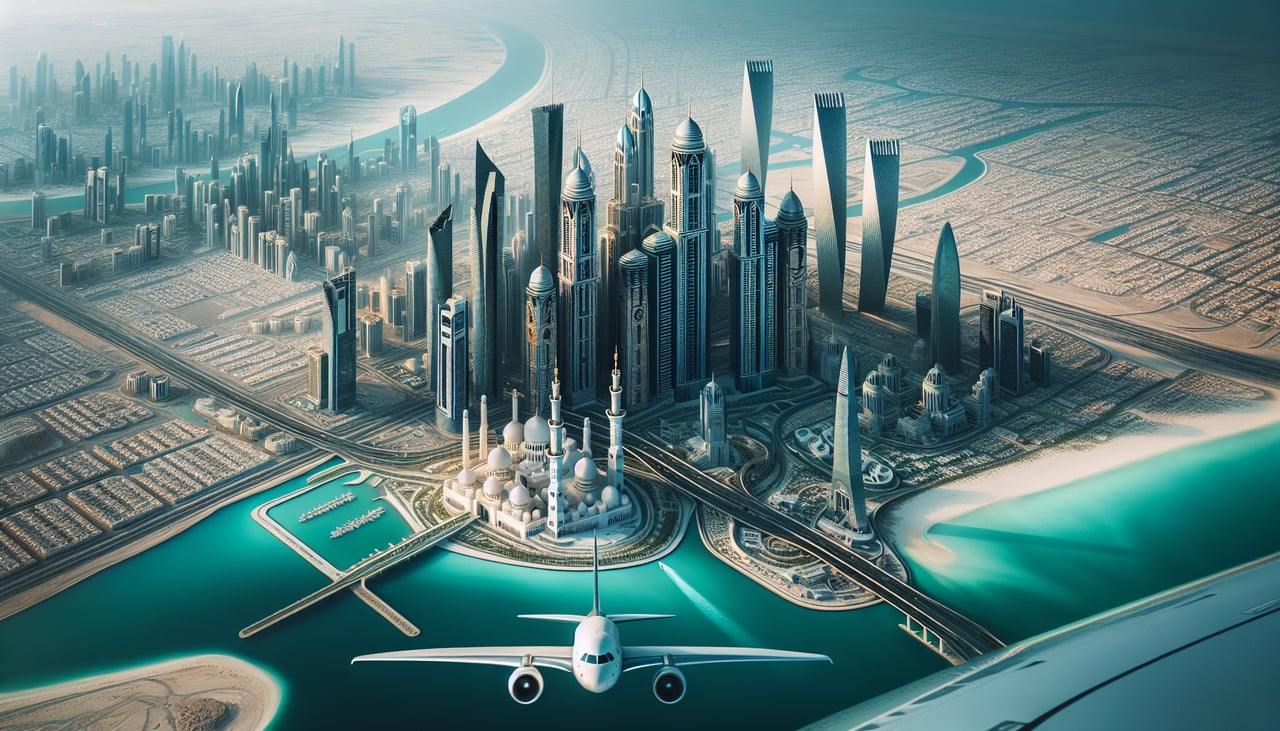
Takeoff from AUH
RIGHTRight-side seats offer views of the Persian Gulf coastline and the Hajar Mountains to the southeast as the aircraft climbs. The left side faces inland toward the flat desert interior with minimal visual interest during the initial climb.
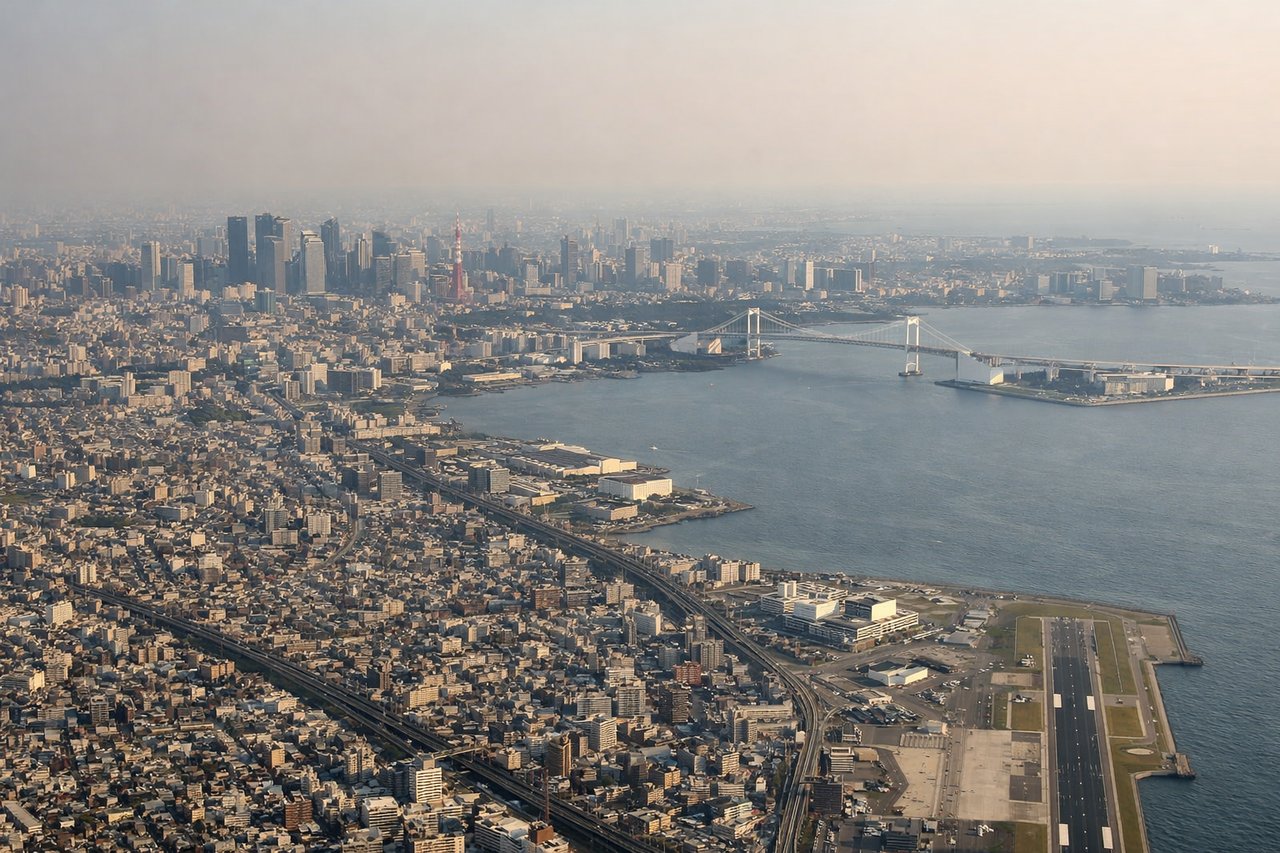
Landing at HND
LEFTLeft-side seats provide views of Tokyo Bay, the Kanto Plain, and Mount Fuji (weather permitting) during the approach from the west. The right side faces the Pacific Ocean with less distinctive landmarks during final descent.
Will your flight be in sunlight?
Pick a date and time in the Sun Map to watch the sun move across your whole flight.
About This Route
Which side of the plane should I sit on flying from Abu Dhabi International (AUH) to Tokyo International (HND)?
Sit on the Right side of the plane for the best views on flights from Abu Dhabi to Tokyo. The takeoff experience from Abu Dhabi is significantly more scenic than the landing approach to Tokyo. The Persian Gulf and Hajar Mountains provide striking visual contrast immediately after departure, while the Tokyo approach, though urban-dense, offers less dramatic natural features. Right-side seats capture the superior early-flight scenery.
What can I see during takeoff from Abu Dhabi International in Abu Dhabi?
During takeoff from Abu Dhabi International (AUH), sit on the Right side for the best views. Right-side seats offer views of the Persian Gulf coastline and the Hajar Mountains to the southeast as the aircraft climbs. The left side faces inland toward the flat desert interior with minimal visual interest during the initial climb. Notable sights include: Persian Gulf (immediate coastline), Hajar Mountains (southeastern horizon), Abu Dhabi city grid (receding below), Jebel Hafeet (distant peak to the south).
What can I see when landing at Tokyo International in Tokyo?
When landing at Tokyo International (HND), sit on the Left side for the best views. Left-side seats provide views of Tokyo Bay, the Kanto Plain, and Mount Fuji (weather permitting) during the approach from the west. The right side faces the Pacific Ocean with less distinctive landmarks during final descent. Notable sights include: Tokyo Bay (central waterway), Kanto Plain urban sprawl (extensive city grid), Mount Fuji (distant peak to the west, seasonal visibility), Boso Peninsula (eastern shoreline).
How long is the flight from Abu Dhabi to Tokyo?
The flight from Abu Dhabi International (AUH) to Tokyo International (HND) takes about 9 hours 50 minutes. The shortest flight path between them is 4,998 miles (8,044 km); winds and air traffic control usually add a few percent.
What does the Abu Dhabi to Tokyo flight path pass over?
The flight path crosses the Arabian Sea, the Indian subcontinent (with the Western Ghats visible on clear days), the Bay of Bengal, and Southeast Asia. Notable midpoint landmarks include the Deccan Plateau, the Irrawaddy Delta in Myanmar, and the Andaman Sea. The route typically passes over or near the Himalayas' southern foothills when crossing into South Asia, though these are often obscured by haze. The South China Sea crossing offers views of scattered islands and shipping lanes. Sunrise or sunset occurs during the midpoint, depending on departure time.