Avalon to Sydney is 470 miles (756 km), a flight of about 1 hour 15 minutes.
While takeoff favors the right, the landing approach provides superior views of Sydney's most recognizable geography—the Blue Mountains, Parramatta River, and Harbour. The landing experience outweighs the takeoff advantage.
Flight Path
The flight path crosses the Strzelecki Ranges (low forested hills ~40 miles northeast of Avalon), then tracks over the Gippsland plains and coastal regions. The Shoalhaven River valley becomes visible during descent into Sydney airspace. No major mountain ranges dominate the midpoint, but the transition from volcanic western Victoria to the sandstone plateaus of the NSW coast is geologically significant, though subtle from altitude.
Great circle distance and headings ›Phase by phase
Takeoff from AVV
RIGHTAvalon typically departs to the north or northeast. Right-side seats offer views of Port Phillip Bay's eastern shoreline and the You Yangs Range, which rise distinctly inland from the coast.
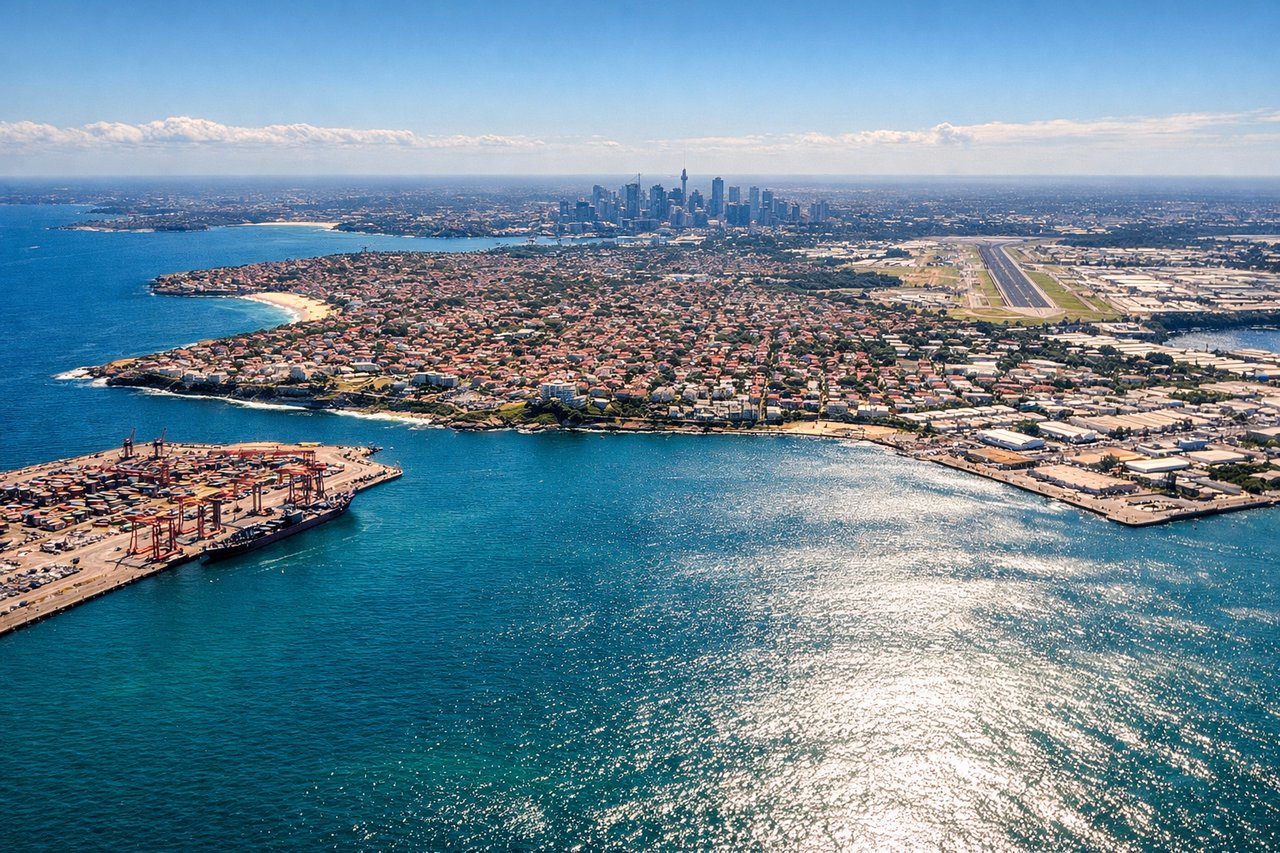
Landing at SYD
LEFTSydney typically lands on runways 16L/R or 34L/R depending on wind. On approach from the southwest, left-side seats provide direct views of the Blue Mountains escarpment, Parramatta River, and Sydney Harbour's iconic geography as the aircraft descends toward the airport.
Landmarks on this routeAll landmarks →
Will your flight be in sunlight?
Pick a date and time in the Sun Map to watch the sun move across your whole flight.
About This Route
Which side of the plane should I sit on flying from Avalon (AVV) to Kingsford Smith International Airport (SYD)?
Sit on the Left side of the plane for the best views on flights from Avalon to Sydney. While takeoff favors the right, the landing approach provides superior views of Sydney's most recognizable geography—the Blue Mountains, Parramatta River, and Harbour. The landing experience outweighs the takeoff advantage.
What can I see during takeoff from Avalon in Avalon?
During takeoff from Avalon (AVV), sit on the Right side for the best views. Avalon typically departs to the north or northeast. Right-side seats offer views of Port Phillip Bay's eastern shoreline and the You Yangs Range, which rise distinctly inland from the coast. Notable sights include: Port Phillip Bay (immediate offshore), You Yangs Range (low volcanic hills ~20 miles northeast), Geelong urban area (western shore), Dandenong Ranges (distant southeastern horizon).
What can I see when landing at Kingsford Smith International Airport in Sydney?
When landing at Kingsford Smith International Airport (SYD), sit on the Left side for the best views. Sydney typically lands on runways 16L/R or 34L/R depending on wind. On approach from the southwest, left-side seats provide direct views of the Blue Mountains escarpment, Parramatta River, and Sydney Harbour's iconic geography as the aircraft descends toward the airport. Notable sights include: Blue Mountains (western horizon, distinctive cliff-edge escarpment), Parramatta River (winding inland waterway), Sydney Harbour (recognizable water body with headlands), Botany Bay (southern approach path).
How long is the flight from Avalon to Sydney?
The flight from Avalon (AVV) to Kingsford Smith International Airport (SYD) takes about 1 hour 15 minutes. The shortest flight path between them is 470 miles (756 km); winds and air traffic control usually add a few percent.
What does the Avalon to Sydney flight path pass over?
The flight path crosses the Strzelecki Ranges (low forested hills ~40 miles northeast of Avalon), then tracks over the Gippsland plains and coastal regions. The Shoalhaven River valley becomes visible during descent into Sydney airspace. No major mountain ranges dominate the midpoint, but the transition from volcanic western Victoria to the sandstone plateaus of the NSW coast is geologically significant, though subtle from altitude.