Right-side seats capture the most dramatic scenery: the Persian Gulf departure and the Alps' approach during landing. The left side offers good alpine views but misses the striking gulf waters at takeoff.
Flight Path
The flight path crosses the Zagros Mountains (eastern Iraq/Iran border), the Mesopotamian plains, the Syrian Desert, and enters European airspace over Turkey before crossing into the Mediterranean and approaching the Alps from the south. Notable midpoint landmarks include the Euphrates River valley, the Anti-Taurus Mountains, and the transition from Middle Eastern arid terrain to European green landscapes.
Great circle distance and headings ›

.jpg?width=600)

Phase by phase
Takeoff from BAH
RIGHTRight-side seats offer views of the Persian Gulf coastline and Bahrain's shallow waters as the aircraft climbs northwestward. You'll see the distinctive shallow turquoise waters and the archipelago's islands receding below.
Landing at MXP
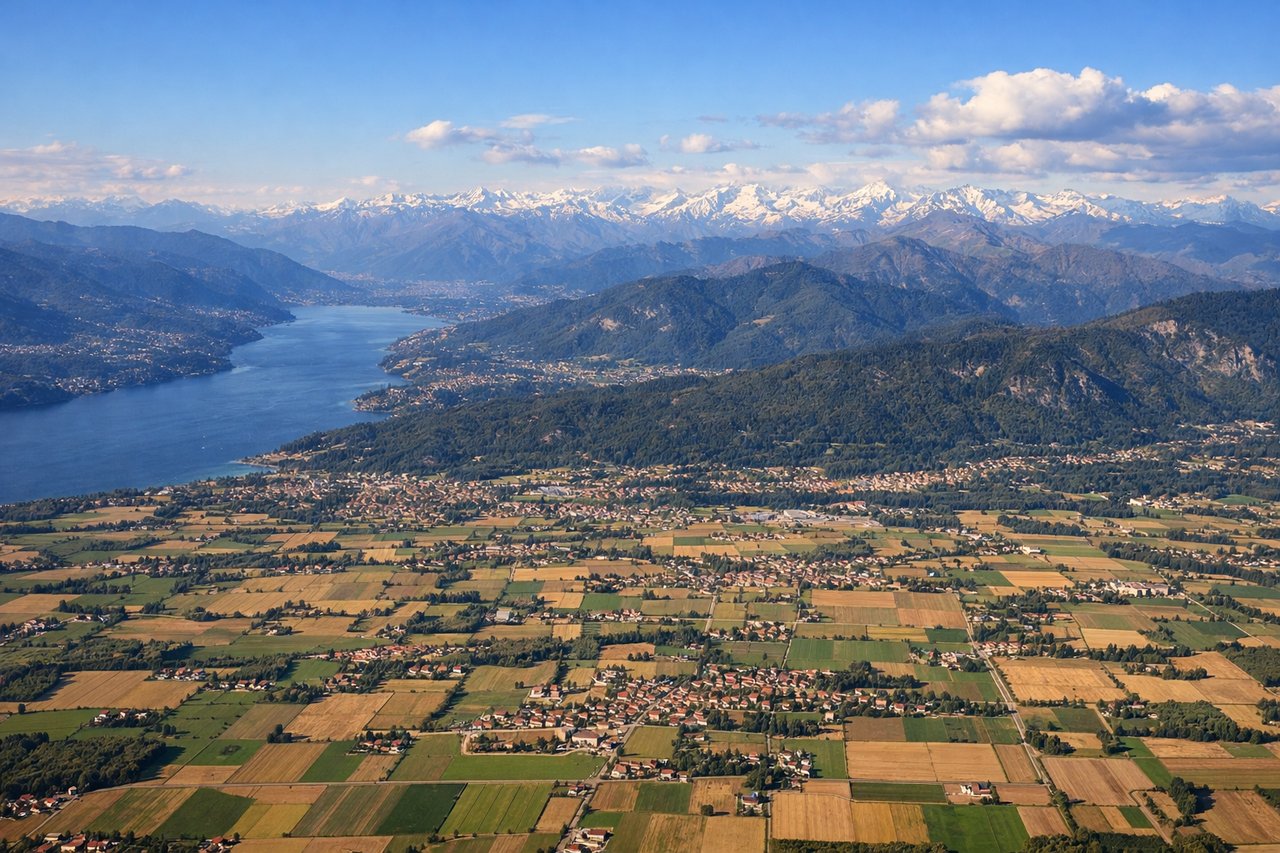
LEFTLeft-side seats provide excellent views during the descent into Malpensa. You'll see the Alps' southern foothills and the Ticino River valley as the aircraft approaches from the southeast, with Lake Maggiore visible to the north.
Landmarks on this routeAll landmarks →
Will your flight be in sunlight?
See exactly which side of the plane gets sun and shade at your departure time.
About This Route
Which side of the plane should I sit on flying from Bahrain International (BAH) to Malpensa (MXP)?
Sit on the Right side of the plane for the best views on flights from Bahrain to Milano. Right-side seats capture the most dramatic scenery: the Persian Gulf departure and the Alps' approach during landing. The left side offers good alpine views but misses the striking gulf waters at takeoff.
What can I see during takeoff from Bahrain International in Bahrain?
During takeoff from Bahrain International (BAH), sit on the Right side for the best views. Right-side seats offer views of the Persian Gulf coastline and Bahrain's shallow waters as the aircraft climbs northwestward. You'll see the distinctive shallow turquoise waters and the archipelago's islands receding below. Notable sights include: Persian Gulf (turquoise shallow waters), Bahrain Island (main landmass), Hawar Islands (small islands to the southeast), Qatar Peninsula (distant landmass on horizon to the west).
What can I see when landing at Malpensa in Milano?
When landing at Malpensa (MXP), sit on the Left side for the best views. Left-side seats provide excellent views during the descent into Malpensa. You'll see the Alps' southern foothills and the Ticino River valley as the aircraft approaches from the southeast, with Lake Maggiore visible to the north. Notable sights include: Alps (snow-capped peaks on northern horizon), Ticino River valley (green river corridor below), Lake Maggiore (large alpine lake to the north), Po River plain (flat agricultural landscape to the south).
How long is the flight from Bahrain to Milano?
The flight from Bahrain International (BAH) to Malpensa (MXP) takes Approximately 5 hours 15 minutes.
What does the Bahrain to Milano flight path pass over?
The flight path crosses the Zagros Mountains (eastern Iraq/Iran border), the Mesopotamian plains, the Syrian Desert, and enters European airspace over Turkey before crossing into the Mediterranean and approaching the Alps from the south. Notable midpoint landmarks include the Euphrates River valley, the Anti-Taurus Mountains, and the transition from Middle Eastern arid terrain to European green landscapes.