Windsor Locks to Chicago is 781 miles (1,257 km), a flight of about 2 hours 15 minutes.
The left side delivers the better views at both ends of the flight — Hartford and the Connecticut River on departure, and Chicago's lakefront and skyline on approach. Across the cruise portion heading due west, the left side also faces slightly more southward, keeping Lake Erie's southern shore and the broader Great Lakes region in peripheral view.
Flight Path
The flight tracks nearly due west along roughly 42°N latitude, crossing the Catskill foothills of upstate New York, then the broad flat agricultural plains of central New York state, over the southern shore of Lake Erie near Erie PA or Cleveland OH (visible as a large gray-blue expanse to the left/south), then across the flat lake plain of northern Ohio and Indiana before descending into the Chicago metro area. The terrain is predominantly flat to gently rolling farmland for the majority of the route west of the Hudson Valley.
Great circle distance and headings ›.jpeg?width=600)


Phase by phase
Takeoff from BDL
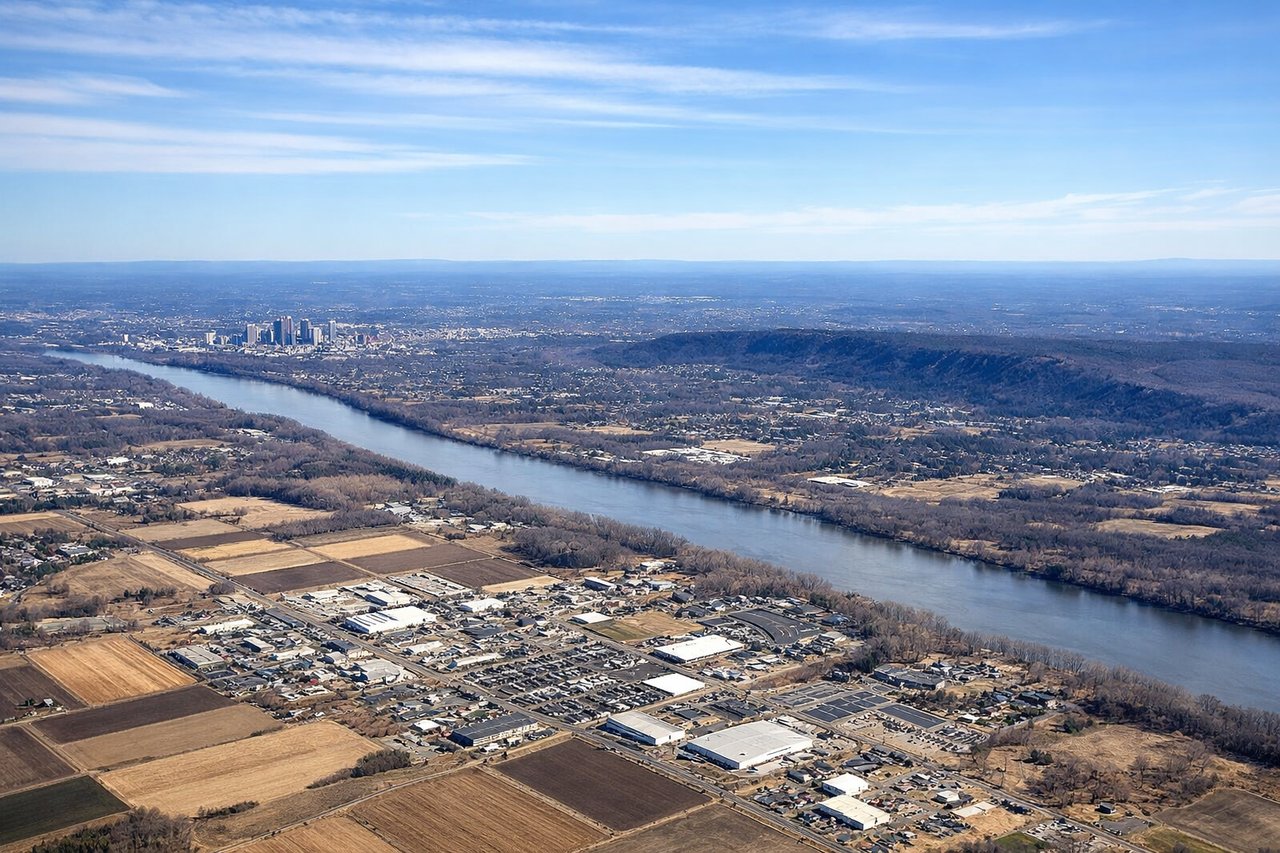
LEFTBDL typically departs runway 06 heading northeast or runway 24 heading southwest. On the more common westbound departures (runway 24), the left side looks south over the Connecticut River valley and toward Hartford's downtown skyline. The right bank turn westward then puts the left side facing south toward Long Island Sound as the aircraft climbs.
Landing at ORD
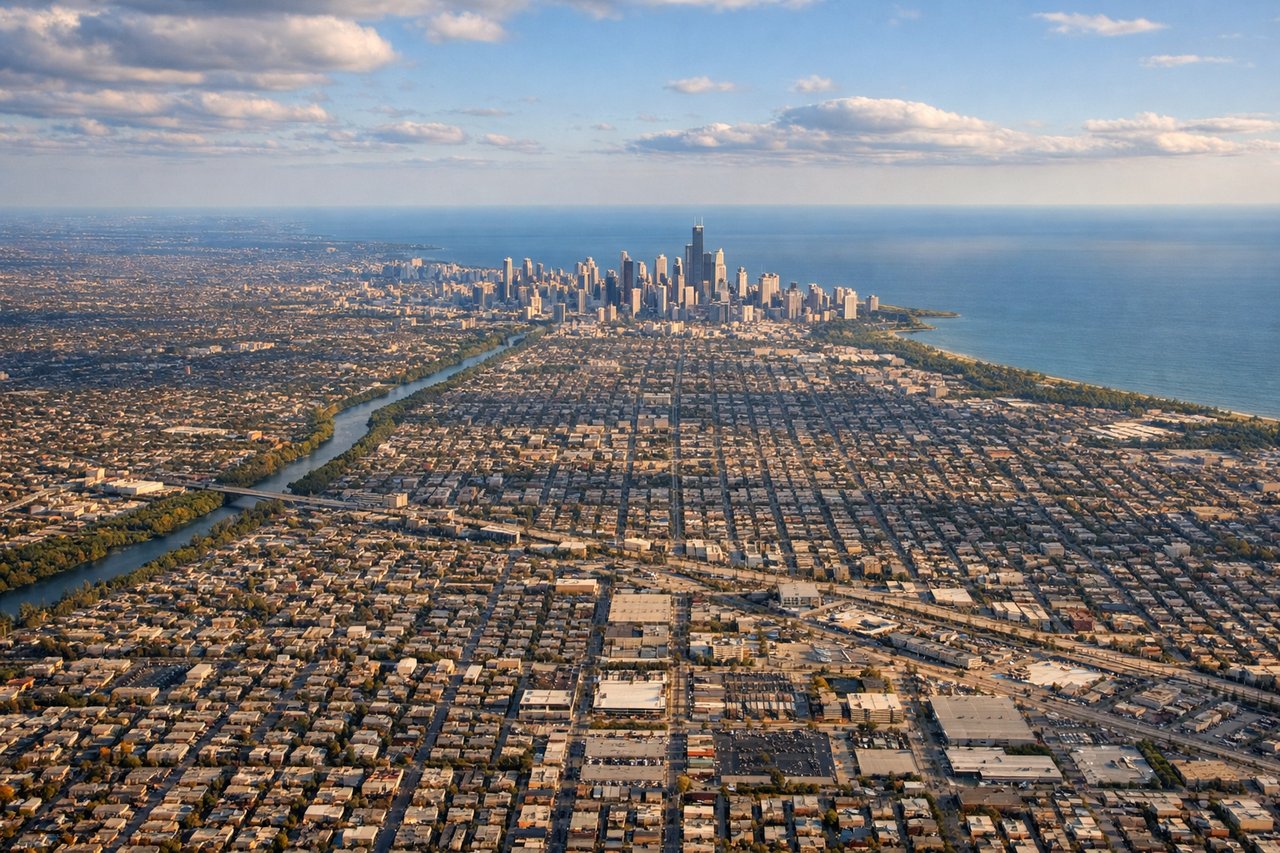
LEFTORD most commonly lands on runways oriented east-west (9L/27R, 10C/28C, etc.). On an approach from the east, aircraft track westbound over the Chicago suburbs, and the left side faces south over the dense urban grid of Chicago's North Side, the lakefront, and downtown. The right side faces north toward the comparatively less distinctive northern suburbs.
Landmarks on this routeAll landmarks →
Will your flight be in sunlight?
Pick a date and time in the Sun Map to watch the sun move across your whole flight.
About This Route
Which side of the plane should I sit on flying from Bradley International (BDL) to Chicago Ohare International (ORD)?
Sit on the Left side of the plane for the best views on flights from Windsor Locks to Chicago. The left side delivers the better views at both ends of the flight — Hartford and the Connecticut River on departure, and Chicago's lakefront and skyline on approach. Across the cruise portion heading due west, the left side also faces slightly more southward, keeping Lake Erie's southern shore and the broader Great Lakes region in peripheral view.
What can I see during takeoff from Bradley International in Windsor Locks?
During takeoff from Bradley International (BDL), sit on the Left side for the best views. BDL typically departs runway 06 heading northeast or runway 24 heading southwest. On the more common westbound departures (runway 24), the left side looks south over the Connecticut River valley and toward Hartford's downtown skyline. The right bank turn westward then puts the left side facing south toward Long Island Sound as the aircraft climbs. Notable sights include: Connecticut River valley below, Hartford downtown skyline to the south, Metacomet Ridge (traprock ridgeline running north-south through central CT), Long Island Sound visible on the southern horizon at cruise altitude.
What can I see when landing at Chicago Ohare International in Chicago?
When landing at Chicago Ohare International (ORD), sit on the Left side for the best views. ORD most commonly lands on runways oriented east-west (9L/27R, 10C/28C, etc.). On an approach from the east, aircraft track westbound over the Chicago suburbs, and the left side faces south over the dense urban grid of Chicago's North Side, the lakefront, and downtown. The right side faces north toward the comparatively less distinctive northern suburbs. Notable sights include: Lake Michigan shoreline and Chicago lakefront, downtown Chicago Loop skyline, Chicago's dense urban street grid of the North Side, O'Hare's distinctive multi-runway complex visible just before touchdown.
How long is the flight from Windsor Locks to Chicago?
The flight from Bradley International (BDL) to Chicago Ohare International (ORD) takes about 2 hours 15 minutes. The shortest flight path between them is 781 miles (1,257 km); winds and air traffic control usually add a few percent.
What does the Windsor Locks to Chicago flight path pass over?
The flight tracks nearly due west along roughly 42°N latitude, crossing the Catskill foothills of upstate New York, then the broad flat agricultural plains of central New York state, over the southern shore of Lake Erie near Erie PA or Cleveland OH (visible as a large gray-blue expanse to the left/south), then across the flat lake plain of northern Ohio and Indiana before descending into the Chicago metro area. The terrain is predominantly flat to gently rolling farmland for the majority of the route west of the Hudson Valley.