Berlin to Newark is 3,983 miles (6,410 km), a flight of about 9 hours 15 minutes.
Left side wins at both ends of the flight. Over the Atlantic the views are similar on both sides, but the left seat delivers Berlin's urban geography on departure and the full New York Harbor panorama including Manhattan and the Statue of Liberty on approach — the two most compelling visual moments of the route.
Flight Path
The flight tracks northwest from Berlin over the North Sea, then across southern Scotland or northern England before heading out over the North Atlantic. The Greenland ice sheet may be visible on the northern horizon on clear days. The route then descends over Newfoundland and Nova Scotia, crossing the Gulf of Maine before reaching the New York metropolitan area. The North Atlantic crossing offers occasional views of icebergs near Greenland latitudes and the dramatic rocky coastline of Newfoundland on descent.
Great circle distance and headings ›
.jpeg?width=600)
.jpg?width=600)
Phase by phase
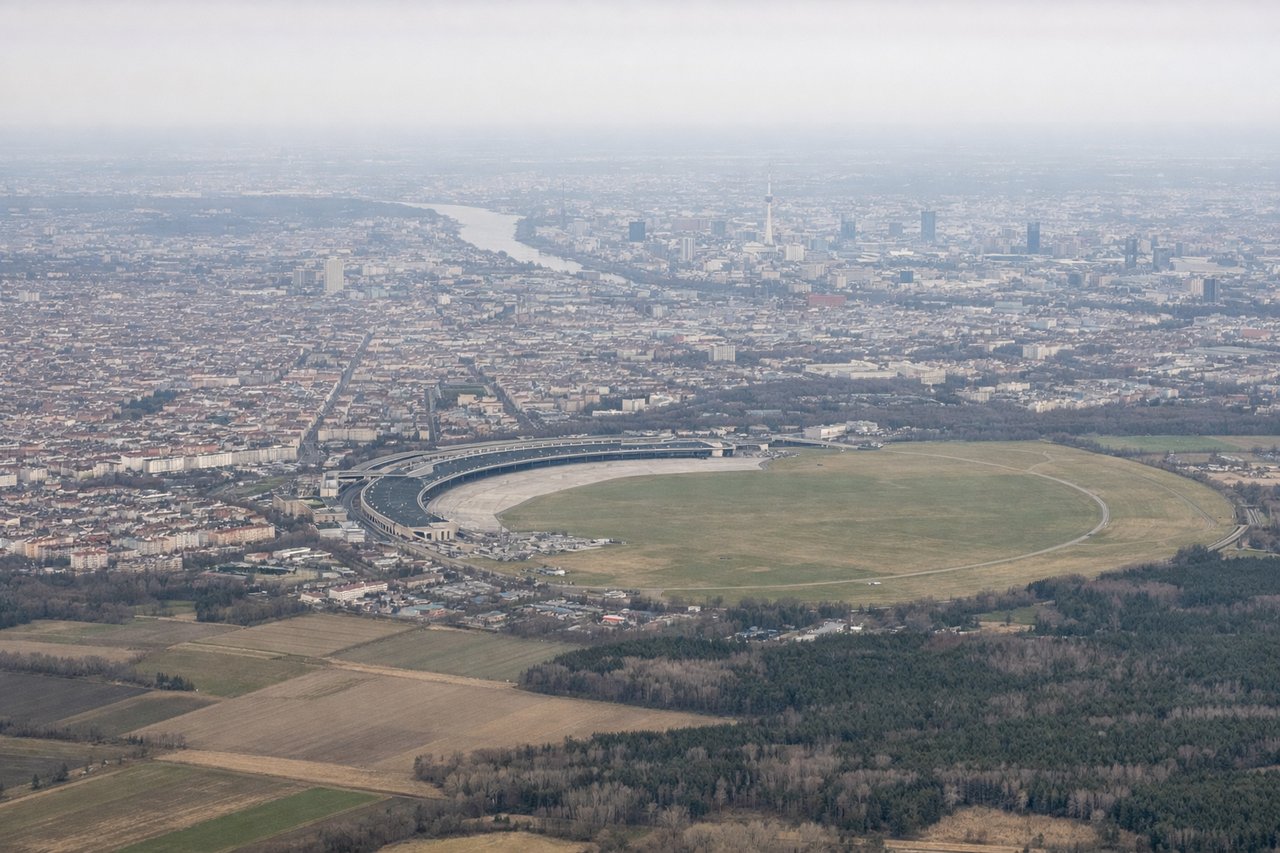
Takeoff from BER
LEFTBER's primary departure runway 25L sends aircraft westward, and the left (south) side gives a clear view back over central Berlin as you climb out — Tempelhof, the Spree river bends, and the urban grid are all visible. The right side faces north toward the flat Brandenburg plain with little of interest.
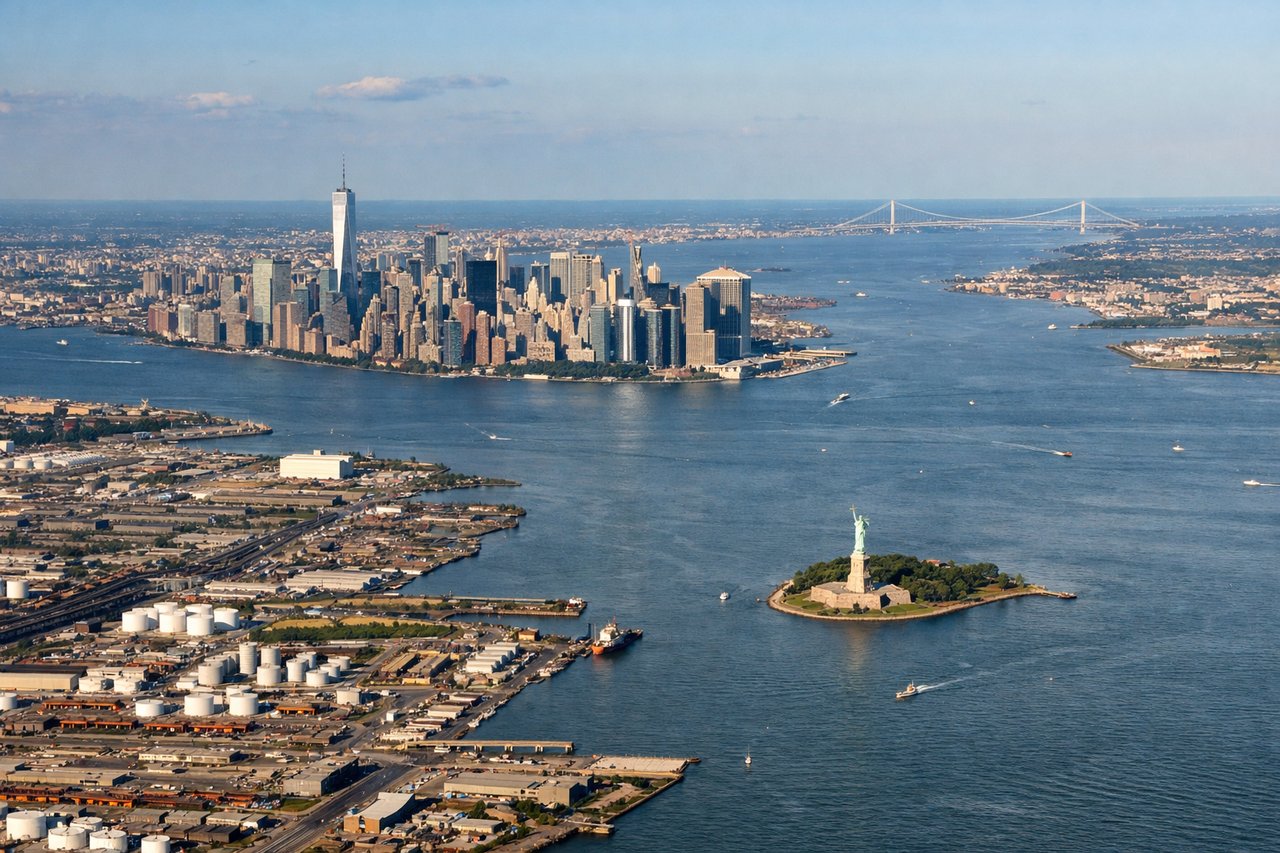
Landing at EWR
LEFTEWR's runway 22L approach brings aircraft in from the northeast over Staten Island and Upper New York Bay, and the left side faces directly toward Lower Manhattan — the skyline, Hudson River, and Statue of Liberty are all on the left. The right side looks toward the New Jersey industrial waterfront with far less visual interest.
Landmarks on this routeAll landmarks →
Will your flight be in sunlight?
Pick a date and time in the Sun Map to watch the sun move across your whole flight.
About This Route
Which side of the plane should I sit on flying from Berlin Brandenburg (BER) to Newark Liberty International (EWR)?
Sit on the Left side of the plane for the best views on flights from Berlin to Newark. Left side wins at both ends of the flight. Over the Atlantic the views are similar on both sides, but the left seat delivers Berlin's urban geography on departure and the full New York Harbor panorama including Manhattan and the Statue of Liberty on approach — the two most compelling visual moments of the route.
What can I see during takeoff from Berlin Brandenburg in Berlin?
During takeoff from Berlin Brandenburg (BER), sit on the Left side for the best views. BER's primary departure runway 25L sends aircraft westward, and the left (south) side gives a clear view back over central Berlin as you climb out — Tempelhof, the Spree river bends, and the urban grid are all visible. The right side faces north toward the flat Brandenburg plain with little of interest. Notable sights include: Tempelhof Airport (former), Spree river bends through central Berlin, Müggelsee lake to the southeast, Berlin city center skyline.
What can I see when landing at Newark Liberty International in Newark?
When landing at Newark Liberty International (EWR), sit on the Left side for the best views. EWR's runway 22L approach brings aircraft in from the northeast over Staten Island and Upper New York Bay, and the left side faces directly toward Lower Manhattan — the skyline, Hudson River, and Statue of Liberty are all on the left. The right side looks toward the New Jersey industrial waterfront with far less visual interest. Notable sights include: Lower Manhattan skyline, Hudson River, Statue of Liberty in Upper New York Bay, Verrazano-Narrows Bridge.
How long is the flight from Berlin to Newark?
The flight from Berlin Brandenburg (BER) to Newark Liberty International (EWR) takes about 9 hours 15 minutes. The shortest flight path between them is 3,983 miles (6,410 km); winds and air traffic control usually add a few percent.
What does the Berlin to Newark flight path pass over?
The flight tracks northwest from Berlin over the North Sea, then across southern Scotland or northern England before heading out over the North Atlantic. The Greenland ice sheet may be visible on the northern horizon on clear days. The route then descends over Newfoundland and Nova Scotia, crossing the Gulf of Maine before reaching the New York metropolitan area. The North Atlantic crossing offers occasional views of icebergs near Greenland latitudes and the dramatic rocky coastline of Newfoundland on descent.