Right side scores higher due to superior landing experience at Haneda with Tokyo Bay's dramatic water approach, urban waterfront, and iconic bridges. While Berlin's departure offers modest urban interest, the cruise phase over Russia and Central Asia is ocean-dominated (5+ hours of Siberian wilderness and steppes with minimal landmarks), capping the left side at 2.5. Right side benefits from the spectacular Tokyo Bay arrival sequence and maintains better visual interest during the Asian approach corridor.
Flown BER to HND? Did we get it right?
Flight Path
Berlin to Tokyo is 5,557 miles (8,943 km), a flight of about 11 hours 15 minutes.
Ural Mountains (visible during cruise at 35,000 ft as a distant ridge line separating European Russia from Siberia), Lake Baikal (world's deepest freshwater lake, visible as a long crescent-shaped body in south-central Siberia), Altai Mountains (southeastern Siberia, marking the border region between Russia, Mongolia, and Kazakhstan), Gobi Desert (northern China, vast arid plateau), Great Wall of China (visible only in exceptional clarity near Beijing), Korean Peninsula (mountainous spine running north-south), Sea of Japan (final water crossing before Japan)
Great circle distance and headings ›Phase by phase
Takeoff from BER
RIGHTRight side captures Berlin's urban sprawl and the Spree River valley during initial climb. Left side faces inland toward flat Brandenburg plains with minimal visual interest during departure.
Landing at HND
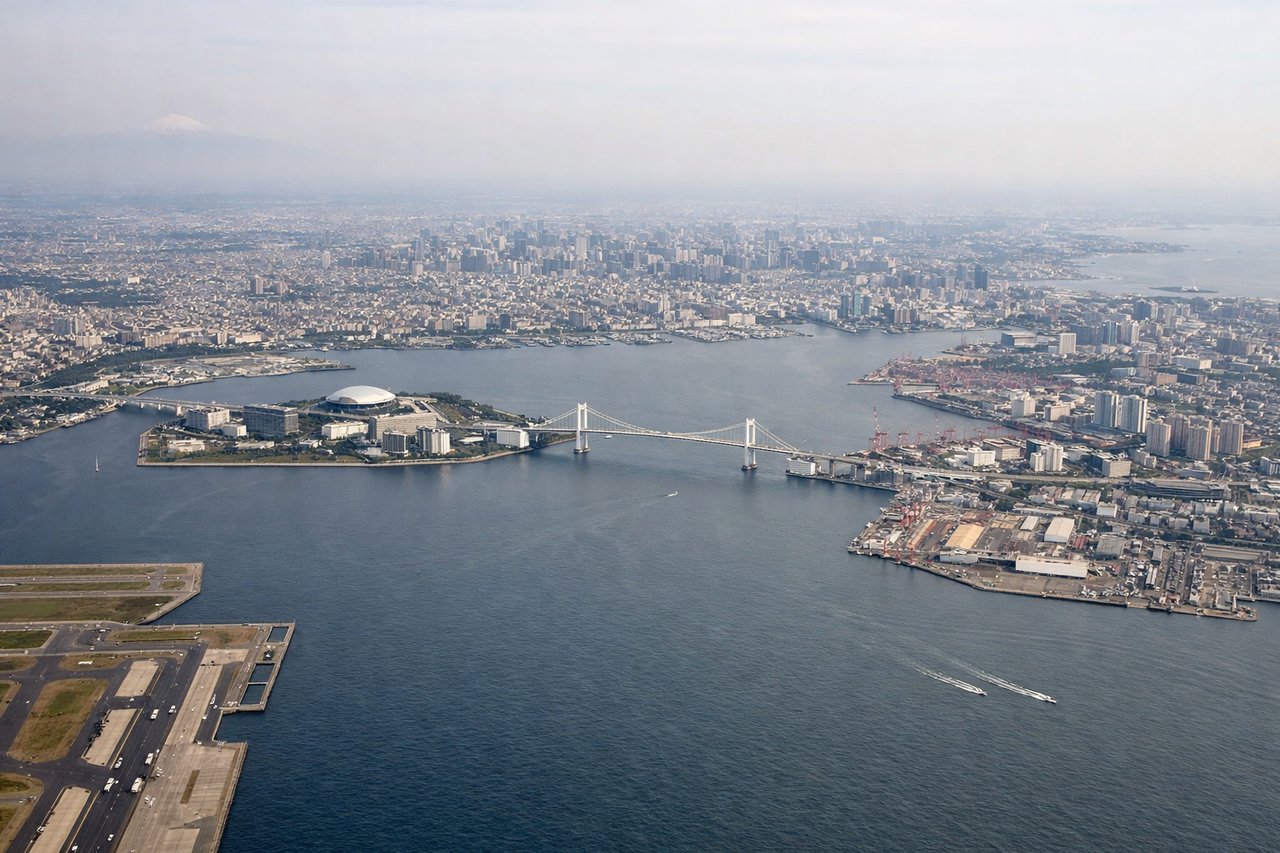
RIGHTRight side offers the superior Tokyo Bay approach with Haneda's dramatic water-based arrival procedures. Passengers see Tokyo's urban waterfront, Rainbow Bridge, and the bay's industrial and recreational features. Left side faces inland toward Chiba Prefecture's suburban sprawl and industrial areas—less visually distinctive.
Will your flight be in sunlight?
Pick a date and time in the Sun Map to watch the sun move across your whole flight.
About This Route
Which side of the plane should I sit on flying from Berlin Brandenburg (BER) to Tokyo International (HND)?
Sit on the Right side of the plane for the best views on flights from Berlin to Tokyo. Right side scores higher due to superior landing experience at Haneda with Tokyo Bay's dramatic water approach, urban waterfront, and iconic bridges. While Berlin's departure offers modest urban interest, the cruise phase over Russia and Central Asia is ocean-dominated (5+ hours of Siberian wilderness and steppes with minimal landmarks), capping the left side at 2.5. Right side benefits from the spectacular Tokyo Bay arrival sequence and maintains better visual interest during the Asian approach corridor.
What can I see during takeoff from Berlin Brandenburg in Berlin?
During takeoff from Berlin Brandenburg (BER), sit on the Right side for the best views. Right side captures Berlin's urban sprawl and the Spree River valley during initial climb. Left side faces inland toward flat Brandenburg plains with minimal visual interest during departure. Notable sights include: Spree River winding through central Berlin, Tiergarten park district, Brandenburg flatlands receding westward.
What can I see when landing at Tokyo International in Tokyo?
When landing at Tokyo International (HND), sit on the Right side for the best views. Right side offers the superior Tokyo Bay approach with Haneda's dramatic water-based arrival procedures. Passengers see Tokyo's urban waterfront, Rainbow Bridge, and the bay's industrial and recreational features. Left side faces inland toward Chiba Prefecture's suburban sprawl and industrial areas—less visually distinctive. Notable sights include: Tokyo Bay with container terminals and ship traffic, Rainbow Bridge spanning the bay, Odaiba artificial island with its distinctive architecture, Tokyo's high-rise skyline on the western shore.
How long is the flight from Berlin to Tokyo?
The flight from Berlin Brandenburg (BER) to Tokyo International (HND) takes about 11 hours 15 minutes. The shortest flight path between them is 5,557 miles (8,943 km); winds and air traffic control usually add a few percent.
What does the Berlin to Tokyo flight path pass over?
Ural Mountains (visible during cruise at 35,000 ft as a distant ridge line separating European Russia from Siberia), Lake Baikal (world's deepest freshwater lake, visible as a long crescent-shaped body in south-central Siberia), Altai Mountains (southeastern Siberia, marking the border region between Russia, Mongolia, and Kazakhstan), Gobi Desert (northern China, vast arid plateau), Great Wall of China (visible only in exceptional clarity near Beijing), Korean Peninsula (mountainous spine running north-south), Sea of Japan (final water crossing before Japan)