Left side scores higher due to the exceptional scenic quality of Bergen's departure—the dramatic Byfjorden fjord system, steep forested hills, and coastal North Sea views provide significantly more visual interest than the flat Rhine valley approach to Düsseldorf. While the landing is less dramatic on the left, the takeoff advantage and the variety of terrain during the cruise phase (Norwegian coast, North Sea, then gradual transition to German plains) outweigh the right side's modest landing scenery.
Flown BGO to DUS? Did we get it right?
Flight Path
Bergen to Duesseldorf is 625 miles (1,006 km), a flight of about 2 hours 15 minutes.
North Sea crossing (open water, minimal landmarks for 1.5 hours), transition over the Frisian Islands and Dutch coast (low-lying barrier islands and estuaries), entry into German airspace over the flat North German Plain with scattered lakes and agricultural patchwork, approach to the Rhine valley and Ruhr industrial region
Great circle distance and headings ›Phase by phase
Takeoff from BGO
LEFTBergen Flesland sits on the Byfjorden inlet surrounded by steep forested hills and coastal terrain. Left-side seats capture the dramatic fjord landscape, harbor infrastructure, and the North Sea coastline during climb-out. Right side faces inland toward flat agricultural valleys with minimal visual interest.
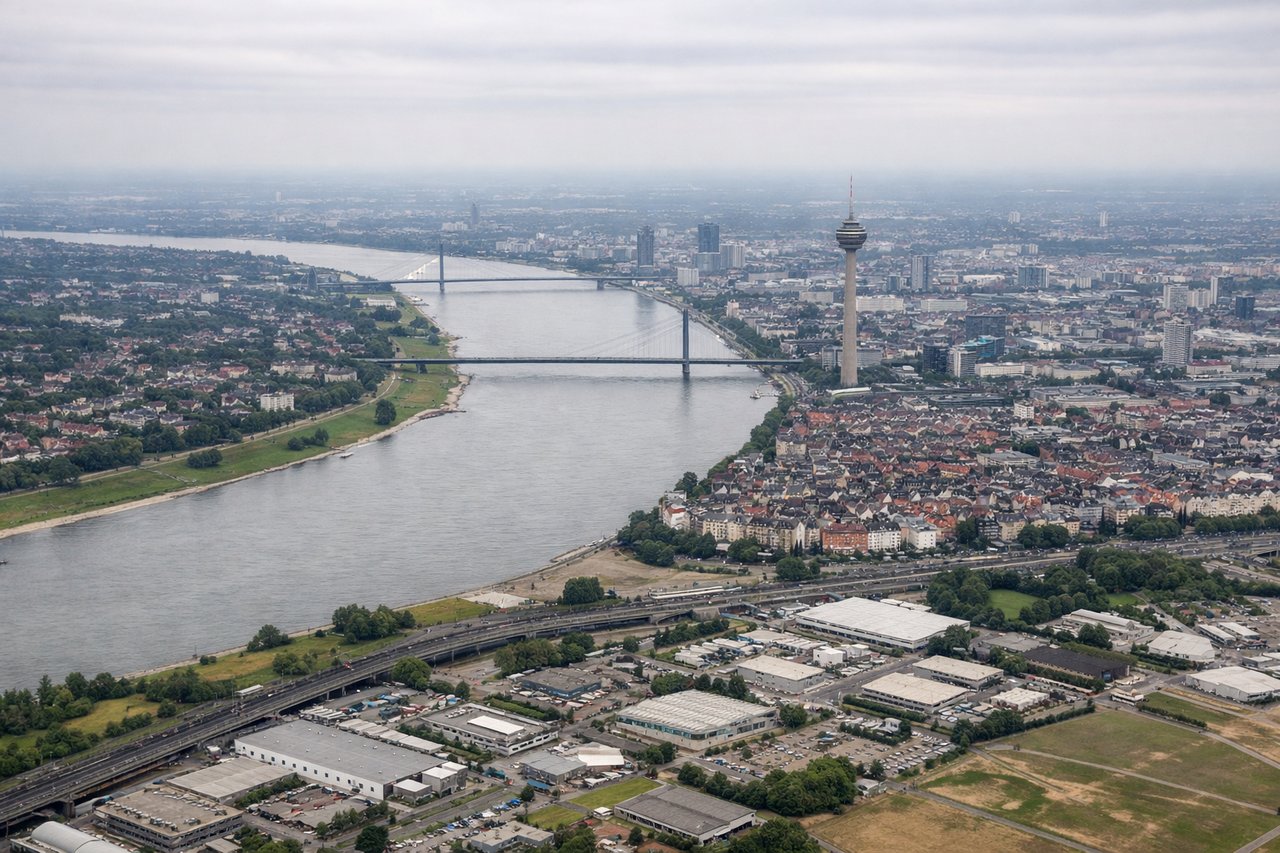
Landing at DUS
RIGHTThe approach to Düsseldorf from the northwest crosses the Rhine River valley and the industrial Ruhr region. Right-side seats offer views of the Rhine's meandering course, the city's urban sprawl, and the distinctive flat-to-gently-rolling terrain of western Germany. Left side faces toward open agricultural plains with less distinctive features.
Will your flight be in sunlight?
Pick a date and time in the Sun Map to watch the sun move across your whole flight.
About This Route
Which side of the plane should I sit on flying from Bergen Flesland (BGO) to Dusseldorf (DUS)?
Sit on the Left side of the plane for the best views on flights from Bergen to Duesseldorf. Left side scores higher due to the exceptional scenic quality of Bergen's departure—the dramatic Byfjorden fjord system, steep forested hills, and coastal North Sea views provide significantly more visual interest than the flat Rhine valley approach to Düsseldorf. While the landing is less dramatic on the left, the takeoff advantage and the variety of terrain during the cruise phase (Norwegian coast, North Sea, then gradual transition to German plains) outweigh the right side's modest landing scenery.
What can I see during takeoff from Bergen Flesland in Bergen?
During takeoff from Bergen Flesland (BGO), sit on the Left side for the best views. Bergen Flesland sits on the Byfjorden inlet surrounded by steep forested hills and coastal terrain. Left-side seats capture the dramatic fjord landscape, harbor infrastructure, and the North Sea coastline during climb-out. Right side faces inland toward flat agricultural valleys with minimal visual interest. Notable sights include: Byfjorden fjord system, Bergen harbor and city waterfront, Fløyen mountain ridge, North Sea coastline.
What can I see when landing at Dusseldorf in Duesseldorf?
When landing at Dusseldorf (DUS), sit on the Right side for the best views. The approach to Düsseldorf from the northwest crosses the Rhine River valley and the industrial Ruhr region. Right-side seats offer views of the Rhine's meandering course, the city's urban sprawl, and the distinctive flat-to-gently-rolling terrain of western Germany. Left side faces toward open agricultural plains with less distinctive features. Notable sights include: Rhine River and its meanders, Düsseldorf city skyline and harbor district, Ruhr industrial valley, flat North German Plain.
How long is the flight from Bergen to Duesseldorf?
The flight from Bergen Flesland (BGO) to Dusseldorf (DUS) takes about 2 hours 15 minutes. The shortest flight path between them is 625 miles (1,006 km); winds and air traffic control usually add a few percent.
What does the Bergen to Duesseldorf flight path pass over?
North Sea crossing (open water, minimal landmarks for 1.5 hours), transition over the Frisian Islands and Dutch coast (low-lying barrier islands and estuaries), entry into German airspace over the flat North German Plain with scattered lakes and agricultural patchwork, approach to the Rhine valley and Ruhr industrial region