While takeoff offers fjord scenery, the landing approach over the Bavarian Alps is more visually dramatic and sustained. Right-side seats capture the Alps for an extended period during descent, making it the better choice for the full journey.
Flown BGO to MUC? Did we get it right?
Flight Path
Bergen to Munich is 865 miles (1,393 km), a flight of about 2 hours 15 minutes.
Over southern Germany: the Danube River valley, Swabian Alps (Schwäbische Alb), and the transition from forested highlands to the Bavarian plain. The flight passes east of Stuttgart and west of Augsburg, crossing multiple river valleys and agricultural regions.
Great circle distance and headings ›

Phase by phase
Takeoff from BGO
LEFTLeft side offers immediate views of Bergen's fjord system and the surrounding mountain ranges. The aircraft climbs southeast from Bergen Flesland, and left-side seats capture the dramatic Hardangerfjord and coastal peaks as you gain altitude.
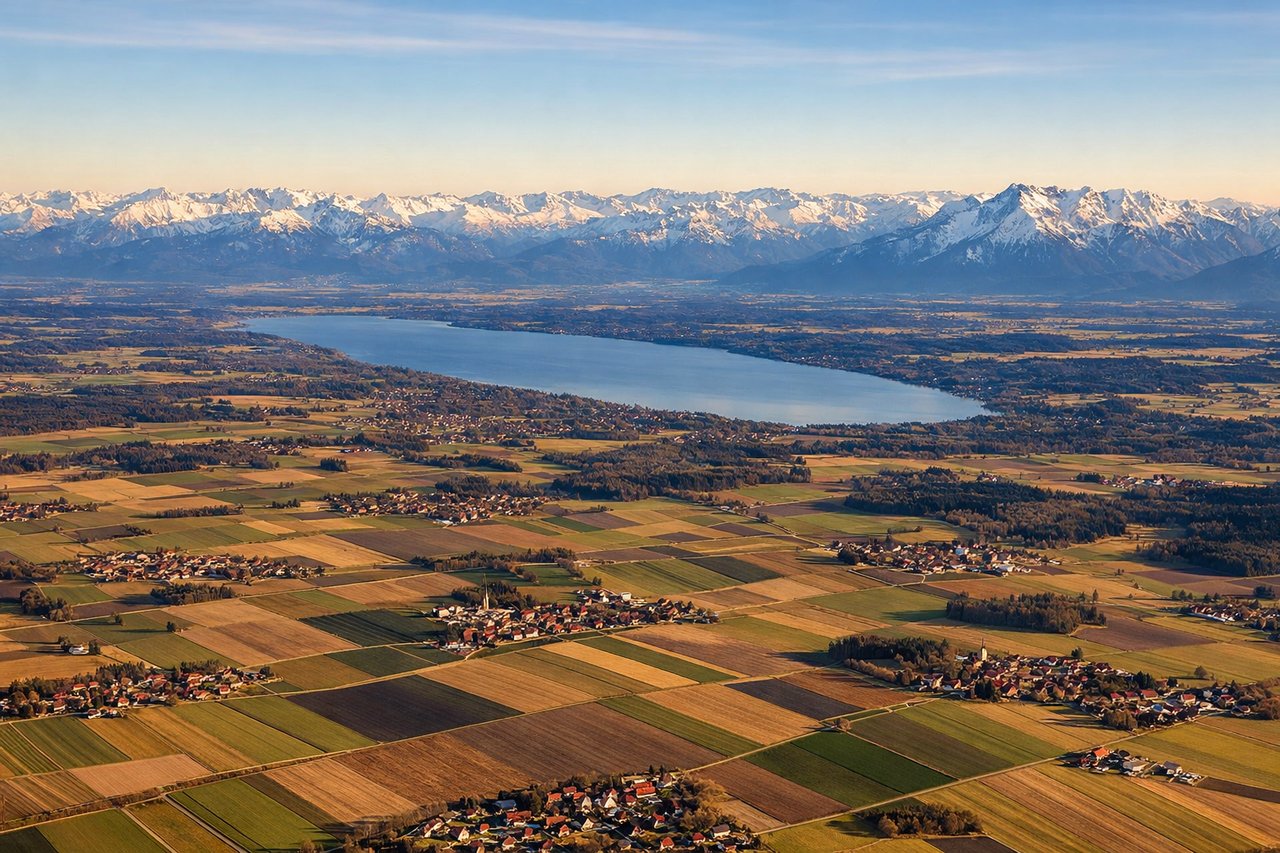
Landing at MUC
RIGHTRight side provides excellent views during the descent approach to Munich. The flight path brings you over the Bavarian Alps from the north, and right-side seats capture the dramatic Alpine peaks, foothills, and the transition to the Munich plain.
Will your flight be in sunlight?
Pick a date and time in the Sun Map to watch the sun move across your whole flight.
About This Route
Which side of the plane should I sit on flying from Bergen Flesland (BGO) to Munich (MUC)?
Sit on the Right side of the plane for the best views on flights from Bergen to Munich. While takeoff offers fjord scenery, the landing approach over the Bavarian Alps is more visually dramatic and sustained. Right-side seats capture the Alps for an extended period during descent, making it the better choice for the full journey.
What can I see during takeoff from Bergen Flesland in Bergen?
During takeoff from Bergen Flesland (BGO), sit on the Left side for the best views. Left side offers immediate views of Bergen's fjord system and the surrounding mountain ranges. The aircraft climbs southeast from Bergen Flesland, and left-side seats capture the dramatic Hardangerfjord and coastal peaks as you gain altitude. Notable sights include: Hardangerfjord, Folgefonna glacier (visible as white peak), Bergen city and harbor, coastal mountain ridges.
What can I see when landing at Munich in Munich?
When landing at Munich (MUC), sit on the Right side for the best views. Right side provides excellent views during the descent approach to Munich. The flight path brings you over the Bavarian Alps from the north, and right-side seats capture the dramatic Alpine peaks, foothills, and the transition to the Munich plain. Notable sights include: Bavarian Alps (Karwendel and Wetterstein ranges), Isar River valley, Munich city sprawl and Marienplatz district.
How long is the flight from Bergen to Munich?
The flight from Bergen Flesland (BGO) to Munich (MUC) takes about 2 hours 15 minutes. The shortest flight path between them is 865 miles (1,393 km); winds and air traffic control usually add a few percent.
What does the Bergen to Munich flight path pass over?
Over southern Germany: the Danube River valley, Swabian Alps (Schwäbische Alb), and the transition from forested highlands to the Bavarian plain. The flight passes east of Stuttgart and west of Augsburg, crossing multiple river valleys and agricultural regions.