Birmingham to Dubai is 3,482 miles (5,604 km), a flight of about 6 hours 45 minutes.
While the right side wins at takeoff over Birmingham, the left side delivers the more dramatic payoff on arrival into Dubai with the full skyline, Palm Jumeirah, and the Gulf visible simultaneously. Over the flight path the left side also picks up the Zagros Mountains of Iran and the Persian Gulf coastline during descent.
Flight Path
The route tracks southeast over Europe, crossing the Alps (visible as a broad white mountain mass), then over the Balkans and Turkey. Over eastern Turkey and Iran the Zagros Mountain range runs parallel to the route — a dramatic corrugated series of ridges visible from cruising altitude. The route then crosses the Persian Gulf lowlands before descending into Dubai. The Caspian Sea may be visible to the north depending on exact routing.
Great circle distance and headings ›.jpg?width=600)


.jpg?width=600)
_and_the_Dubai_skyline_(25781049892).jpg?width=600)
Phase by phase
Takeoff from BHX
RIGHTBHX typically departs on runway 15 heading southeast, so the right side gives you a clear view back over central Birmingham, the city centre, and the West Midlands conurbation as you climb out. You can pick out the urban grid and major road arteries clearly.
Landing at DXB
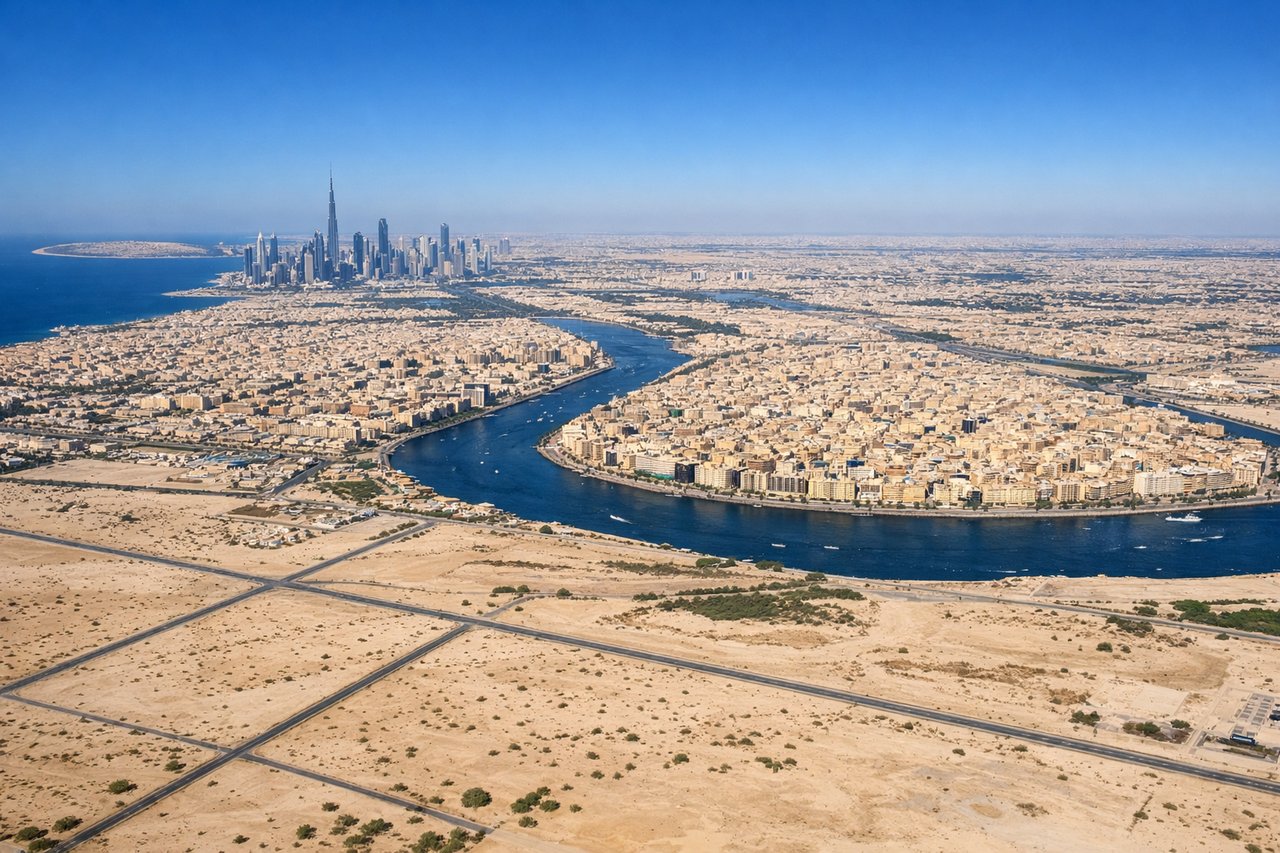
LEFTDXB's primary arrival runway 30L/30R brings aircraft in from the southeast over the Gulf, and the left side gives you the Dubai skyline — Downtown Dubai, the Burj Khalifa, and the Palm Jumeirah — as you descend over the city. The right side faces the desert interior.
Landmarks on this routeAll landmarks →
Will your flight be in sunlight?
Pick a date and time in the Sun Map to watch the sun move across your whole flight.
About This Route
Which side of the plane should I sit on flying from Birmingham (BHX) to Dubai International (DXB)?
Sit on the Left side of the plane for the best views on flights from Birmingham to Dubai. While the right side wins at takeoff over Birmingham, the left side delivers the more dramatic payoff on arrival into Dubai with the full skyline, Palm Jumeirah, and the Gulf visible simultaneously. Over the flight path the left side also picks up the Zagros Mountains of Iran and the Persian Gulf coastline during descent.
What can I see during takeoff from Birmingham in Birmingham?
During takeoff from Birmingham (BHX), sit on the Right side for the best views. BHX typically departs on runway 15 heading southeast, so the right side gives you a clear view back over central Birmingham, the city centre, and the West Midlands conurbation as you climb out. You can pick out the urban grid and major road arteries clearly. Notable sights include: Birmingham city centre, Spaghetti Junction (Gravelly Hill interchange), River Tame valley, Coventry urban area to the east.
What can I see when landing at Dubai International in Dubai?
When landing at Dubai International (DXB), sit on the Left side for the best views. DXB's primary arrival runway 30L/30R brings aircraft in from the southeast over the Gulf, and the left side gives you the Dubai skyline — Downtown Dubai, the Burj Khalifa, and the Palm Jumeirah — as you descend over the city. The right side faces the desert interior. Notable sights include: Burj Khalifa and Downtown Dubai, Palm Jumeirah, Dubai Creek, Dubai Marina skyline.
How long is the flight from Birmingham to Dubai?
The flight from Birmingham (BHX) to Dubai International (DXB) takes about 6 hours 45 minutes. The shortest flight path between them is 3,482 miles (5,604 km); winds and air traffic control usually add a few percent.
What does the Birmingham to Dubai flight path pass over?
The route tracks southeast over Europe, crossing the Alps (visible as a broad white mountain mass), then over the Balkans and Turkey. Over eastern Turkey and Iran the Zagros Mountain range runs parallel to the route — a dramatic corrugated series of ridges visible from cruising altitude. The route then crosses the Persian Gulf lowlands before descending into Dubai. The Caspian Sea may be visible to the north depending on exact routing.