Left side scores higher due to the dramatic Rocky Mountain Front during departure, which provides genuine terrain variety and visual interest. Although right side offers urban Tokyo and bay scenery on arrival, the majority of the 11-hour flight crosses featureless open ocean, limiting right-side appeal. Left side's mountain drama at takeoff and the cruise-phase views of the Rockies and western North America outweigh the landing advantage on the right.
Flown BJC to HND? Did we get it right?
Flight Path
Denver to Tokyo is 5,789 miles (9,316 km), a flight of about 11 hours 15 minutes.
Aleutian Islands (Alaska), Bering Sea, Kamchatka Peninsula volcanic peaks, Sakhalin Island, Sea of Japan, Japanese Alps (visible on clear descent days)
Great circle distance and headings ›Phase by phase
Takeoff from BJC
LEFTLeft side captures the Rocky Mountain Front during climb-out from BJC. Depending on runway direction (12 or 30), northbound or southbound departures reveal the dramatic eastern escarpment of the Front Range, with peaks rising 5,000–7,000 feet above the Denver basin. Right side faces the flat plains east of Denver with minimal terrain drama.
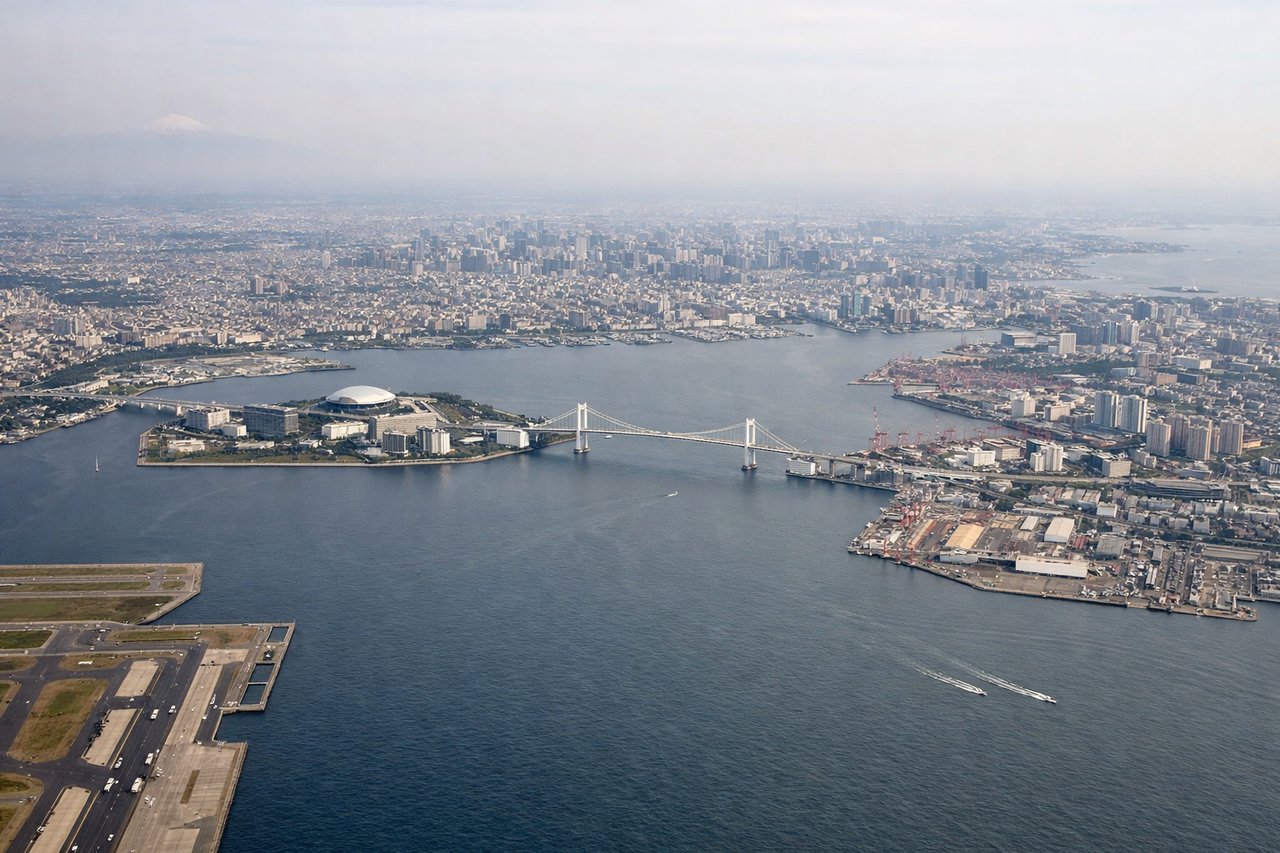
Landing at HND
RIGHTRight side (typically starboard on final approach to HND) offers views of Tokyo Bay, the Kanto Plain, and urban Tokyo during descent and approach. Haneda's noise-abatement procedures often route arrivals over the bay from the south (34L/34R approach), placing the city and harbor on the right side of the aircraft. Left side faces open Pacific Ocean for most of the approach.
Will your flight be in sunlight?
Pick a date and time in the Sun Map to watch the sun move across your whole flight.
About This Route
Which side of the plane should I sit on flying from Rocky Mountain Metropolitan Airport (BJC) to Tokyo International (HND)?
Sit on the Left side of the plane for the best views on flights from Denver to Tokyo. Left side scores higher due to the dramatic Rocky Mountain Front during departure, which provides genuine terrain variety and visual interest. Although right side offers urban Tokyo and bay scenery on arrival, the majority of the 11-hour flight crosses featureless open ocean, limiting right-side appeal. Left side's mountain drama at takeoff and the cruise-phase views of the Rockies and western North America outweigh the landing advantage on the right.
What can I see during takeoff from Rocky Mountain Metropolitan Airport in Denver?
During takeoff from Rocky Mountain Metropolitan Airport (BJC), sit on the Left side for the best views. Left side captures the Rocky Mountain Front during climb-out from BJC. Depending on runway direction (12 or 30), northbound or southbound departures reveal the dramatic eastern escarpment of the Front Range, with peaks rising 5,000–7,000 feet above the Denver basin. Right side faces the flat plains east of Denver with minimal terrain drama. Notable sights include: Front Range peaks (Mount Evans, Mount Bierstadt visible on clear days), South Platte River valley, Denver metropolitan sprawl transitioning to foothills.
What can I see when landing at Tokyo International in Tokyo?
When landing at Tokyo International (HND), sit on the Right side for the best views. Right side (typically starboard on final approach to HND) offers views of Tokyo Bay, the Kanto Plain, and urban Tokyo during descent and approach. Haneda's noise-abatement procedures often route arrivals over the bay from the south (34L/34R approach), placing the city and harbor on the right side of the aircraft. Left side faces open Pacific Ocean for most of the approach. Notable sights include: Tokyo Bay with Rainbow Bridge and port facilities, Kanto Plain urban sprawl, Tokyo Tower or Skytree silhouette on clear days, Haneda's runway complex and taxiway grid.
How long is the flight from Denver to Tokyo?
The flight from Rocky Mountain Metropolitan Airport (BJC) to Tokyo International (HND) takes about 11 hours 15 minutes. The shortest flight path between them is 5,789 miles (9,316 km); winds and air traffic control usually add a few percent.
What does the Denver to Tokyo flight path pass over?
Aleutian Islands (Alaska), Bering Sea, Kamchatka Peninsula volcanic peaks, Sakhalin Island, Sea of Japan, Japanese Alps (visible on clear descent days)