While Nashville's takeoff offers pleasant urban and hill scenery, the right side's landing approach into Vancouver is dramatically superior—the North Shore Mountains, Burrard Inlet, and coastal geography provide far greater visual drama and variety. The mountain scenery on approach outweighs the modest Tennessee landscape on departure, making the right side the stronger choice for the full flight.
Flown BNA to YVR? Did we get it right?
Flight Path
Nashville to Vancouver is 2,037 miles (3,278 km), a flight of about 4 hours 15 minutes.
Cascade Range (Washington/Oregon border), Columbia River Gorge, Snake River Plain (Idaho), Wallowa Mountains (northeastern Oregon), Blue Mountains (Oregon), Bitterroot Range (Montana/Idaho border), Flathead Lake (Montana), Mission Mountains (Montana)
Great circle distance and headings ›


Phase by phase
Takeoff from BNA
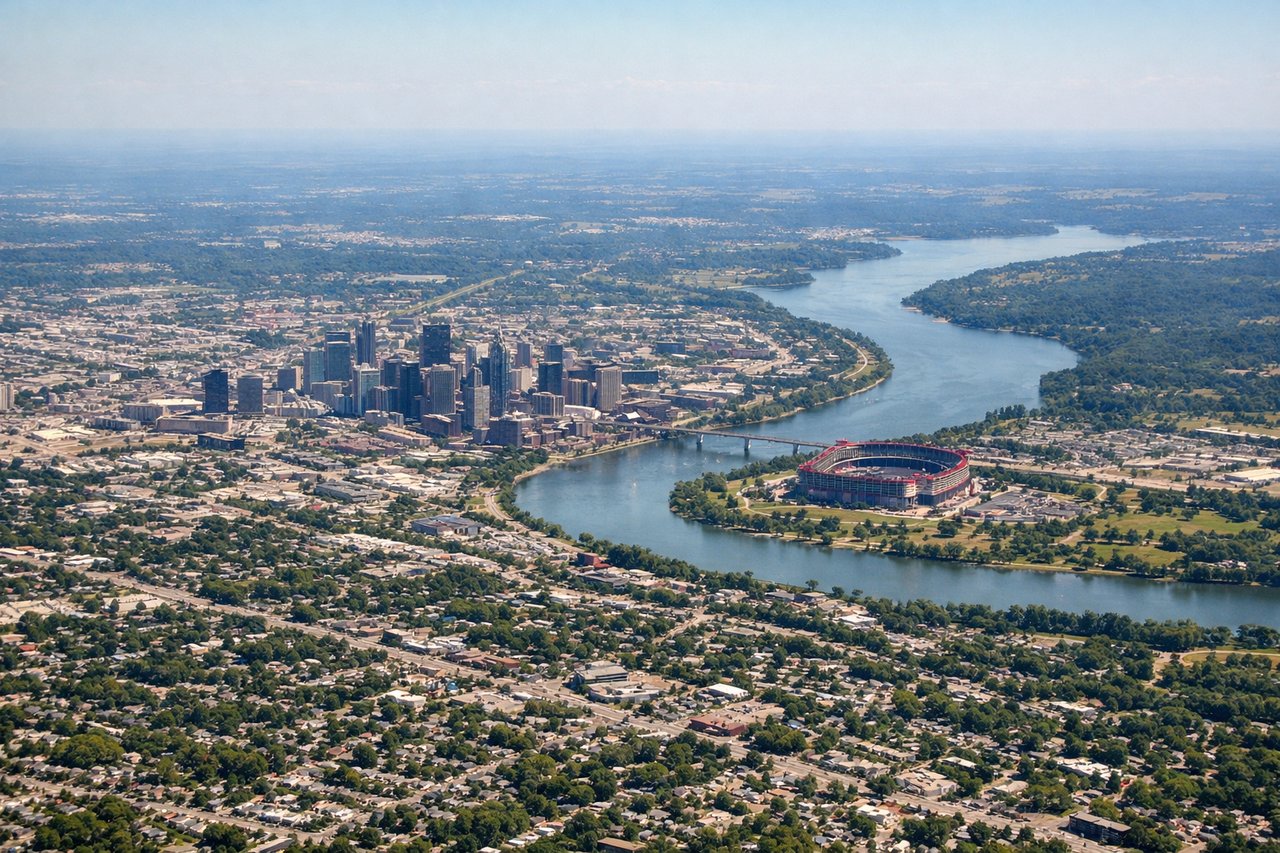
LEFTNashville's urban landscape and the Cumberland River valley provide immediate visual interest during climb-out. The left side captures the city grid and surrounding Tennessee hills as you gain altitude northwestward.

Landing at YVR
RIGHTThe right side during approach to Vancouver captures the dramatic North Shore Mountains, Burrard Inlet, and the coastal geography that defines the approach. The mountain backdrop and water features create far more visual drama than the left side's interior terrain.
Will your flight be in sunlight?
Pick a date and time in the Sun Map to watch the sun move across your whole flight.
About This Route
Which side of the plane should I sit on flying from Nashville International (BNA) to Vancouver International (YVR)?
Sit on the Right side of the plane for the best views on flights from Nashville to Vancouver. While Nashville's takeoff offers pleasant urban and hill scenery, the right side's landing approach into Vancouver is dramatically superior—the North Shore Mountains, Burrard Inlet, and coastal geography provide far greater visual drama and variety. The mountain scenery on approach outweighs the modest Tennessee landscape on departure, making the right side the stronger choice for the full flight.
What can I see during takeoff from Nashville International in Nashville?
During takeoff from Nashville International (BNA), sit on the Left side for the best views. Nashville's urban landscape and the Cumberland River valley provide immediate visual interest during climb-out. The left side captures the city grid and surrounding Tennessee hills as you gain altitude northwestward. Notable sights include: Cumberland River winding through downtown Nashville, Nashville skyline (Broadway district and arena), Tennessee rolling hills to the north and west.
What can I see when landing at Vancouver International in Vancouver?
When landing at Vancouver International (YVR), sit on the Right side for the best views. The right side during approach to Vancouver captures the dramatic North Shore Mountains, Burrard Inlet, and the coastal geography that defines the approach. The mountain backdrop and water features create far more visual drama than the left side's interior terrain. Notable sights include: North Shore Mountains (Grouse, Seymour, Cypress peaks), Burrard Inlet and Vancouver Harbor, Strait of Georgia coastline, Vancouver city skyline.
How long is the flight from Nashville to Vancouver?
The flight from Nashville International (BNA) to Vancouver International (YVR) takes about 4 hours 15 minutes. The shortest flight path between them is 2,037 miles (3,278 km); winds and air traffic control usually add a few percent.
What does the Nashville to Vancouver flight path pass over?
Cascade Range (Washington/Oregon border), Columbia River Gorge, Snake River Plain (Idaho), Wallowa Mountains (northeastern Oregon), Blue Mountains (Oregon), Bitterroot Range (Montana/Idaho border), Flathead Lake (Montana), Mission Mountains (Montana)