While takeoff offers river scenery, the landing approach into Gatwick provides more dramatic and extensive views: the Thames estuary, London's vast urban footprint, and the South Downs create a more visually rewarding final descent than the relatively flat Aquitaine plains seen on departure.
Flight Path
The flight path crosses the Bay of Biscay's eastern edge and the English Channel. Notable midpoint features include the Normandy coastline (visible from altitude as a thin line of cliffs and beaches), the Isle of Wight as a small landmass in the Channel, and the gradual transition from French agricultural plains to English countryside. The English Channel itself—typically 50–80 miles wide on this route—appears as a pale blue-grey water body separating the two coasts, with shipping lanes occasionally visible as linear patterns.
Great circle distance and headings ›Phase by phase
Takeoff from BOD
RIGHTRight-side seats offer views of the Garonne River estuary and the Atlantic coastline as the aircraft climbs northeastward. The river's distinctive meanders and the flat Aquitaine plains are clearly visible during the initial climb-out phase.
Landing at LGW
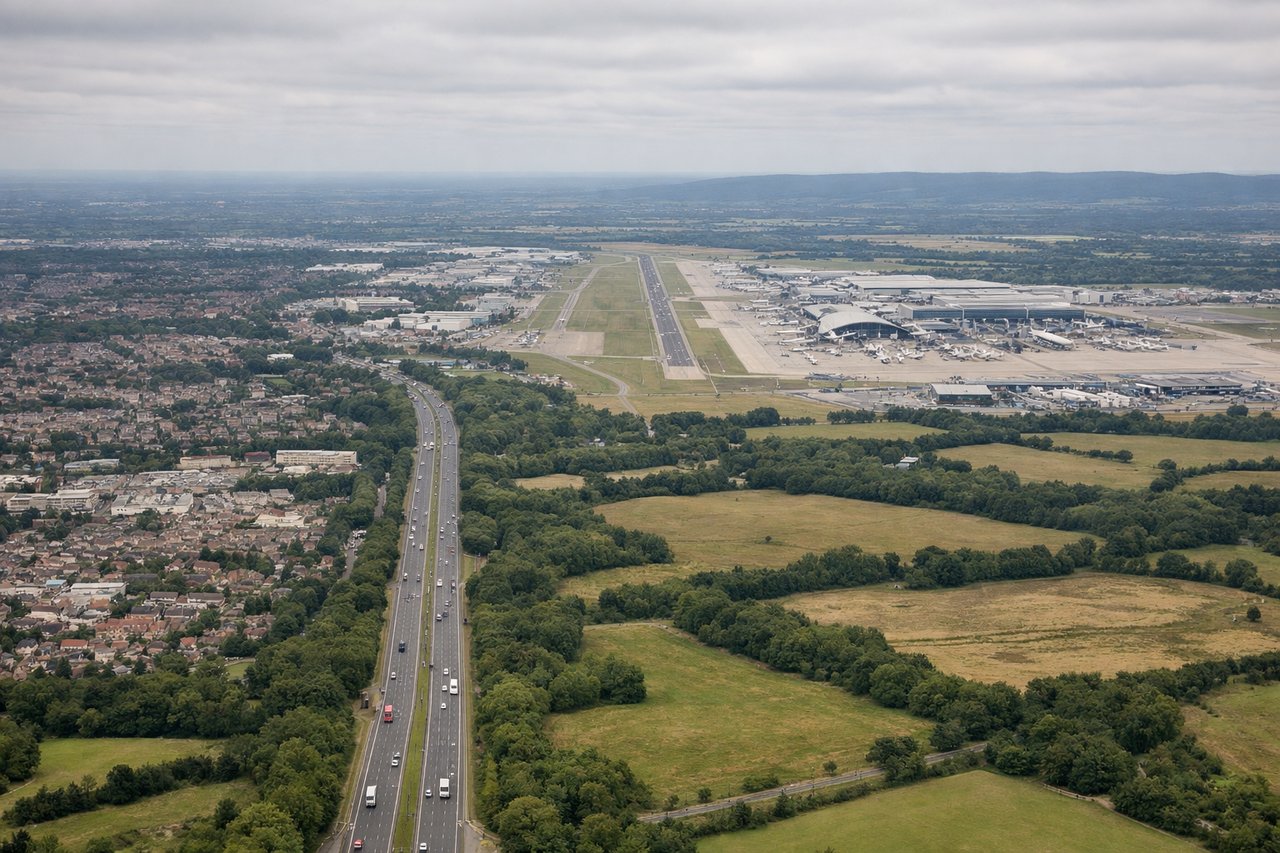
LEFTLeft-side seats provide excellent views of the Thames estuary, London's urban sprawl, and the South Downs as the aircraft descends toward Gatwick from the southwest. The river's distinctive curves and the city's extent are particularly striking on approach.
Landmarks on this routeAll landmarks →
Will your flight be in sunlight?
See exactly which side of the plane gets sun and shade at your departure time.
About This Route
Which side of the plane should I sit on flying from Merignac (BOD) to Gatwick (LGW)?
Sit on the Left side of the plane for the best views on flights from Bordeaux to London. While takeoff offers river scenery, the landing approach into Gatwick provides more dramatic and extensive views: the Thames estuary, London's vast urban footprint, and the South Downs create a more visually rewarding final descent than the relatively flat Aquitaine plains seen on departure.
What can I see during takeoff from Merignac in Bordeaux?
During takeoff from Merignac (BOD), sit on the Right side for the best views. Right-side seats offer views of the Garonne River estuary and the Atlantic coastline as the aircraft climbs northeastward. The river's distinctive meanders and the flat Aquitaine plains are clearly visible during the initial climb-out phase. Notable sights include: Garonne River estuary, Atlantic coastline near Arcachon Basin, Aquitaine plains, Landes forest (dark green expanse to the south).
What can I see when landing at Gatwick in London?
When landing at Gatwick (LGW), sit on the Left side for the best views. Left-side seats provide excellent views of the Thames estuary, London's urban sprawl, and the South Downs as the aircraft descends toward Gatwick from the southwest. The river's distinctive curves and the city's extent are particularly striking on approach. Notable sights include: Thames estuary and river meanders, London urban area (visible as grey-brown expanse), South Downs ridge, Weald of Kent and Sussex.
How long is the flight from Bordeaux to London?
The flight from Merignac (BOD) to Gatwick (LGW) takes Approximately 1 hour 15 minutes.
What does the Bordeaux to London flight path pass over?
The flight path crosses the Bay of Biscay's eastern edge and the English Channel. Notable midpoint features include the Normandy coastline (visible from altitude as a thin line of cliffs and beaches), the Isle of Wight as a small landmass in the Channel, and the gradual transition from French agricultural plains to English countryside. The English Channel itself—typically 50–80 miles wide on this route—appears as a pale blue-grey water body separating the two coasts, with shipping lanes occasionally visible as linear patterns.