While takeoff favors the right, the landing view from the left is more dramatic and geographically distinctive—Jamaica Bay's unique ecosystem and the Atlantic approach provide better visual interest than the inland Queens/Brooklyn approach. The takeoff view is good but brief; the landing compensation makes left the better overall choice.
Flown BOM to JFK? Did we get it right?
Flight Path
Bombay to New York is 7,787 miles (12,532 km), a flight of about 16 hours 30 minutes.
Flight path crosses the Arabian Sea, then the Middle East (Persian Gulf region, visible from cruise altitude), the Caucasus Mountains (distant southern horizon), Black Sea region, Eastern Europe, and the Atlantic. At cruise altitude (35,000+ feet), the curvature of Earth becomes apparent. Notable midpoint landmarks include the Caspian Sea (if visible during daylight), the Alps (northern Europe, visible as a distant ridge), and the Atlantic coastline of Ireland/UK (eastern approach to North America). The North Atlantic crossing dominates the latter half—primarily open ocean with occasional weather systems visible as cloud formations.
Great circle distance and headings ›


Phase by phase
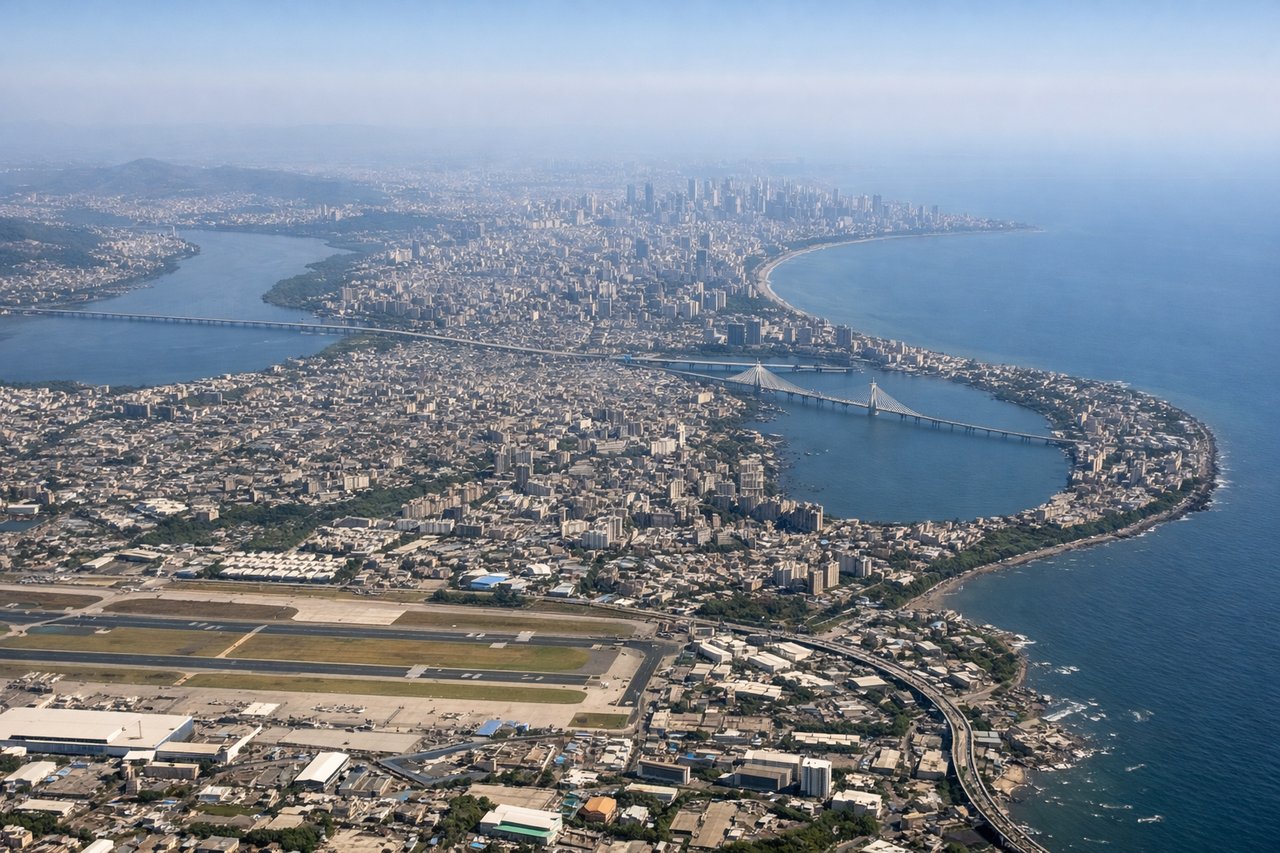
Takeoff from BOM
RIGHTBOM typically departs runways 09L/09R (eastbound) during normal operations. Right-side seats face north across the Arabian Sea and toward the Western Ghats, offering immediate water views and mountain backdrop. Left seats face inland toward the city and industrial areas.
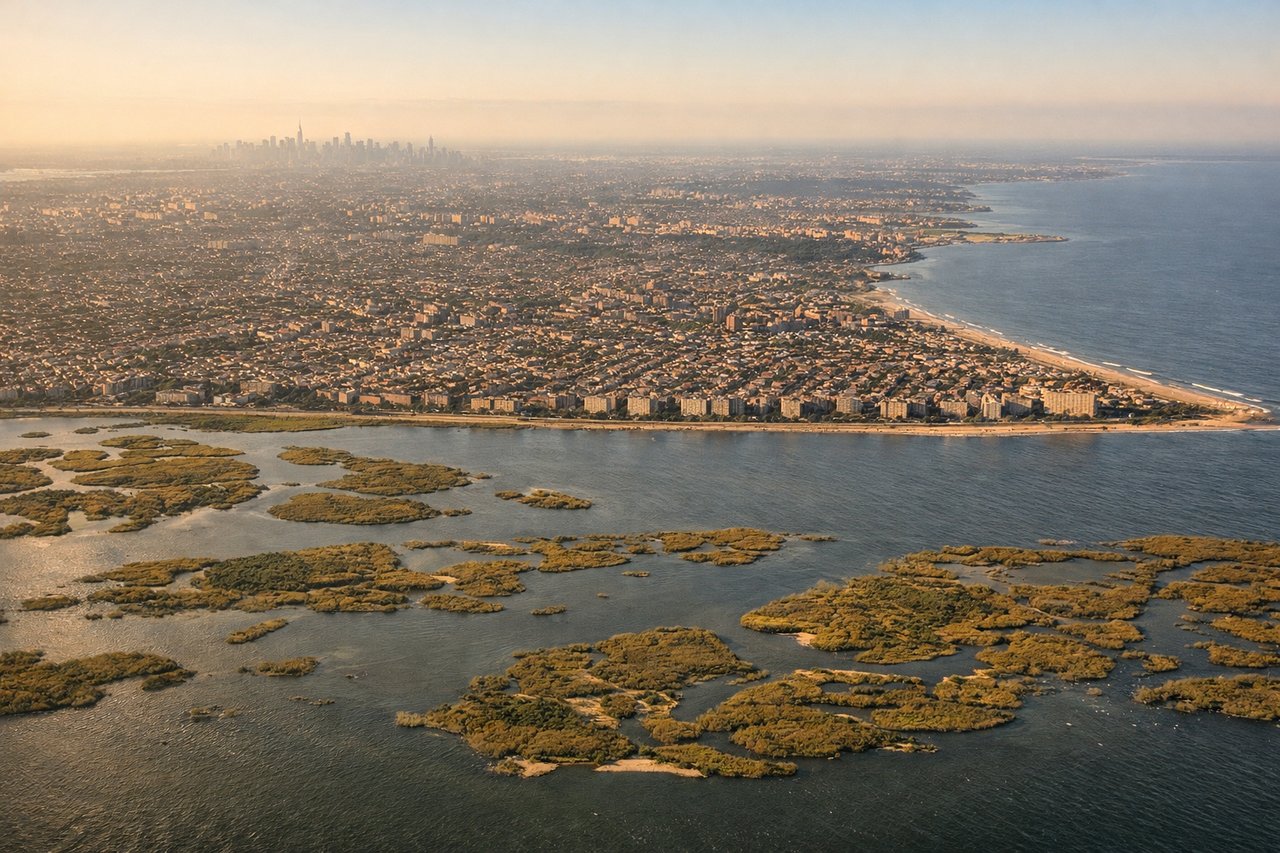
Landing at JFK
LEFTJFK typically uses runways 04L/04R or 13L/13R depending on wind. For westbound arrivals (most common from Asia), approach vectors often favor left-side seats, which face south and east across Jamaica Bay, the Atlantic shoreline, and Long Island's southern coast. Right seats face inland toward Queens and Brooklyn.
Will your flight be in sunlight?
Pick a date and time in the Sun Map to watch the sun move across your whole flight.
About This Route
Which side of the plane should I sit on flying from Chhatrapati Shivaji International (BOM) to John F Kennedy International (JFK)?
Sit on the Left side of the plane for the best views on flights from Bombay to New York. While takeoff favors the right, the landing view from the left is more dramatic and geographically distinctive—Jamaica Bay's unique ecosystem and the Atlantic approach provide better visual interest than the inland Queens/Brooklyn approach. The takeoff view is good but brief; the landing compensation makes left the better overall choice.
What can I see during takeoff from Chhatrapati Shivaji International in Bombay?
During takeoff from Chhatrapati Shivaji International (BOM), sit on the Right side for the best views. BOM typically departs runways 09L/09R (eastbound) during normal operations. Right-side seats face north across the Arabian Sea and toward the Western Ghats, offering immediate water views and mountain backdrop. Left seats face inland toward the city and industrial areas. Notable sights include: Arabian Sea (immediate offshore water), Western Ghats mountain range (distant eastern horizon), Mumbai harbor and shipping lanes (below during initial climb), Elephanta Island (small, visible in harbor area).
What can I see when landing at John F Kennedy International in New York?
When landing at John F Kennedy International (JFK), sit on the Left side for the best views. JFK typically uses runways 04L/04R or 13L/13R depending on wind. For westbound arrivals (most common from Asia), approach vectors often favor left-side seats, which face south and east across Jamaica Bay, the Atlantic shoreline, and Long Island's southern coast. Right seats face inland toward Queens and Brooklyn. Notable sights include: Jamaica Bay (large water body with islands and marshland), Atlantic Ocean (eastern horizon), Long Island's southern barrier beaches (Rockaway Peninsula, Jamaica Bay islands), Manhattan skyline (distant, visible on clear days from certain approach angles).
How long is the flight from Bombay to New York?
The flight from Chhatrapati Shivaji International (BOM) to John F Kennedy International (JFK) takes about 16 hours 30 minutes. The shortest flight path between them is 7,787 miles (12,532 km); winds and air traffic control usually add a few percent.
What does the Bombay to New York flight path pass over?
Flight path crosses the Arabian Sea, then the Middle East (Persian Gulf region, visible from cruise altitude), the Caucasus Mountains (distant southern horizon), Black Sea region, Eastern Europe, and the Atlantic. At cruise altitude (35,000+ feet), the curvature of Earth becomes apparent. Notable midpoint landmarks include the Caspian Sea (if visible during daylight), the Alps (northern Europe, visible as a distant ridge), and the Atlantic coastline of Ireland/UK (eastern approach to North America). The North Atlantic crossing dominates the latter half—primarily open ocean with occasional weather systems visible as cloud formations.