While Budapest's Danube departure is scenic, the landing approach to Genoa with the dramatic Ligurian Apennines meeting the Mediterranean coast and the harbor complex provides significantly more visual drama and variety. The right side captures the flight's most distinctive geographical transition—from inland European plains to Alpine foothills to Mediterranean coastline—making it the superior choice for window-seat scenery.
Flight Path
The flight path crosses the Po River valley in northern Italy, with the Alps visible to the north (Mont Blanc, Gran Paradiso massif) and the Apennine Mountains gradually rising to the south as the aircraft descends toward the Ligurian coast. Lake Como and Lake Garda may be visible on clear days to the left during cruise. The transition from Hungarian plains through the Alps to Mediterranean foothills represents the most dramatic geographical shift on this route.
Great circle distance and headings ›.jpg?width=600)


Phase by phase
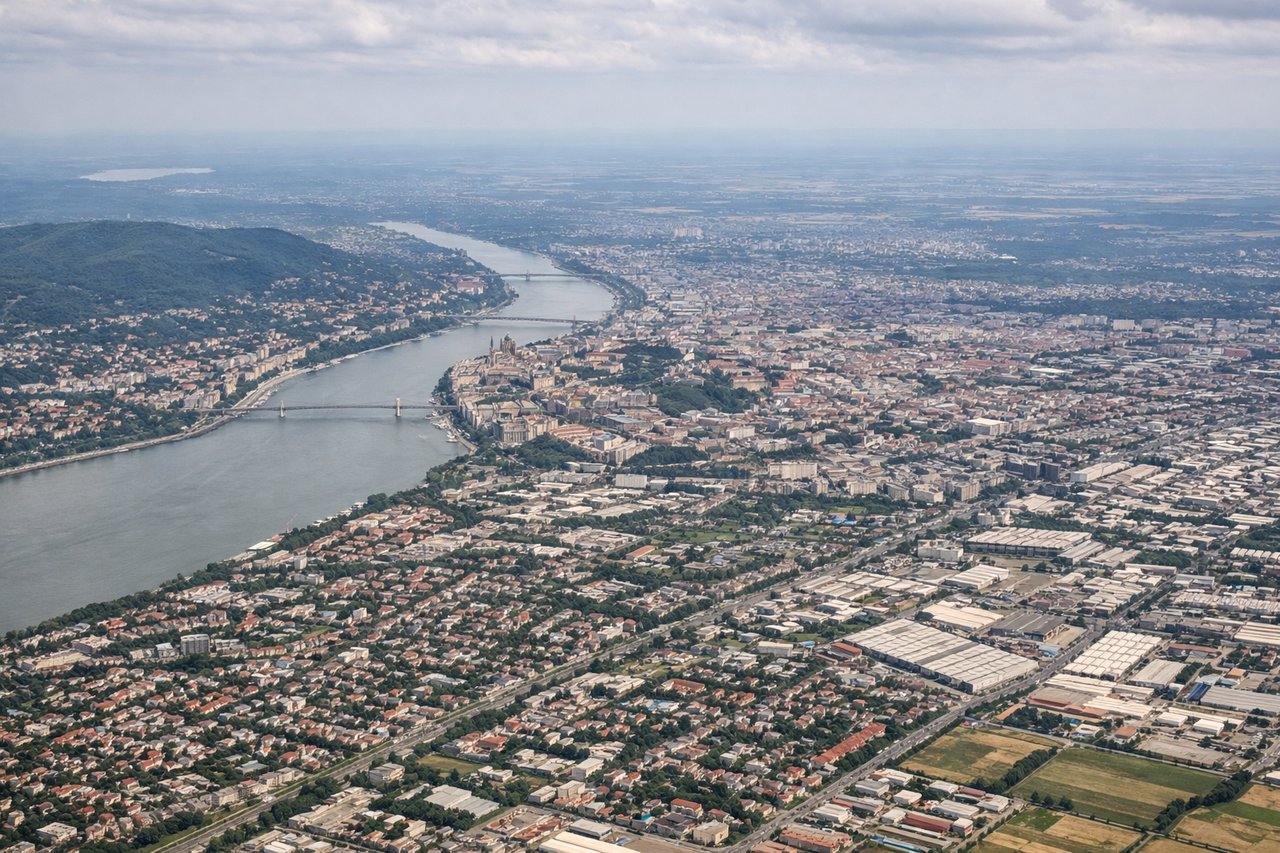
Takeoff from BUD
LEFTLeft side captures Budapest's urban sprawl and the Danube River winding through the city during climb-out, with the Hungarian Plain stretching southward. Right side faces northwest toward flat agricultural terrain with minimal visual interest.
Landing at GOA
RIGHTRight side provides the dramatic approach to Genoa with the Ligurian Apennines descending steeply to the Mediterranean coast, the Porto di Genova harbor complex, and the Riviera di Levante coastline. Left side shows only inland Piedmont plains and distant mountains.
Landmarks on this routeAll landmarks →
Will your flight be in sunlight?
See exactly which side of the plane gets sun and shade at your departure time.
About This Route
Which side of the plane should I sit on flying from Ferihegy (BUD) to Genova Sestri (GOA)?
Sit on the Right side of the plane for the best views on flights from Budapest to Genoa. While Budapest's Danube departure is scenic, the landing approach to Genoa with the dramatic Ligurian Apennines meeting the Mediterranean coast and the harbor complex provides significantly more visual drama and variety. The right side captures the flight's most distinctive geographical transition—from inland European plains to Alpine foothills to Mediterranean coastline—making it the superior choice for window-seat scenery.
What can I see during takeoff from Ferihegy in Budapest?
During takeoff from Ferihegy (BUD), sit on the Left side for the best views. Left side captures Budapest's urban sprawl and the Danube River winding through the city during climb-out, with the Hungarian Plain stretching southward. Right side faces northwest toward flat agricultural terrain with minimal visual interest. Notable sights include: Danube River through Budapest city center, Margaret Island, Buda Hills escarpment, Hungarian Plain extending south.
What can I see when landing at Genova Sestri in Genoa?
When landing at Genova Sestri (GOA), sit on the Right side for the best views. Right side provides the dramatic approach to Genoa with the Ligurian Apennines descending steeply to the Mediterranean coast, the Porto di Genova harbor complex, and the Riviera di Levante coastline. Left side shows only inland Piedmont plains and distant mountains. Notable sights include: Ligurian Apennines mountain range, Genoa harbor and breakwaters, Riviera di Levante rocky coastline, Mediterranean Sea.
How long is the flight from Budapest to Genoa?
The flight from Ferihegy (BUD) to Genova Sestri (GOA) takes 2h 15m.
What does the Budapest to Genoa flight path pass over?
The flight path crosses the Po River valley in northern Italy, with the Alps visible to the north (Mont Blanc, Gran Paradiso massif) and the Apennine Mountains gradually rising to the south as the aircraft descends toward the Ligurian coast. Lake Como and Lake Garda may be visible on clear days to the left during cruise. The transition from Hungarian plains through the Alps to Mediterranean foothills represents the most dramatic geographical shift on this route.