Left side scores higher due to superior takeoff scenery (Budapest's Danube and urban landmarks) and the cruise phase over the Iberian Peninsula and Mediterranean, which includes the Spanish coast, Pyrenees foothills, and varied terrain. Right side's landing advantage (Teide and volcanic coast) does not fully compensate for the long Atlantic crossing on that side, which offers minimal visual interest. The left side provides better overall variety across the full flight duration.
Flown BUD to TFS? Did we get it right?
Flight Path
Budapest to Tenerife is 2,340 miles (3,766 km), a flight of about 4 hours 50 minutes.
Pyrenees Mountains (northern Spain–France border, visible as a distant ridge line during cruise at FL350), Iberian Peninsula's interior plateau, Mediterranean coast near Valencia or Alicante (depending on exact routing), Balearic Islands (Mallorca, Menorca—small but recognizable from altitude), transition to open Atlantic south of Spain, approach to Canary Islands archipelago with Gran Canaria and Tenerife visible 50+ miles before landing
Great circle distance and headings ›Phase by phase
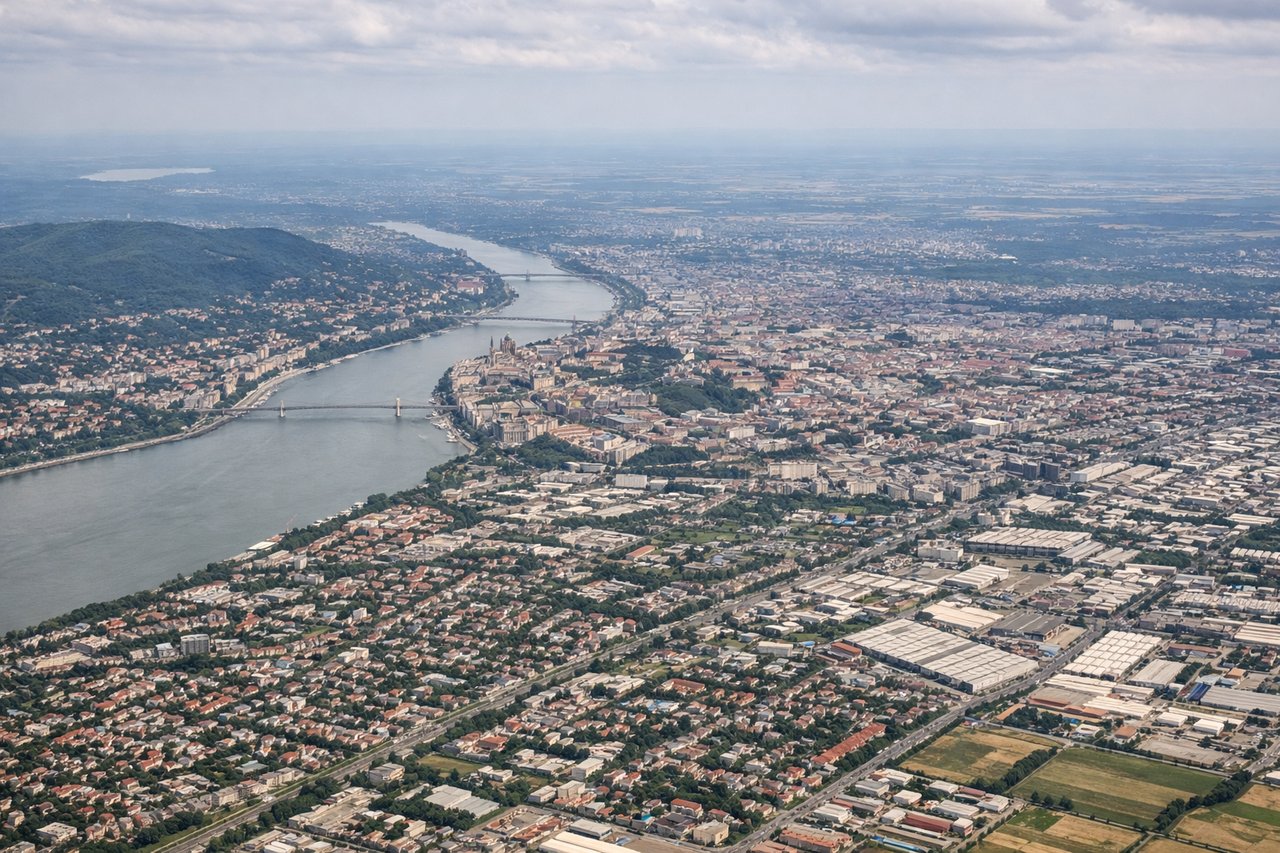
Takeoff from BUD
LEFTLeft side captures Budapest's urban sprawl and the Danube River during initial climb, with the city's distinctive meanders visible from 3,000–5,000 feet. Right side faces open plains with minimal landmarks.
Landing at TFS
RIGHTRight side (south-facing approach to runway 07) reveals Tenerife's dramatic volcanic landscape: Mount Teide's snow-capped peak dominates the interior, and the southern coast's black-sand beaches and resort development appear during final descent. Left side faces open Atlantic.
Will your flight be in sunlight?
Pick a date and time in the Sun Map to watch the sun move across your whole flight.
About This Route
Which side of the plane should I sit on flying from Ferihegy (BUD) to Tenerife Sur (TFS)?
Sit on the Left side of the plane for the best views on flights from Budapest to Tenerife. Left side scores higher due to superior takeoff scenery (Budapest's Danube and urban landmarks) and the cruise phase over the Iberian Peninsula and Mediterranean, which includes the Spanish coast, Pyrenees foothills, and varied terrain. Right side's landing advantage (Teide and volcanic coast) does not fully compensate for the long Atlantic crossing on that side, which offers minimal visual interest. The left side provides better overall variety across the full flight duration.
What can I see during takeoff from Ferihegy in Budapest?
During takeoff from Ferihegy (BUD), sit on the Left side for the best views. Left side captures Budapest's urban sprawl and the Danube River during initial climb, with the city's distinctive meanders visible from 3,000–5,000 feet. Right side faces open plains with minimal landmarks. Notable sights include: Danube River (multiple loops through Budapest), Margaret Island, Buda Hills escarpment, Pest urban grid.
What can I see when landing at Tenerife Sur in Tenerife?
When landing at Tenerife Sur (TFS), sit on the Right side for the best views. Right side (south-facing approach to runway 07) reveals Tenerife's dramatic volcanic landscape: Mount Teide's snow-capped peak dominates the interior, and the southern coast's black-sand beaches and resort development appear during final descent. Left side faces open Atlantic. Notable sights include: Mount Teide (3,718 m, visible from 80+ miles), Tenerife's volcanic ridgelines, Playa de las Américas resort strip, southern coastal cliffs.
How long is the flight from Budapest to Tenerife?
The flight from Ferihegy (BUD) to Tenerife Sur (TFS) takes about 4 hours 50 minutes. The shortest flight path between them is 2,340 miles (3,766 km); winds and air traffic control usually add a few percent.
What does the Budapest to Tenerife flight path pass over?
Pyrenees Mountains (northern Spain–France border, visible as a distant ridge line during cruise at FL350), Iberian Peninsula's interior plateau, Mediterranean coast near Valencia or Alicante (depending on exact routing), Balearic Islands (Mallorca, Menorca—small but recognizable from altitude), transition to open Atlantic south of Spain, approach to Canary Islands archipelago with Gran Canaria and Tenerife visible 50+ miles before landing