While takeoff from BWI favors the right side, the landing approach to Doha strongly favors the left, and the landing experience is typically more visually rewarding given the dramatic coastal development and Persian Gulf scenery. The left side captures the approach's most distinctive features.
Flight Path
The flight path crosses the Atlantic Ocean (no notable landmarks for 6+ hours), then passes over southern Europe and the Mediterranean. Notable midpoint features include the Iberian Peninsula, southern France, the Alps (distant to the north), the Mediterranean coast, and the North African coast near Libya. The route then crosses the Sahara Desert (vast, featureless tan expanse), the Nile Delta (distinctive green agricultural area with branching river channels), and the Red Sea before entering the Arabian Peninsula and descending toward the Persian Gulf.
Great circle distance and headings ›.jpeg?width=600)
.jpg?width=600)


Phase by phase
Takeoff from BWI
RIGHTRight-side seats offer views of the Chesapeake Bay and its tributaries during the initial climb-out eastward from BWI. The bay's distinctive branching waterways and surrounding marshlands are prominent features visible within the first 10-15 minutes of flight.
Landing at DOH
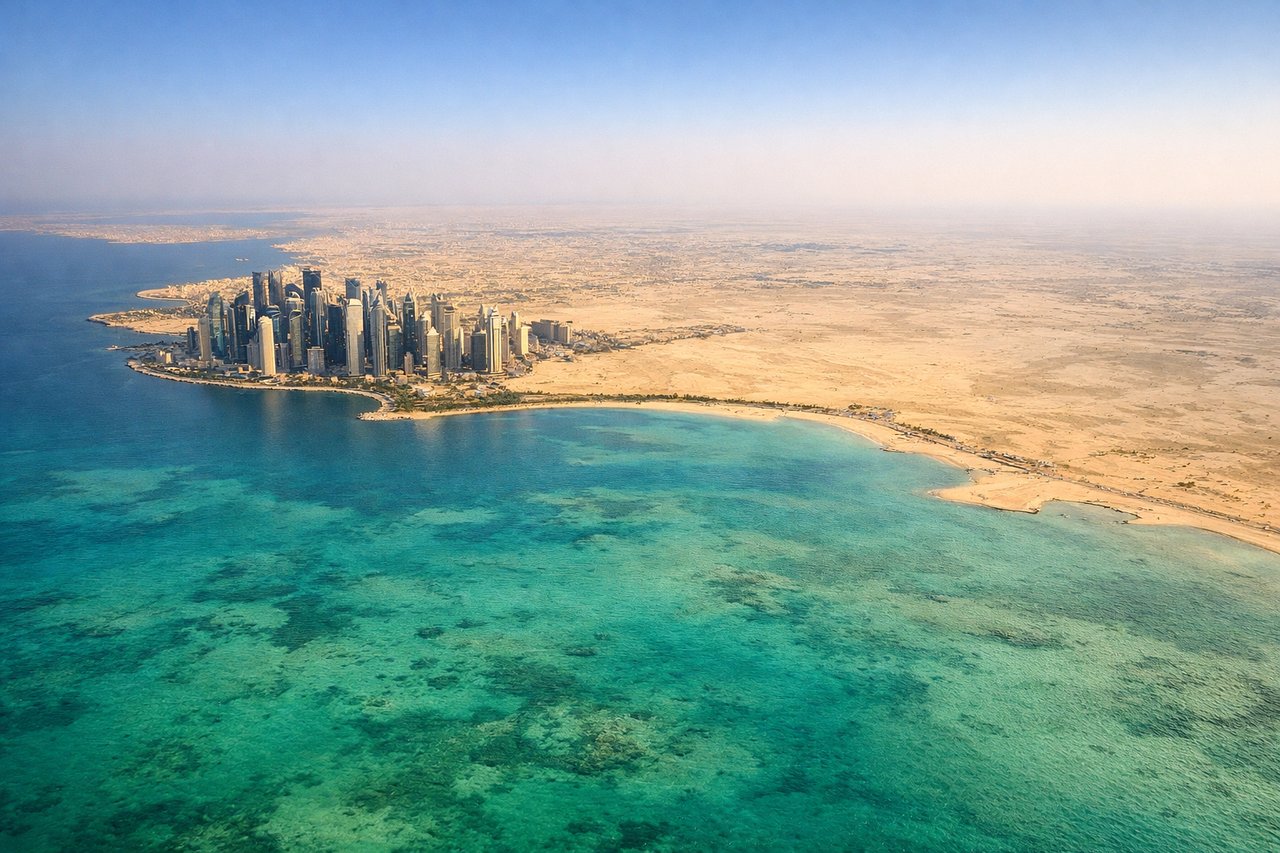
LEFTLeft-side seats provide excellent views during the approach to Doha, particularly of the Persian Gulf's turquoise waters, the Qatar peninsula's distinctive coastline, and the sprawling development of Doha itself. The approach typically comes from the northwest, making left-side views superior.
Landmarks on this routeAll landmarks →
Will your flight be in sunlight?
See exactly which side of the plane gets sun and shade at your departure time.
About This Route
Which side of the plane should I sit on flying from Baltimore Washington International (BWI) to Hamad International Airport (DOH)?
Sit on the Left side of the plane for the best views on flights from Baltimore to Doha. While takeoff from BWI favors the right side, the landing approach to Doha strongly favors the left, and the landing experience is typically more visually rewarding given the dramatic coastal development and Persian Gulf scenery. The left side captures the approach's most distinctive features.
What can I see during takeoff from Baltimore Washington International in Baltimore?
During takeoff from Baltimore Washington International (BWI), sit on the Right side for the best views. Right-side seats offer views of the Chesapeake Bay and its tributaries during the initial climb-out eastward from BWI. The bay's distinctive branching waterways and surrounding marshlands are prominent features visible within the first 10-15 minutes of flight. Notable sights include: Chesapeake Bay, Patapsco River estuary, Baltimore Harbor, Patuxent River.
What can I see when landing at Hamad International Airport in Doha?
When landing at Hamad International Airport (DOH), sit on the Left side for the best views. Left-side seats provide excellent views during the approach to Doha, particularly of the Persian Gulf's turquoise waters, the Qatar peninsula's distinctive coastline, and the sprawling development of Doha itself. The approach typically comes from the northwest, making left-side views superior. Notable sights include: Persian Gulf, Qatar peninsula coastline, Doha skyline and harbor, artificial islands and coastal development.
How long is the flight from Baltimore to Doha?
The flight from Baltimore Washington International (BWI) to Hamad International Airport (DOH) takes Approximately 13-14 hours.
What does the Baltimore to Doha flight path pass over?
The flight path crosses the Atlantic Ocean (no notable landmarks for 6+ hours), then passes over southern Europe and the Mediterranean. Notable midpoint features include the Iberian Peninsula, southern France, the Alps (distant to the north), the Mediterranean coast, and the North African coast near Libya. The route then crosses the Sahara Desert (vast, featureless tan expanse), the Nile Delta (distinctive green agricultural area with branching river channels), and the Red Sea before entering the Arabian Peninsula and descending toward the Persian Gulf.