Right seats capture the dramatic Rocky Mountain scenery during takeoff from Bozeman, which is the most visually distinctive portion of this flight. The landing approach over Lake Michigan and Chicago is scenic but less dramatic than the mountain departure. Right side wins overall.
Flown BZN to ORD? Did we get it right?
Flight Path
Bozeman to Chicago is 1,183 miles (1,903 km), a flight of about 3 hours.
The flight path crosses the northern Great Plains. Notable features include the Absaroka Range (visible briefly southeast of Bozeman during climb), the Bighorn Mountains in Wyoming (visible to the right/south around 1.5 hours into flight), the Black Hills of South Dakota (right side, around 2.5 hours), and the Mississippi River valley (visible around 3.5 hours as the aircraft descends toward Chicago). The terrain transitions from mountainous to rolling prairie to flat agricultural plains. Most of the middle section offers limited scenic interest—primarily farmland, small towns, and occasional river valleys.
Great circle distance and headings ›


Phase by phase
Takeoff from BZN
RIGHTRight-side seats offer immediate views of the Gallatin Range and Bridger Mountains as the aircraft climbs northeast from Bozeman. The left side faces the Madison Range but at a less dramatic angle during initial climb-out.
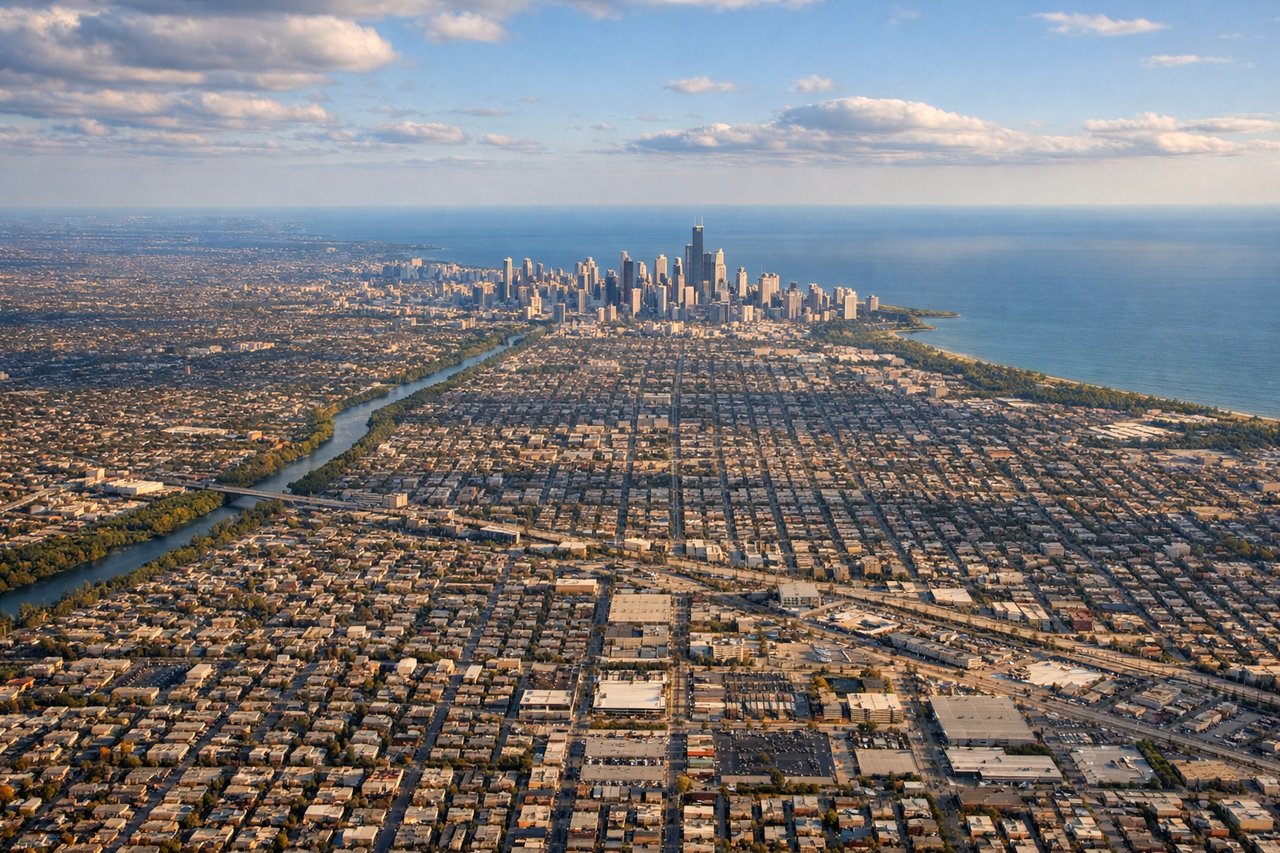
Landing at ORD
LEFTLeft-side seats provide excellent views during the descent approach to Chicago. The aircraft typically descends over Lake Michigan from the northeast, and left seats face the lake, downtown Chicago skyline, and the Illinois shoreline.
Will your flight be in sunlight?
Pick a date and time in the Sun Map to watch the sun move across your whole flight.
About This Route
Which side of the plane should I sit on flying from Bozeman Yellowstone International Airport (BZN) to Chicago Ohare International (ORD)?
Sit on the Right side of the plane for the best views on flights from Bozeman to Chicago. Right seats capture the dramatic Rocky Mountain scenery during takeoff from Bozeman, which is the most visually distinctive portion of this flight. The landing approach over Lake Michigan and Chicago is scenic but less dramatic than the mountain departure. Right side wins overall.
What can I see during takeoff from Bozeman Yellowstone International Airport in Bozeman?
During takeoff from Bozeman Yellowstone International Airport (BZN), sit on the Right side for the best views. Right-side seats offer immediate views of the Gallatin Range and Bridger Mountains as the aircraft climbs northeast from Bozeman. The left side faces the Madison Range but at a less dramatic angle during initial climb-out. Notable sights include: Gallatin Range (east), Bridger Mountains (northeast), Bozeman valley floor, Paradise Valley extending north.
What can I see when landing at Chicago Ohare International in Chicago?
When landing at Chicago Ohare International (ORD), sit on the Left side for the best views. Left-side seats provide excellent views during the descent approach to Chicago. The aircraft typically descends over Lake Michigan from the northeast, and left seats face the lake, downtown Chicago skyline, and the Illinois shoreline. Notable sights include: Lake Michigan (dominant), Chicago downtown skyline, Illinois coastline and suburbs, Waukegan area to the north.
How long is the flight from Bozeman to Chicago?
The flight from Bozeman Yellowstone International Airport (BZN) to Chicago Ohare International (ORD) takes about 3 hours. The shortest flight path between them is 1,183 miles (1,903 km); winds and air traffic control usually add a few percent.
What does the Bozeman to Chicago flight path pass over?
The flight path crosses the northern Great Plains. Notable features include the Absaroka Range (visible briefly southeast of Bozeman during climb), the Bighorn Mountains in Wyoming (visible to the right/south around 1.5 hours into flight), the Black Hills of South Dakota (right side, around 2.5 hours), and the Mississippi River valley (visible around 3.5 hours as the aircraft descends toward Chicago). The terrain transitions from mountainous to rolling prairie to flat agricultural plains. Most of the middle section offers limited scenic interest—primarily farmland, small towns, and occasional river valleys.