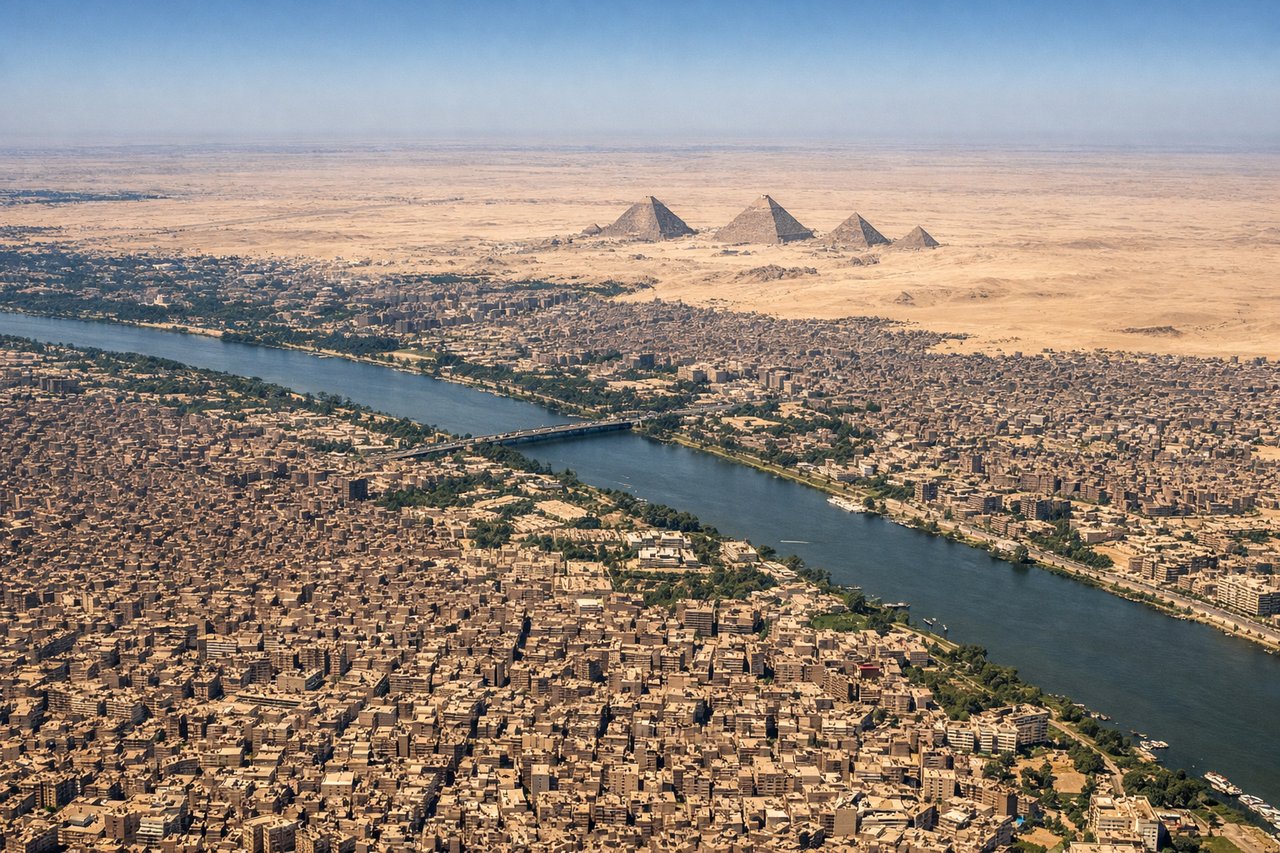
The right side delivers the most dramatic single moment of the flight — the Giza pyramids visible during Cairo departure — which outweighs the left side's Gulf coast arrival views. During the cruise over the Sinai and Arabian Peninsula, neither side offers dramatically more, but the right side also picks up views of the Sinai coastline along the Gulf of Suez during the climb-out.
Flight Path
The flight crosses the Sinai Peninsula, offering views of its rugged mountainous interior including the St. Catherine massif area. It then crosses the Gulf of Aqaba and the northwestern Saudi Arabian desert — flat, sandy, and largely featureless. The final portion crosses the shallow waters of the Persian Gulf approaching Qatar's low-lying coastline.
Great circle distance and headings ›

.jpg?width=600)
.JPG?width=600)


Phase by phase
Takeoff from CAI
RIGHTCairo International typically departs on runway 05R/23L or 05C/23C, heading northeast. A right-side seat gives you a clear view back over central Cairo, the Nile, and the Giza plateau as the aircraft climbs and banks eastward. The pyramids at Giza are genuinely visible from the right side during the initial climb and turn.
Landing at DOH
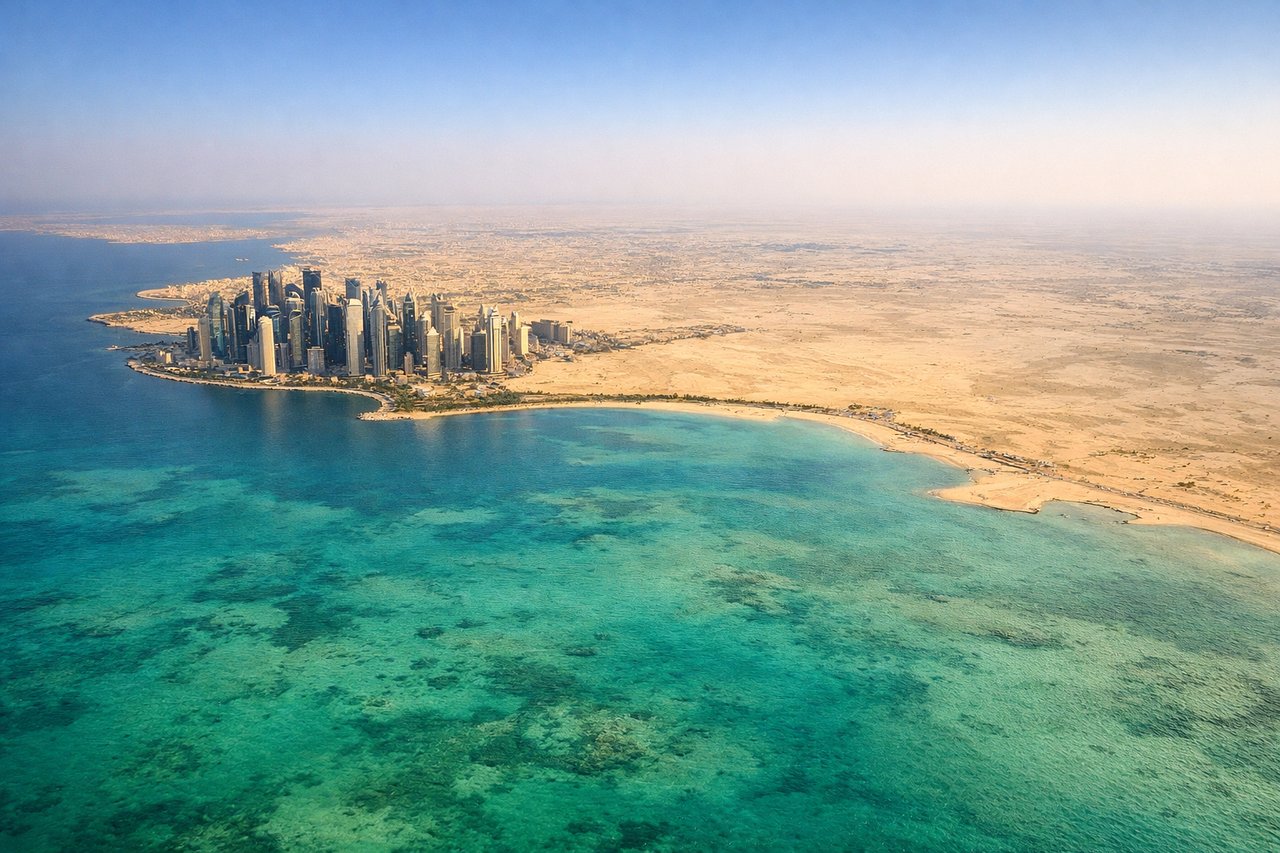
LEFTDoha's Hamad International Airport (which has largely replaced old DOH) approaches typically from the northeast over the Gulf. However, old Doha International sits on the coast, and approaches from the north or northwest put the Doha skyline and the Qatar peninsula coastline on the left side. The left seat gives views of the distinctive West Bay skyscraper cluster and the shallow turquoise waters of the Persian Gulf.
Landmarks on this routeAll landmarks →
Will your flight be in sunlight?
See exactly which side of the plane gets sun and shade at your departure time.
About This Route
Which side of the plane should I sit on flying from Cairo International (CAI) to Hamad International Airport (DOH)?
Sit on the Right side of the plane for the best views on flights from Cairo to Doha. The right side delivers the most dramatic single moment of the flight — the Giza pyramids visible during Cairo departure — which outweighs the left side's Gulf coast arrival views. During the cruise over the Sinai and Arabian Peninsula, neither side offers dramatically more, but the right side also picks up views of the Sinai coastline along the Gulf of Suez during the climb-out.
What can I see during takeoff from Cairo International in Cairo?
During takeoff from Cairo International (CAI), sit on the Right side for the best views. Cairo International typically departs on runway 05R/23L or 05C/23C, heading northeast. A right-side seat gives you a clear view back over central Cairo, the Nile, and the Giza plateau as the aircraft climbs and banks eastward. The pyramids at Giza are genuinely visible from the right side during the initial climb and turn. Notable sights include: Giza Pyramid Complex, the Nile River snaking through Cairo, Greater Cairo urban sprawl, Heliopolis district directly below.
What can I see when landing at Hamad International Airport in Doha?
When landing at Hamad International Airport (DOH), sit on the Left side for the best views. Doha's Hamad International Airport (which has largely replaced old DOH) approaches typically from the northeast over the Gulf. However, old Doha International sits on the coast, and approaches from the north or northwest put the Doha skyline and the Qatar peninsula coastline on the left side. The left seat gives views of the distinctive West Bay skyscraper cluster and the shallow turquoise waters of the Persian Gulf. Notable sights include: West Bay Doha skyline, Persian Gulf shallow turquoise coastal waters, Qatar peninsula coastline, Doha Corniche waterfront.
How long is the flight from Cairo to Doha?
The flight from Cairo International (CAI) to Hamad International Airport (DOH) takes Approximately 2 hours 30 minutes.
What does the Cairo to Doha flight path pass over?
The flight crosses the Sinai Peninsula, offering views of its rugged mountainous interior including the St. Catherine massif area. It then crosses the Gulf of Aqaba and the northwestern Saudi Arabian desert — flat, sandy, and largely featureless. The final portion crosses the shallow waters of the Persian Gulf approaching Qatar's low-lying coastline.