While Casablanca's coastal takeoff is scenic, the long Atlantic cruise offers little variation regardless of side. The left side pulls ahead overall because the Montreal approach delivers a genuinely distinctive river-and-skyline view that the right side's ocean-dominated takeoff can't match in duration or detail.
Flown CMN to YUL? Did we get it right?
Flight Path
Casablanca to Montreal is 3,526 miles (5,675 km), a flight of about 7 hours 35 minutes.
Almost the entire mid-flight is over open North Atlantic water, with the aircraft passing well south of Newfoundland's Grand Banks before making landfall over the Gulf of St. Lawrence and eastern Quebec on descent.
Great circle distance and headings ›Phase by phase
Takeoff from CMN
RIGHTDeparting CMN on the 17/35 axis, the aircraft climbs out parallel to the Moroccan coastline with Casablanca's dense urban grid, its port, and the Atlantic shoreline visible to the east side of the cabin. The left side only shows open ocean.
Landing at YUL
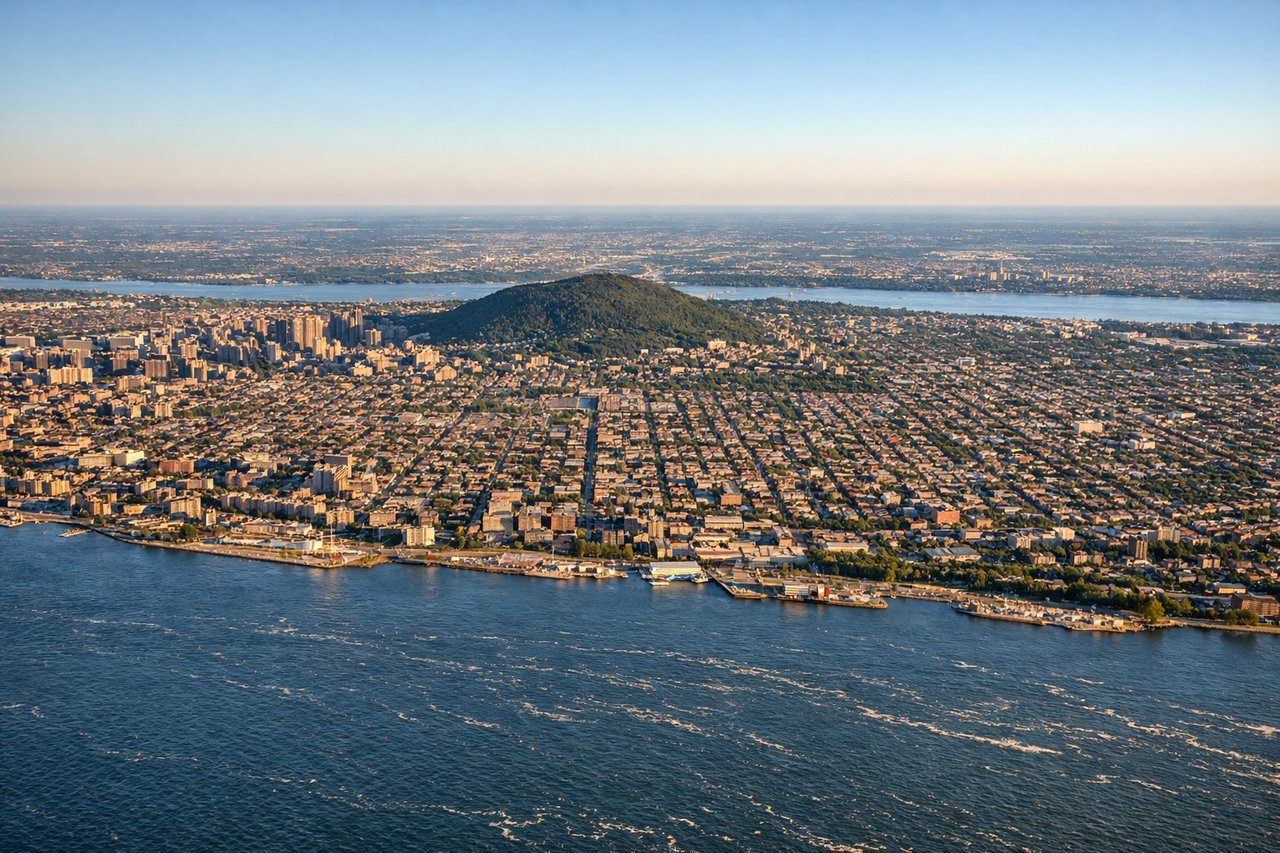
LEFTOn approach to YUL's runway 24, the flight path descends over the St. Lawrence River valley, giving passengers on the south-facing side a view of the river, the island of Montreal, and Mount Royal rising above the downtown skyline before touchdown.
Will your flight be in sunlight?
Pick a date and time in the Sun Map to watch the sun move across your whole flight.
About This Route
Which side of the plane should I sit on flying from Mohammed V (CMN) to Montreal International Dorval (YUL)?
Sit on the Left side of the plane for the best views on flights from Casablanca to Montreal. While Casablanca's coastal takeoff is scenic, the long Atlantic cruise offers little variation regardless of side. The left side pulls ahead overall because the Montreal approach delivers a genuinely distinctive river-and-skyline view that the right side's ocean-dominated takeoff can't match in duration or detail.
What can I see during takeoff from Mohammed V in Casablanca?
During takeoff from Mohammed V (CMN), sit on the Right side for the best views. Departing CMN on the 17/35 axis, the aircraft climbs out parallel to the Moroccan coastline with Casablanca's dense urban grid, its port, and the Atlantic shoreline visible to the east side of the cabin. The left side only shows open ocean. Notable sights include: Casablanca city center and Hassan II Mosque, Port of Casablanca, Atlantic coastline.
What can I see when landing at Montreal International Dorval in Montreal?
When landing at Montreal International Dorval (YUL), sit on the Left side for the best views. On approach to YUL's runway 24, the flight path descends over the St. Lawrence River valley, giving passengers on the south-facing side a view of the river, the island of Montreal, and Mount Royal rising above the downtown skyline before touchdown. Notable sights include: St. Lawrence River, Mount Royal, Montreal downtown skyline, Lachine Canal area.
How long is the flight from Casablanca to Montreal?
The flight from Mohammed V (CMN) to Montreal International Dorval (YUL) takes about 7 hours 35 minutes. The shortest flight path between them is 3,526 miles (5,675 km); winds and air traffic control usually add a few percent.
What does the Casablanca to Montreal flight path pass over?
Almost the entire mid-flight is over open North Atlantic water, with the aircraft passing well south of Newfoundland's Grand Banks before making landfall over the Gulf of St. Lawrence and eastern Quebec on descent.