Cienfuegos to Boston is 1,498 miles (2,411 km), a flight of about 4 hours.
The right side captures the most dramatic scenery: the Caribbean departure over Cienfuegos Bay and the entire Atlantic crossing. While the left side offers excellent Boston Harbor and city views on arrival, the takeoff views from the right side are more visually distinctive and less commonly photographed.
Flight Path
The flight path crosses the Atlantic Ocean for roughly 1,200 nautical miles. Notable features along the route include the Bahamas archipelago (if visible during early climb, appearing as shallow turquoise banks and islands), the Gulf Stream's darker blue waters, and the continental shelf break where water color transitions from deep blue to lighter shades as you approach the U.S. East Coast. The Outer Banks of North Carolina may be visible during descent if flying slightly south of direct routing. No major mountain ranges or dramatic terrain features are visible during the oceanic portion—the crossing is primarily open water with occasional cloud formations.
Great circle distance and headings ›Phase by phase
Takeoff from CFG
RIGHTRight-side seats offer views of the Caribbean Sea and the Cienfuegos coastline as the aircraft climbs northward. You'll see the bay's distinctive crescent shape and the city's waterfront layout receding below.
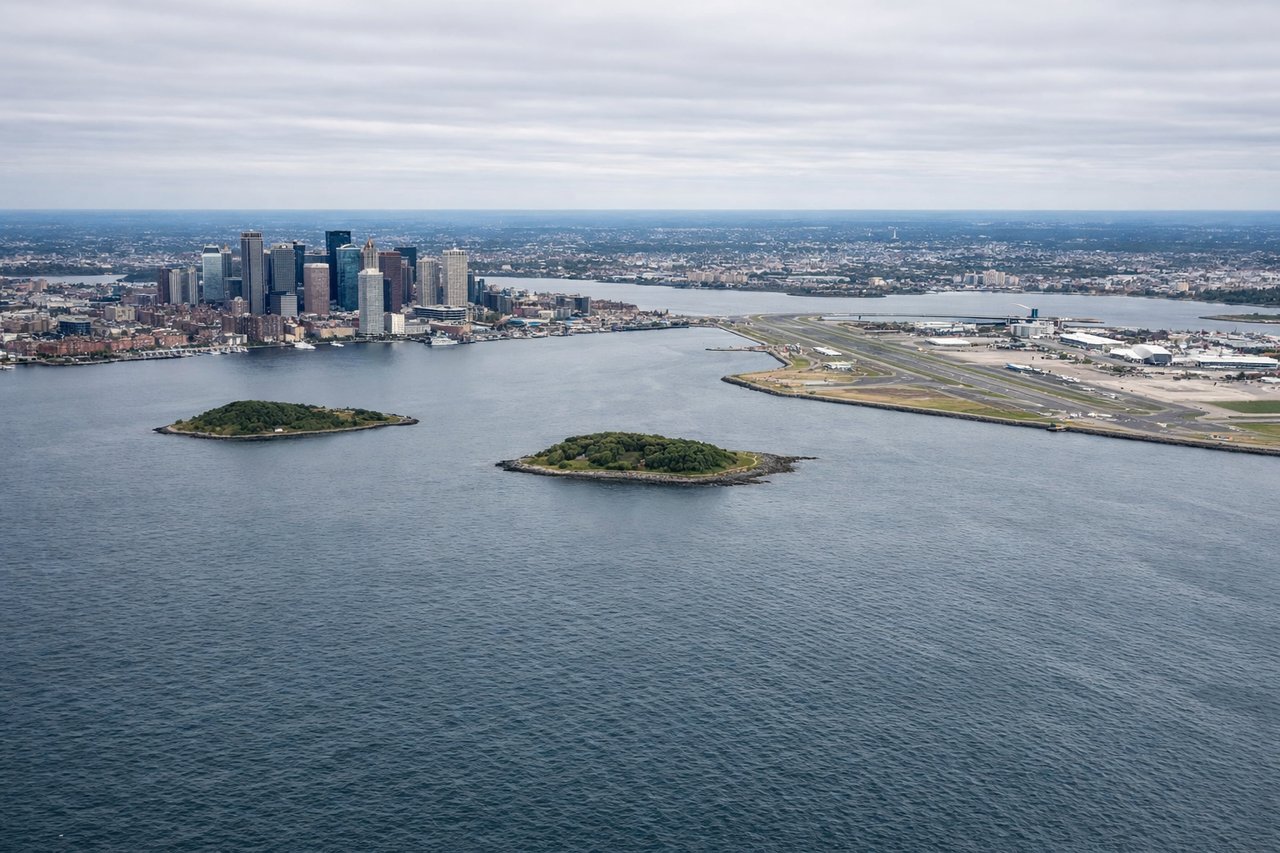
Landing at BOS
LEFTLeft-side seats provide excellent views during the final approach into Boston. You'll see the Atlantic coastline, Boston Harbor with its islands, and the city skyline as you descend toward Logan Airport on the harbor's eastern edge.
Will your flight be in sunlight?
Pick a date and time in the Sun Map to watch the sun move across your whole flight.
About This Route
Which side of the plane should I sit on flying from Jaime Gonzalez (CFG) to General Edward Lawrence Logan International (BOS)?
Sit on the Right side of the plane for the best views on flights from Cienfuegos to Boston. The right side captures the most dramatic scenery: the Caribbean departure over Cienfuegos Bay and the entire Atlantic crossing. While the left side offers excellent Boston Harbor and city views on arrival, the takeoff views from the right side are more visually distinctive and less commonly photographed.
What can I see during takeoff from Jaime Gonzalez in Cienfuegos?
During takeoff from Jaime Gonzalez (CFG), sit on the Right side for the best views. Right-side seats offer views of the Caribbean Sea and the Cienfuegos coastline as the aircraft climbs northward. You'll see the bay's distinctive crescent shape and the city's waterfront layout receding below. Notable sights include: Cienfuegos Bay, Caribbean Sea, Escambray Mountains (inland to the south), Jagua Fortress ruins on the peninsula.
What can I see when landing at General Edward Lawrence Logan International in Boston?
When landing at General Edward Lawrence Logan International (BOS), sit on the Left side for the best views. Left-side seats provide excellent views during the final approach into Boston. You'll see the Atlantic coastline, Boston Harbor with its islands, and the city skyline as you descend toward Logan Airport on the harbor's eastern edge. Notable sights include: Boston Harbor and its islands, Atlantic coastline, Charles River, Boston city skyline.
How long is the flight from Cienfuegos to Boston?
The flight from Jaime Gonzalez (CFG) to General Edward Lawrence Logan International (BOS) takes about 4 hours. The shortest flight path between them is 1,498 miles (2,411 km); winds and air traffic control usually add a few percent.
What does the Cienfuegos to Boston flight path pass over?
The flight path crosses the Atlantic Ocean for roughly 1,200 nautical miles. Notable features along the route include the Bahamas archipelago (if visible during early climb, appearing as shallow turquoise banks and islands), the Gulf Stream's darker blue waters, and the continental shelf break where water color transitions from deep blue to lighter shades as you approach the U.S. East Coast. The Outer Banks of North Carolina may be visible during descent if flying slightly south of direct routing. No major mountain ranges or dramatic terrain features are visible during the oceanic portion—the crossing is primarily open water with occasional cloud formations.