Cuiaba to Rio De Janeiro is 973 miles (1,567 km), a flight of about 2 hours 15 minutes.
While takeoff favors the right, the landing approach over Guanabara Bay and the iconic Rio peaks is a far more dramatic and memorable experience. Left-side seats deliver the classic Rio arrival view that makes this route special.
Flight Path
The flight path crosses central Brazil's plateau region, passing over the states of Mato Grosso do Sul and São Paulo. Notable features include the Paraná River valley (visible as a significant drainage system if flying at lower altitudes during descent), the transition from cerrado to Atlantic Forest vegetation, and the Serra da Mantiqueira mountain range appearing on the eastern horizon during the descent phase into Rio.
Great circle distance and headings ›Phase by phase
Takeoff from CGB
RIGHTCuiaba typically departs to the east or northeast. Right-side seats capture the Cuiaba River valley and the transition from cerrado grassland to the beginning of the Brazilian plateau terrain as you climb out.
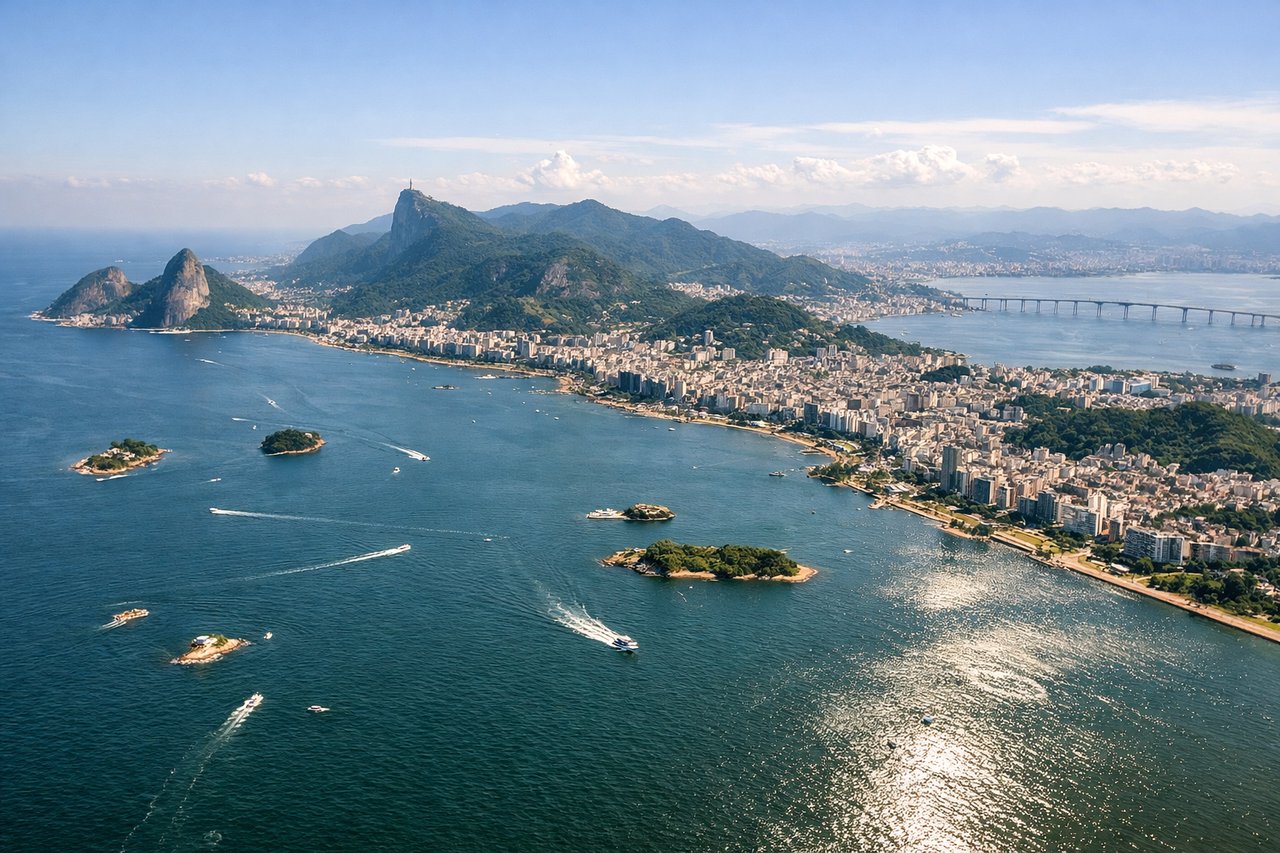
Landing at GIG
LEFTRio approaches from the north typically use runways aligned north-south (09L/09R or 10L/10R). Left-side seats provide the best views of Guanabara Bay, the iconic granite peaks (Pão de Açúcar and Corcovado), and the coastal approach over the Atlantic.
Landmarks on this routeAll landmarks →
Will your flight be in sunlight?
Pick a date and time in the Sun Map to watch the sun move across your whole flight.
About This Route
Which side of the plane should I sit on flying from Marechal Rondon (CGB) to Galeao Antonio Carlos Jobim (GIG)?
Sit on the Left side of the plane for the best views on flights from Cuiaba to Rio De Janeiro. While takeoff favors the right, the landing approach over Guanabara Bay and the iconic Rio peaks is a far more dramatic and memorable experience. Left-side seats deliver the classic Rio arrival view that makes this route special.
What can I see during takeoff from Marechal Rondon in Cuiaba?
During takeoff from Marechal Rondon (CGB), sit on the Right side for the best views. Cuiaba typically departs to the east or northeast. Right-side seats capture the Cuiaba River valley and the transition from cerrado grassland to the beginning of the Brazilian plateau terrain as you climb out. Notable sights include: Cuiaba River (winding through the city below), Cerrado vegetation patterns (distinctive light-colored grassland), Local urban sprawl of Cuiaba, Plateau escarpment edge to the east.
What can I see when landing at Galeao Antonio Carlos Jobim in Rio De Janeiro?
When landing at Galeao Antonio Carlos Jobim (GIG), sit on the Left side for the best views. Rio approaches from the north typically use runways aligned north-south (09L/09R or 10L/10R). Left-side seats provide the best views of Guanabara Bay, the iconic granite peaks (Pão de Açúcar and Corcovado), and the coastal approach over the Atlantic. Notable sights include: Guanabara Bay (large crescent-shaped body of water with islands), Pão de Açúcar and Corcovado peaks (distinctive granite formations on the bay's entrance), Copacabana and Ipanema beaches (curved sandy shorelines), Atlantic Ocean.
How long is the flight from Cuiaba to Rio De Janeiro?
The flight from Marechal Rondon (CGB) to Galeao Antonio Carlos Jobim (GIG) takes about 2 hours 15 minutes. The shortest flight path between them is 973 miles (1,567 km); winds and air traffic control usually add a few percent.
What does the Cuiaba to Rio De Janeiro flight path pass over?
The flight path crosses central Brazil's plateau region, passing over the states of Mato Grosso do Sul and São Paulo. Notable features include the Paraná River valley (visible as a significant drainage system if flying at lower altitudes during descent), the transition from cerrado to Atlantic Forest vegetation, and the Serra da Mantiqueira mountain range appearing on the eastern horizon during the descent phase into Rio.