Cuiaba to Sao Paulo is 826 miles (1,329 km), a flight of about 2 hours 15 minutes.
While takeoff favors the right for cerrado and river views, the landing approach on the left offers more dramatic scenery—the Serra da Mantiqueira, the Tietê River valley, and the massive São Paulo metropolitan area provide more visually distinctive features than the relatively flat central plateau terrain of the outbound leg.
Flight Path
The flight path crosses the interior plateau of São Paulo state, passing over agricultural regions (sugarcane and coffee plantations), scattered towns, and the Paraíba River valley. The terrain gradually transitions from the flatter cerrado of Mato Grosso to the more undulating plateau landscape of São Paulo state. No major mountain ranges are crossed, but the gradual elevation change and increasing density of human settlement become visible as the aircraft approaches the São Paulo metropolitan region.
Great circle distance and headings ›Phase by phase
Takeoff from CGB
RIGHTRight-side seats offer views of the Cuiaba River valley and the transition from central Brazilian plateau terrain toward the southeast. The initial climb-out heads generally south-southwest, making the right side optimal for viewing the river system and surrounding cerrado landscape.
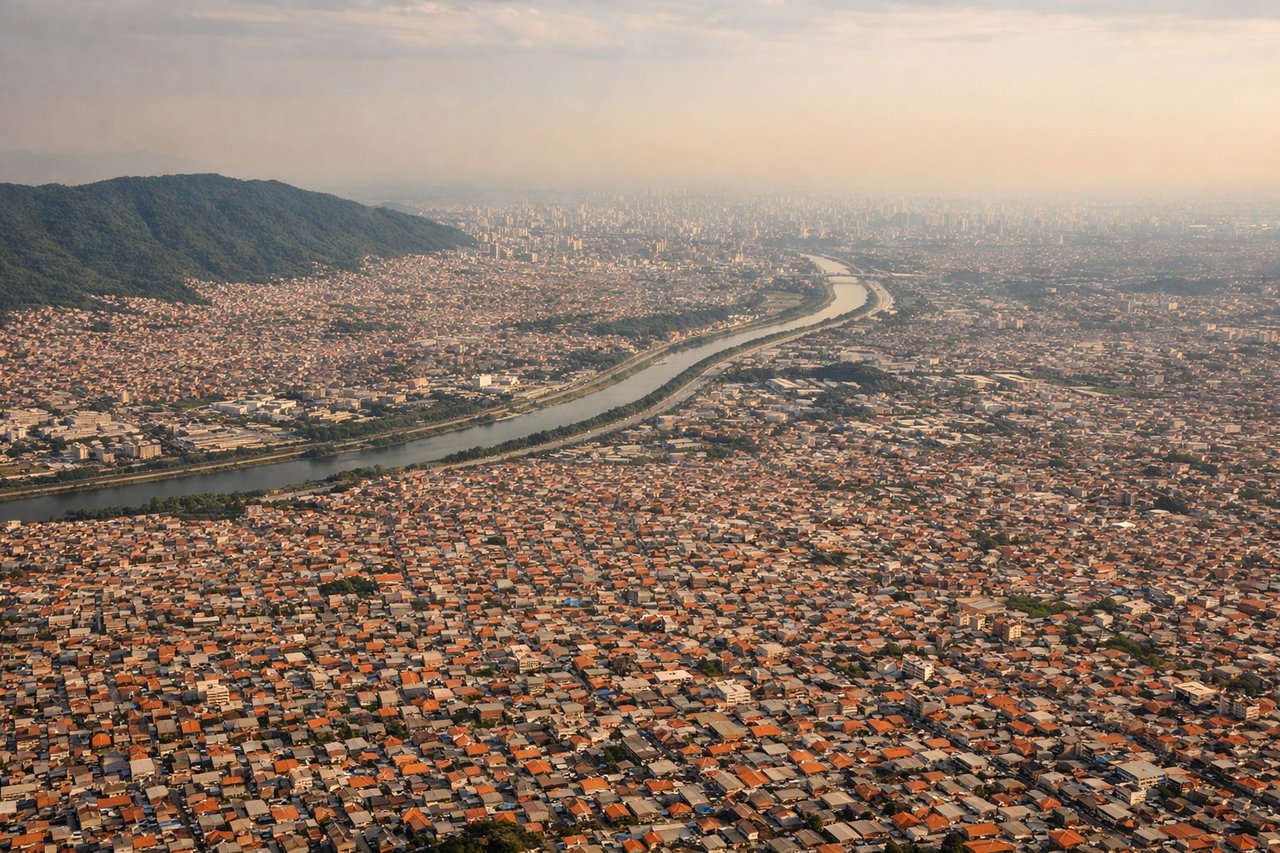
Landing at GRU
LEFTLeft-side seats provide views during the descent approach into GRU. The flight path descends from the northwest, and left-side passengers see the Serra da Mantiqueira mountain range and the transition into the densely populated São Paulo metropolitan area, including views of the Tietê River valley.
Landmarks on this routeAll landmarks →
Will your flight be in sunlight?
Pick a date and time in the Sun Map to watch the sun move across your whole flight.
About This Route
Which side of the plane should I sit on flying from Marechal Rondon (CGB) to Guarulhos (GRU)?
Sit on the Left side of the plane for the best views on flights from Cuiaba to Sao Paulo. While takeoff favors the right for cerrado and river views, the landing approach on the left offers more dramatic scenery—the Serra da Mantiqueira, the Tietê River valley, and the massive São Paulo metropolitan area provide more visually distinctive features than the relatively flat central plateau terrain of the outbound leg.
What can I see during takeoff from Marechal Rondon in Cuiaba?
During takeoff from Marechal Rondon (CGB), sit on the Right side for the best views. Right-side seats offer views of the Cuiaba River valley and the transition from central Brazilian plateau terrain toward the southeast. The initial climb-out heads generally south-southwest, making the right side optimal for viewing the river system and surrounding cerrado landscape. Notable sights include: Cuiaba River (flowing north-south through the city), surrounding cerrado grasslands and scattered vegetation, low plateaus to the east, urban sprawl of Cuiaba itself.
What can I see when landing at Guarulhos in Sao Paulo?
When landing at Guarulhos (GRU), sit on the Left side for the best views. Left-side seats provide views during the descent approach into GRU. The flight path descends from the northwest, and left-side passengers see the Serra da Mantiqueira mountain range and the transition into the densely populated São Paulo metropolitan area, including views of the Tietê River valley. Notable sights include: Serra da Mantiqueira (distant mountain range on the horizon), Tietê River valley and its urban corridor, São Paulo metropolitan sprawl, Guarulhos airport approach zone.
How long is the flight from Cuiaba to Sao Paulo?
The flight from Marechal Rondon (CGB) to Guarulhos (GRU) takes about 2 hours 15 minutes. The shortest flight path between them is 826 miles (1,329 km); winds and air traffic control usually add a few percent.
What does the Cuiaba to Sao Paulo flight path pass over?
The flight path crosses the interior plateau of São Paulo state, passing over agricultural regions (sugarcane and coffee plantations), scattered towns, and the Paraíba River valley. The terrain gradually transitions from the flatter cerrado of Mato Grosso to the more undulating plateau landscape of São Paulo state. No major mountain ranges are crossed, but the gradual elevation change and increasing density of human settlement become visible as the aircraft approaches the São Paulo metropolitan region.